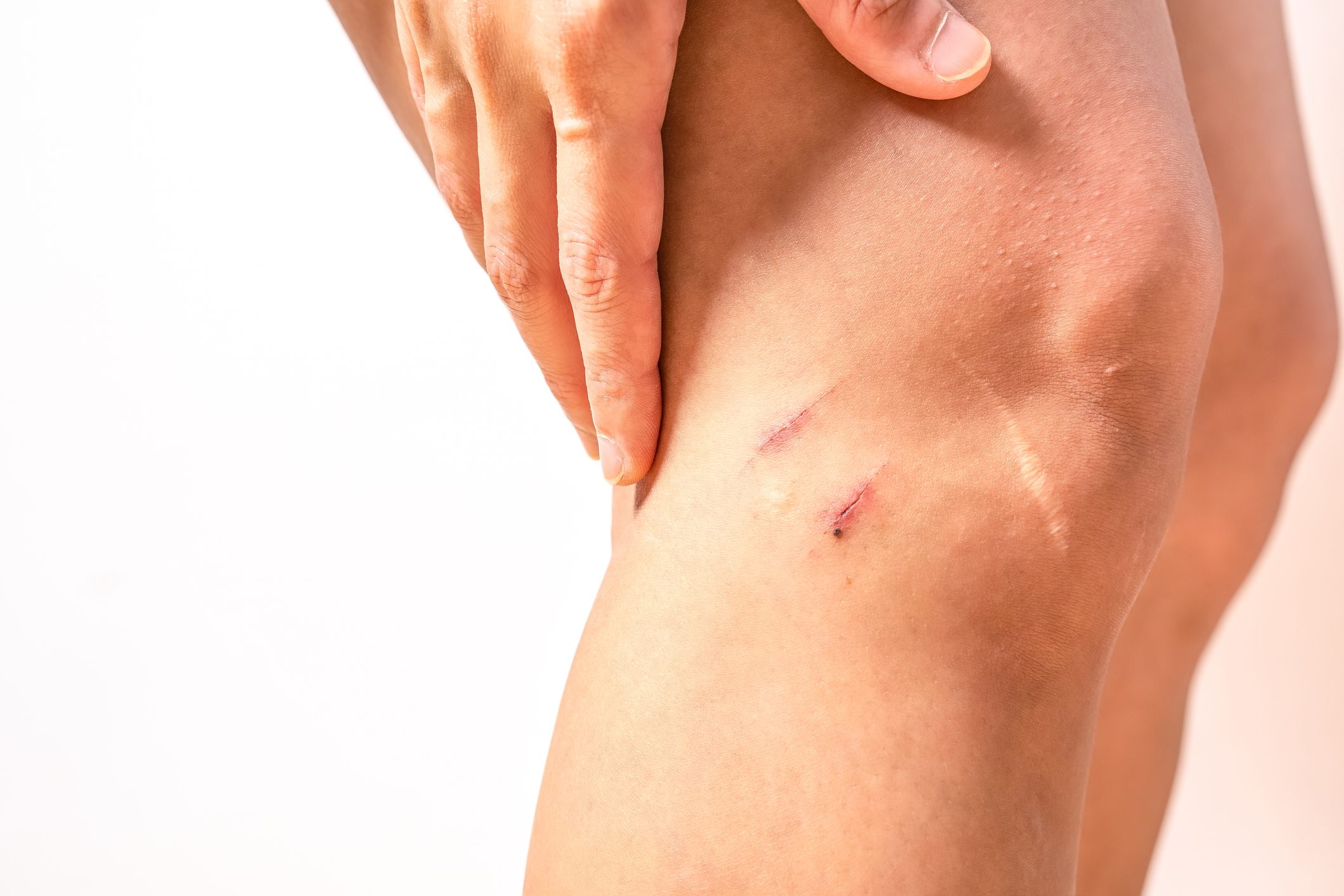
Scars are a repair tissue made mainly of collagen, which forms when a wound passes the outermost layer of the skin and reaches the dermis. As the National Institutes of Health explain, collagen fibers are arranged differently and hair, glands and nerves are missing.
A scratch on the finger disappears in a few days, a knee operation leaves a mark for life. The difference lies in how deep a wound reaches. The skin is made of three superimposed layers: on the surface there is theepidermisa covering of cells that is continually renewed; below is the dermisthe “mattress” of collagen and elastin that houses blood vessels, nerves, hair follicles and glands; even further down there is thehypodermisthe fat layer. A scar it is a repair tissue, the result of the body’s natural repair process, built above all with the collagen (the main structural protein of our body), which serves to close a deep wound quickly to protect it from the entry of bacteria and resulting potential infections.
However, it is not a faithful copy of the original, it is more a patch like the one sewn on a pair of jeans, the hole closes but with a different fabric. For this reason, over time, a scar can lighten until it is barely visible, but it may not disappear completely.
Repair after an injury is divided into different phases, described in the National Institutes of Health StatPearls sheet:
- Clot formation: the vessels narrow and the platelets to stop bleeding.
- Inflammation: in the following days, cells arrive like i neutrophils (white blood cells) that clean the wound of debris and bacteria.
- Proliferation: for a few weeks, new vessels grow and the granulation tissue. The protagonists of this phase are i fibroblastscells that deposit collagen.
- Remodeling: collagen comes reorganized and the scar goes from pink and raised to lighter and flatter.
As is easy to see, the scar has a very different appearance and consistency from the rest of the body. In healthy skin, in fact, collagen fibers are intertwined to form a three-dimensional network.
When we get injured though, the body is in a hurry to repair the damage and places new collagen in parallel making the fabric more compact and less elastic. Furthermore, this new skin is missing the hair follicles, the glands that produce sweat and sebum; nerve endings are also often missing. This is why the scar appears smoother, shinier and generally less sensitive to the touch.
Speaking of sensations: it very often happens that a scar itches. Why does this happen? The itching it is a normal sign of healing that can occur in the first months of a wound and is caused by factors such as dry skin (lacking glands, the tissue does not hydrate sufficiently), the regrowth of nerves and the release of chemical substances by the body in the remodeling phase which directly stimulate the annoying sense of itching.
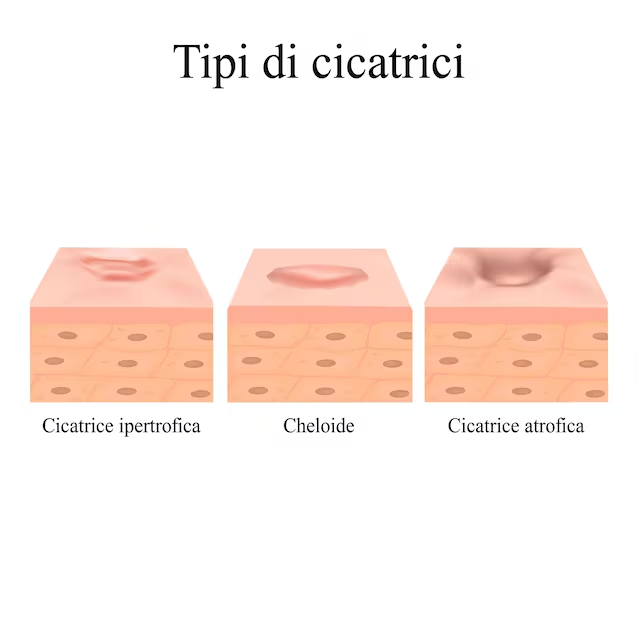
Usually, as time passes, the situation stabilizes. Sometimes, however, the healing process gets stuck. It may happen that the fibroblasts produce more collagen than necessary, generating a hypertrophic scarredder and more raised but remaining within the edges of the wound.
A case per childbirth are i keloids: The scar expands beyond the edges, invading healthy skin, and can be painful and itchy. Keloids can appear even months or years after the injury, particularly on the ears, chest, shoulders and back, they do not regress on their own and, as explained in a study published in Frontiers in Cell and Developmental Biology, they have a strong genetic basis (they are more frequent, for example, in dark complexions).
There are also atrophic scars which are easily recognized because they create small indentations in the skin, similar to tiny pits or “holes”. They are the classic legacy ofacne or of chickenpox and they focus mainly on the face. As the years pass, these scars tend to become more pronounced as we age: the skin physiologically loses collagen and elasticity, sagging slightly and making the furrows even more evident.
Today we have various weapons at our disposal to attenuate problematic scars: silicone gels or patches, cortisone infiltrations, laser treatments and compression garments. These are all excellent strategies for reducing its thickness and lightening its color but, as the experts at the Cleveland Clinic point out, no current therapy works like an eraser.
