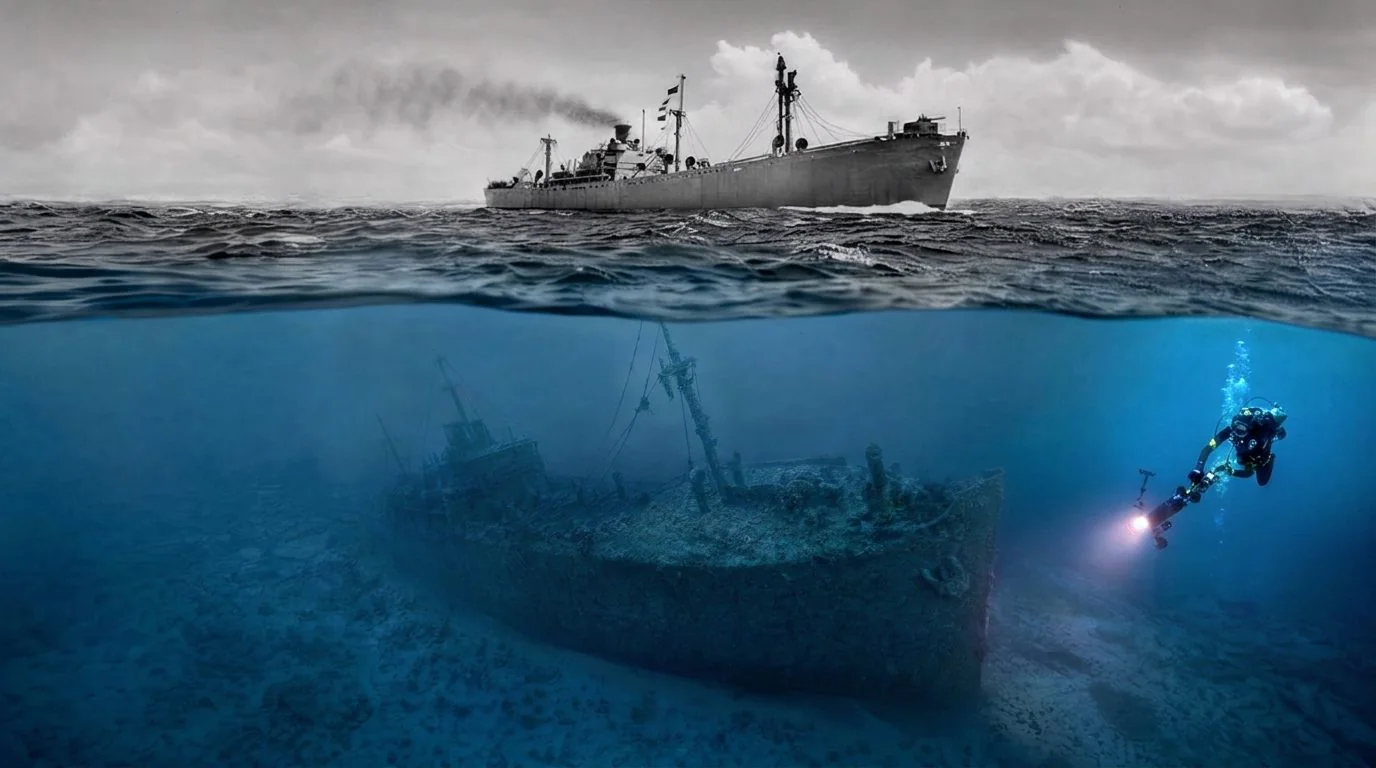
A new underwater survey campaign has documented the wreck of the US ship SS Samuel J. Tilden, which sank in the port of Bari during the Second World War. The remains preserve some of the cargo, including jeeps, an ambulance and anti-aircraft guns.
Off the coast of Bari, about one nautical mile (1.85 km) from the coastbetween 45 and 55 meters deep, lies the wreck of the SS Samuel J. Tildena US cargo ship sunk during World War II. A new campaign by underwater surveysconducted between 20 and 22 October 2026, made it possible to further document the state of conservation and update the three-dimensional model of the vessel, started with the previous campaign.
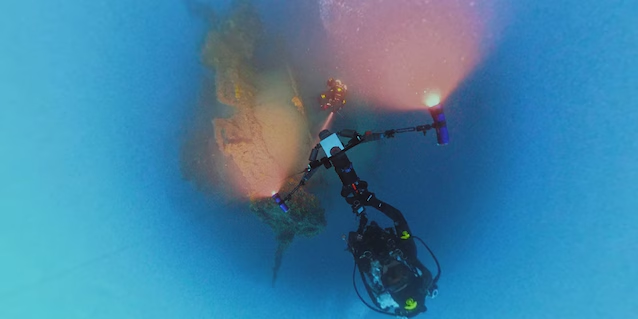
They participated in the mission Federico Ugoliniprofessor of the Department of Cultural Heritage of the University of Salento, Marco Procaccini of the University of Siena, the lieutenant Ugo Adorante of the Carabinieri Underwater Unit of Pescara and Francesco Rende of the Higher Institute for Environmental Protection and Research (ISPRA), with the support of Caterina Annese of the Superintendency of Archaeology, Fine Arts and Landscape for the Metropolitan City of Bari. The novelty of this campaign is the use of a 360 degree camerawhich will allow the creation of immersive content and virtual visits to the site.
For Federico Ugolinithe wreck is:
A document of the history of Bari and, at the same time, a living marine environment.
What Tilden was and what happened on December 2, 1943
The Tilden, built in 1942 in Portland, Oregon, belonged to class Libertya series of cargo ships mass-built in the United States to support Allied supplies during the conflict. During the war years, American shipyards launched more than 2,700.
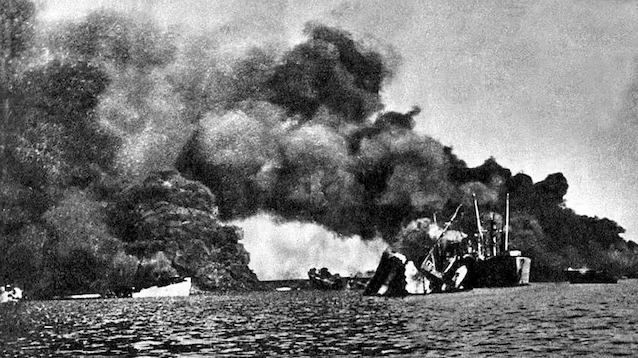
The December 2, 1943 the ship was in the port of Bari — where it had arrived from Tunisia with around 250 passengers and over 1000 tons of cargo — when the Luftwaffethe air force of Nazi Germany, attacked the city by surprise and its seaport with 105 Ju 88 bombers.
According to the study published in 2026 in the journal Heritageapproximately 21 Allied ships sank and another 12 were seriously damaged; the deaths, including soldiers and civilians, were more than a thousand.
One of the ships hit, the SS John Harvey was carrying mustard gas, an aggressive chemical: a large part dissolved in the naphtha that floated on the water of the port and contaminated the shipwrecked people. Doctors did not immediately recognize the symptoms and only identified the poisoning on December 11. Due to the surprise effect and the extent of the losses, the bombing of the port of Bari is often remembered as a “little Pearl Harbor”.
During the attack the Tilden was hit by German bombs and, by mistakealso by Allied anti-aircraft. Severely damaged, it went to the drifts towards the coast.
At 1am on 4 December two British torpedo boats towed her offshore, where she came sunkprobably to avoid further damage to the port and moored ships. First, however, 251 people were rescued, while 41 were injured and 27 died. For this reason the wreck is also a war grave.
What lies on the seabed today
The wreck was known to divers since the 1970sbut was long mistaken for other ships.
The underwater Carabinieri, in fact, had identified it in 2011, and the identification was confirmed in 2025, with the first search campaign. On that occasion they were used depth sounder multibeama wire-guided robot (ROV) and were carried out 12 deep dives. The 3D model was obtained with photogrammetry, the technique that reconstructs an object in three dimensions starting from many photographs taken from different angles.
Underwater reconnaissance documented the bow, stern and central castle. They are still on the aft deck several vehiclesprobably including some ambulances, while a anti-aircraft gun (most likely a 20 mm Oerlikon), part of the on-board armament. The internal environments remain completely unexplored and may be examined in future campaigns. The October surveys focused instead on the sides, castle and bow and stern decks.
In addition to its historical value, the wreck today constitutes a habitat for numerous marine species: yellow and black sponges, algae, echinoderms and polychaetes they have colonized the metal structures, on which some fishing nets also remained entangled.
The three-dimensional documentation will therefore allow us to monitor over time both the deterioration of the hull, between corrosion and collapseand the transformations of the surrounding environment.
The last wreck of the bombing
The Tilden represents particularly important material evidence of the 1943 bombing: according to the authors of the study it is the only remaining wreckbecause the others, about twenty, were recovered, demolished or removed after the war.
Tilden was also destined to the same fate: in 1946 the hull was sold to a Genoese company, which however never recovered it. The project now aims to make this submerged heritage accessible even to those who cannot dive to those depths, beyond the 40 meter limit normally foreseen for recreational diving.
