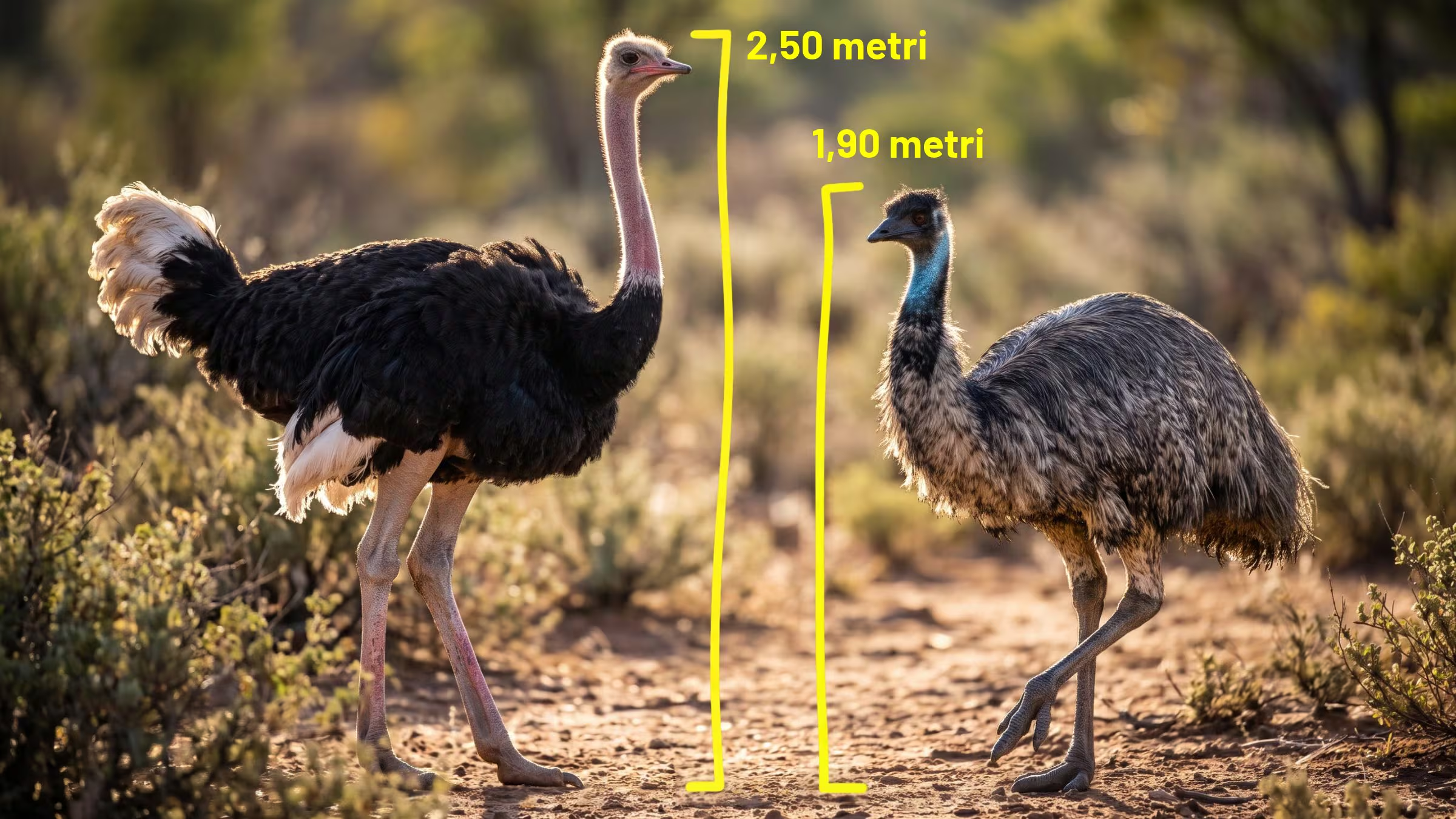
The emu is the second tallest bird in the world. It doesn’t fly, but runs up to 50 km/h. This nomadic giant is omnivorous, only the males incubate the eggs and, although it was once targeted by the army, today it is a symbol of Australia.
THE’emu (Dromaius novaehollandiae) is the second tallest bird in the world after the ostrich: an adult comes to 1.90 – 2 meters and weighs on average 36-40kg. It doesn’t fly, but it makes up for it with a run that it is estimated can touch i 50 km/h: a speed and resistance that in 1932 allowed him to survive the “emu war“, when the Australian army tried in vain to exterminate it to defend the crops.
Endemic to Oceania but now bred all over the world – so much so that it ended up in the news, at the beginning of November 2026, for having run freely among cars in Vigevano, in the province of Pavia – this animal has a fascinating ethology, starting from hatching eggs which is an exclusive task of male.
On an evolutionary level, the emu belongs to the ancient group of ratites together with ostriches, rheas, kiwis and the cassowary (the only one to compete with it in size, being able to reach 2 meters in height and weigh up to 80 kg). The name comes from Latin ratis (“raft”) and perfectly describes their anatomy: unlike birds, their sternum is flat and lacks a keel, the keel-shaped bone structure necessary to anchor the flight muscles.
Why he can’t fly: anatomy and physical appearance
The body is massive, supported by a long neck and a small, almost “naked” blue-black head. The plumage is grey-brown with a bristly appearance given by the presence of soft and disordered feathers, useless for flying but excellent as a thermal insulator.
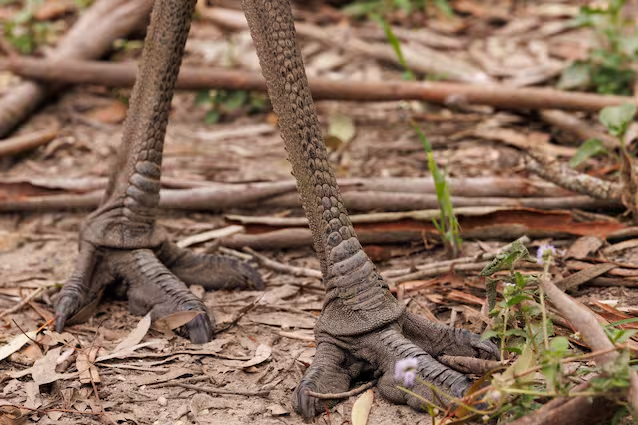
The emu’s driving force is its legs long and muscular formed by three fingers (the ostrich has two) which allow it to take strides of approx 10 foot. The wings, however, are reduced to residues: they developed during evolution from complete and functional wings present in the ancestors of these birds but have lost their role (vestigial wings).
However, ratites have long been thought to be descended from a only ancestor already unable to fly. A study published in Science in 2014 by Kieren Mitchell and colleagues, based on ancient DNA from the extinct elephant birds of Madagascar, suggested a different scenario: the ancestors were small birds capable of flyingwhich reached the different continents by flight and then lost this ability independently. The authors themselves recall that the result is based on Mitochondrial DNA and will need to be confirmed by nuclear genomes.
Where it lives and what it eats: the natural habitat in Australia
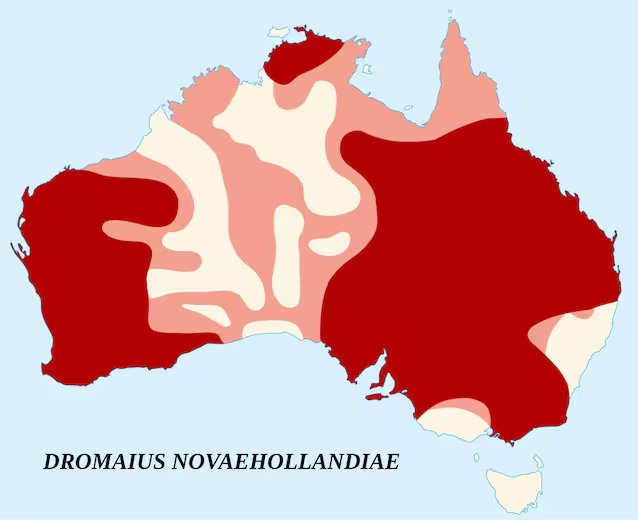
The emu is distributed across much of the Australian continent, from coastal areas to the Snowy Mountains. According to BirdLife Australia, it prefers wooded savannas and the sclerophyllous forests (dominated by plants with hard, leathery leaves, such as eucalyptus), while it is rare in rainforests and drier areas.
The Dromaius novaehollandiae it is omnivorous and opportunistic. It eats fruits, seeds, shoots, insects and even small animals. The diet follows seasonal availability, and it is precisely the search for food and water that makes it an animal nomadic. Travel can cover hundreds of kilometerswith stages of 15-25 km per day.
Equally characteristic is the voice. The emu emits drumming and dark sounds (the so-called booming) thanks to one inflatable bag on the neck, which works like a sounding board.
Reproduction and the unusual role of the male in brooding
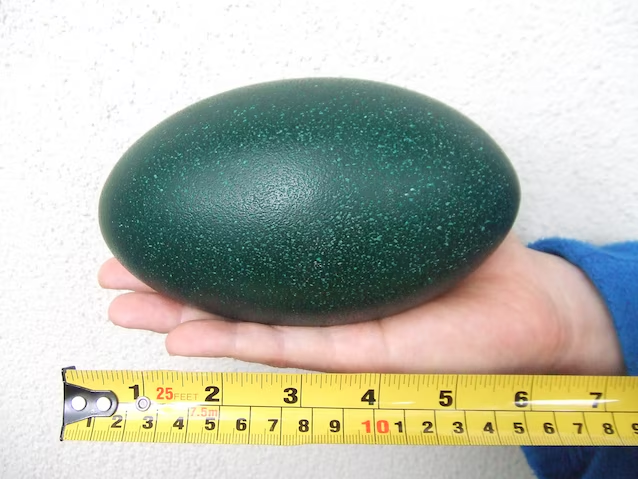
The breeding season falls in the cooler months of the austral year, approximately between April and June. The female lays from 5 to 15 eggs in a rudimentary nest (a grass platform on the ground), at intervals of 2-4 days. The eggs are large (about 13 × 9 cm) and have one color dark bluish-green.
At this point the roles are reversed. The female moves away and can mate with other males, while the male remains on the nest for approximately 8 weeks (48-56 days) without eating, drinking or defecating, surviving thanks to previously accumulated fat reserves and getting up only to turn the eggs. At the end of the hatching it may have lost approx a third of the weight corporeal.
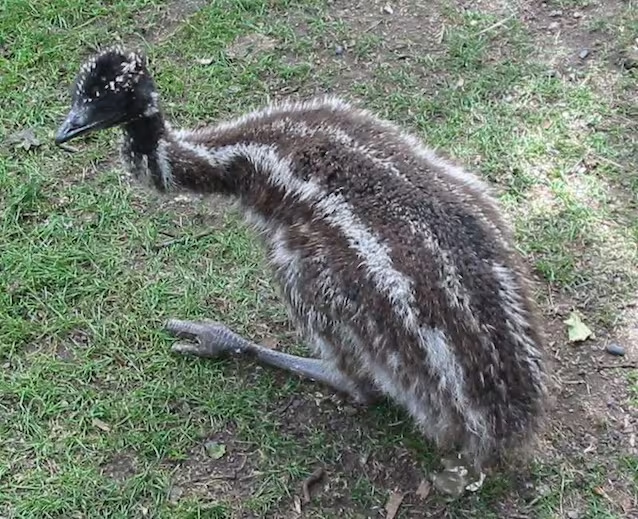
The chicks are born cream colored with dark brown longitudinal stripes, a camouflage pattern that makes them difficult to spot in the grass. Even after hatching, the father takes care of them: he protects them and guides them for several months, generally up to the age of 6. They become almost adults at one year and can reproduce around 20 months.
The relationship with man and the historic war
Between November 2nd and December 10th 1932the south-west of Australia was the scene of the so-called “emu war“, an unusual military operation launched to stem the from these enormous birds. Despite the army’s intervention and the reported killing of about a thousand specimensthe mission turned out to be a failure: most of the animals managed to escape the bullets. Ultimately, to save their crops, farmers had no choice but to install much stronger fences.
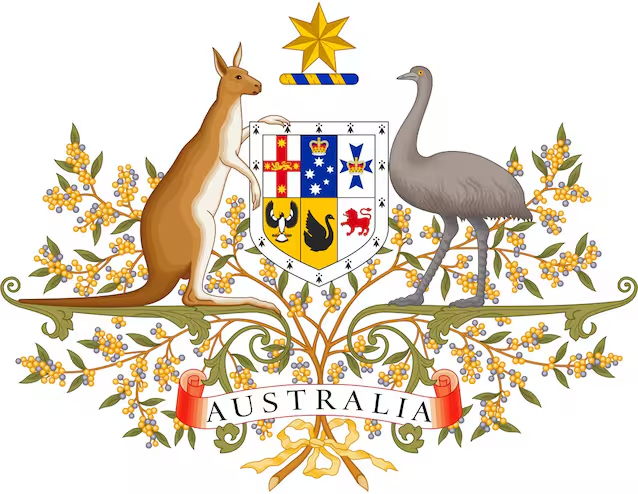
Paradoxically, the same animal targeted by the military almost a century ago is also the symbol of the nationdepicted on the Australian coat of arms together with the kangaroo.
Less Concern (Least Concern) in the IUCN Red List, are estimated to be between 630,000 and 725,000 mature specimens, and is protected by the Australian Federal Biodiversity Act 1999.
