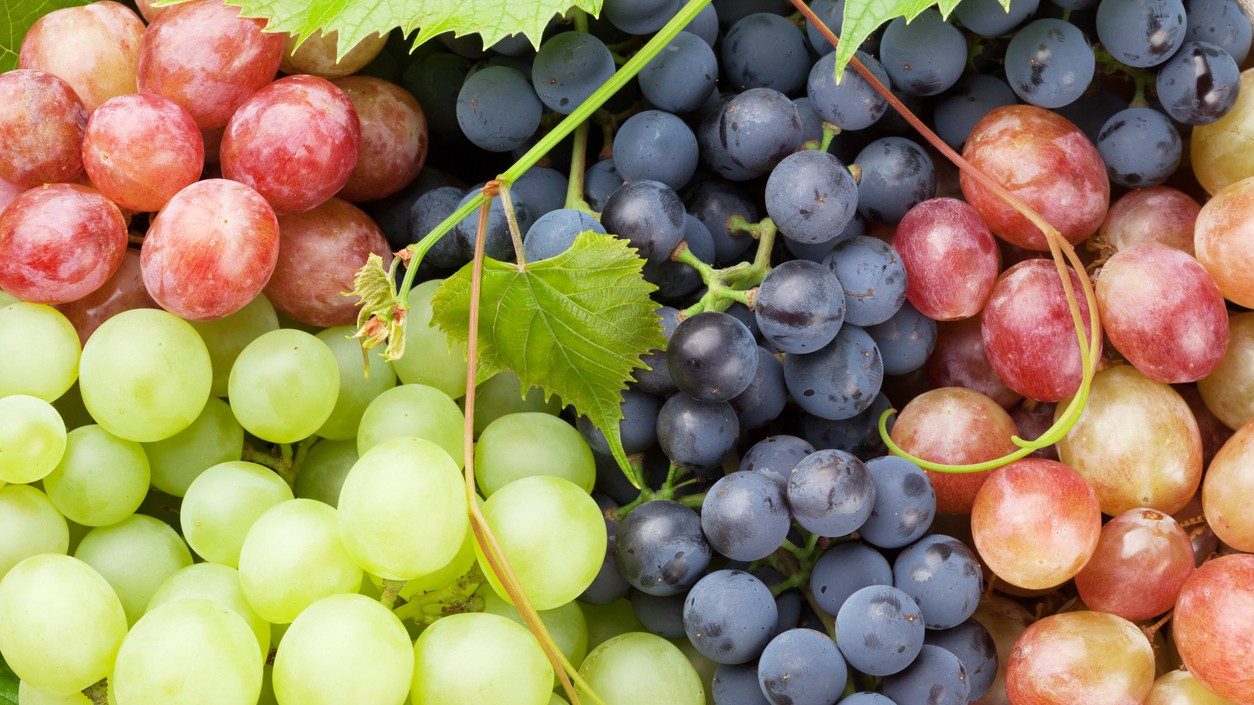
To obtain white grapes, two contemporary genetic “faults” are needed which stop the production of anthocyanins, the molecules that give the dark color to the grapes. A rare mutation that has meant that almost all current white grapes have a single common ancestor.
THE’grapewhether black or white, all comes from the same plant, the Vitis vinifera. Of course, for many it may not be an epochal discovery, but have you ever wondered what differentiates them? They are distinguished by only a couple of genetic accidents happened to one by chance black berry vine hundreds of thousands of years ago! According to estimates by Reynard and his team, in an article published in 2025 on Horticulture Researchthe first “genetic accident” of grapes dates back to 150,000 years ago. However, a single hitch was not enough, two “faults” in the DNA present at the same time were necessary to obtain white grapes. A very rare event which in 2007 led an Australian team led by Walker to hypothesize the presence of a common ancestor to all currently cultivated white grapes.
In the beginning all the grapes were black
Wild vines, as Reynard points out, always produce dark, blue-black berries at maturation. The aim is to attract birds, which will eat the colored grapes and disperse the seeds, with defecation, away from the mother plant. The credit for that beautiful complexion goes to anthocyaninscolored molecules that the plant accumulates in the skin when the grape begins to ripen. And what color do white grapes produce? For some time now, as confirmed by Walker’s 2007 work, it has been known that simply it does not produce any pigmenttherefore appearing white. And this is in fact why geneticists consider it almost a “faded” descendant of dark berry ancestors.
It’s the as this whitening occurred which is very interesting, because it is the result of a series of curious events. The first question the researchers asked was: why did white grapes stop producing colored molecules? Has the enzyme that produces them “broken”? No. As Walker reports, already in 2001 a Japanese group had discovered that the gene (VvUFGT) of that enzyme is identical both in white grapes and in their red variants. The only difference is that in white remains almost silent.
Two genetic switches turned off at the same time produce white grapes
The researchers’ attention then shifts to the factors that should activate the production of that enzyme. The first half of the mystery was solved in 2004 by a group of Japanese researchers. In their article Retrotransposon-Induced Mutations in Grape Skin Color analyze two pairs of table grapes: the Italia and the Moscato d’Alessandria grape, both white, and their red “daughters”, the Ruby Okuyama and the Flame Muscat, each born from a changed branch.
By comparing them, the researchers discovered a retrotransposona genetic fragment capable of “jumping” from one point of the genome to another, placed right in front of a gene called VvMYBA1. This gene turns on the production of anthocyaninsbut when there is the retrotransposon in front, it remains off. In the red daughter variants, however, this “intruder” is almost completely disappearedonly a small fragment remains, but it is not enough to block the VvMYBA1 gene: the gene starts working again, the production of anthocyanins starts again and the grape is red.
A few years later, Walker and his Australian team discovered that next to VvMYBA1 there is a sister gene, VvMYBA2and mutations may also be present on this. Two in particular deactivate the function: one replaces a single brick of the protein, an amino acid, while the other causes the reading of the gene to “slip”.
Just as long as it works too only one of these two genes: the production of anthocyanins starts and the grape is colored. How colorful also depends on other factors, such as how many working copies of the switches there are and how well they work, which is one of the reasons why, between black and white, there are also red and rosé grapes. If the genes are both “broken”these molecules are not produced and the resulting grapes are white.
All European white grapes have a single common ancestor
The fact that there are two different faults in the same place in the DNA is such a rare event that it probably is occurred only once in the evolutionary history of the vine. To test this hypothesis, Walker’s group analyzed varieties of white grapes that were very distant from each other, belonging to 12 of the 16 genetic groups into which the cultivated vines are divided. They all presented the exact same mutations, a sign, according to the researchers, that there was a single common ancestor from which all the white grapes we know today derive.
By the way, “white” is a character recessive: means that the mutations must be present on both color-bearing chromosomes. If the color genes are functional on even just one of the chromosomes, the grape will be colored. The researchers hypothesize that the mutations initially appeared on just one chromosome, in plants that continued to produce dark grapes. Only when, from random crossings, a seedling was born with both copies mutatedthe first white grapes appeared. Which of the two failures came first, however, no one knows.
Reynard and his research group have discovered a second mechanism by which grapes can turn white: the loss of a large piece of DNA that takes away a good part of the color genes. This variant, however, never arrived in the vineyards of Western Europe and only exists in table grapes of Asian origin. According to the authors, therefore, white grapes would have been born at least twice.
The curious case of Pinot noir, white and gray
It is essential to know that plants can accumulate mutations in a single branch and, since the vine multiplies by cutting, a mutated shoot can give rise to a new variety identical to the mother in everything except color. Pinot offers us an example of this ability, described in a 2012 research by Silvia Vezzulli, researcher at the Edmund Mach Foundation. Pinot noir has a chromosome in which the color switches are functional and one in which they are mutated: as long as the first one works, the grapes are dark. If mutations accumulate in a shoot that also damage the chromosome with working switches, white grapes will grow on that branch! Here we have the Pinot Blancwhich obviously we now also find as an independent variety, because over time it has been selected and propagated by cuttings.
But the most curious thing of all is that, in some cases, these mutations can accumulate only in the inner cell layer which forms the peel tissues. The outer layer keeps the healthy chromosome and its ability to color intact. The result is a chimera: the Pinot Grigio with grapes only partially tinged with that pinkish-grey that gives it its name.
This research also allowed us to dispel a widely shared myth. Initially it was thought that gray came from Pinot Grigio and white from it. With its work, Vezzulli’s group has demonstrated that the two mutations occur in a similar manner totally independent of each othereach directly from Pinot Noir.
Sources
Reynard JS, Brodard J, Roquis D, et al. A divergent haplotype with a large deletion at the berry color locus causes a white-skinned phenotype in grapevine. Hortic Res. 2025 Walker AR, Lee E, Bogs J, McDavid DA, Thomas MR, Robinson SP. White grapes grow through the mutation of two similar and adjacent regulatory genes. Plant J. 2007 Kobayashi S, Goto-Yamamoto N, Hirochika H. Retrotransposon-induced mutations in grape skin color. Science. 2004 Vezzulli S, Leonardelli L, Malossini U, Stefanini M, Velasco R, Moser C. Pinot blanc and Pinot gris arose as independent somatic mutations of Pinot noir. J Exp Bot. 2012
