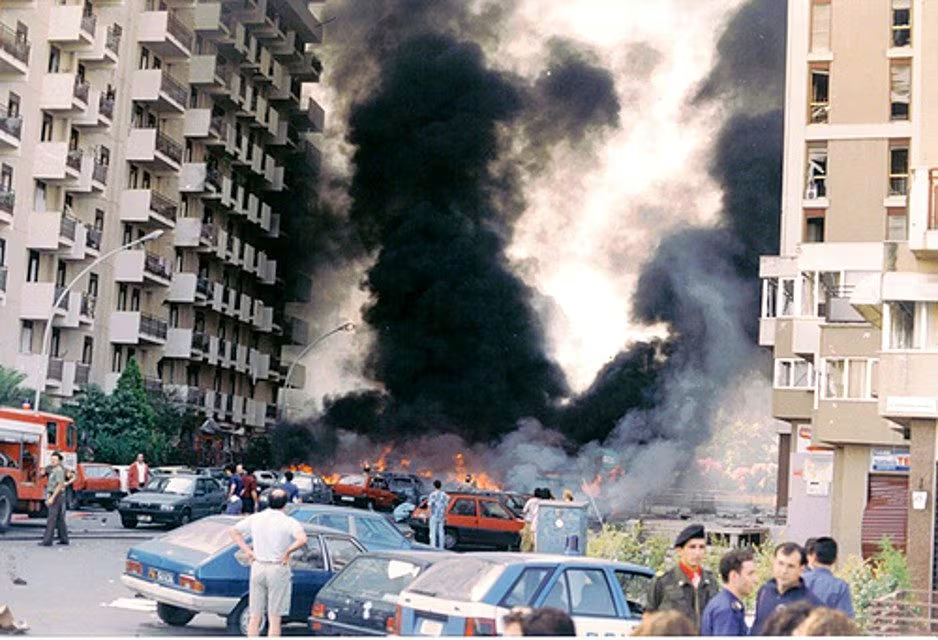
The reasons for the misdirection of the Via d’Amelio massacre have never been ascertained and the truth has not yet emerged. In recent days, the Caltanissetta prosecutor’s office has entered the then deputy director of the Anti-Mafia Investigation Directorate, Gianni De Gennaro, who committed suicide a few days later, in the register of suspects.
The July 19, 1992 — less than two months after the Capaci massacre in which Giovanni Falcone was killed — a car bomb placed in via d’Amelio, in Palermo, killed the judge Paolo Borsellinoone of the magistrates most involved in the fight against the mafia, and the agents of his escort.
After the attack, the suspicion emerged that the massacre, although carried out by the mafia, hadhidden instigators”that is, it had been wanted by elements external to mafia environmentsperhaps belonging to the economic or political-institutional world, who feared being involved in Borsellino’s investigations. The truth has not been fully ascertained, but after the massacre thered agenda that the judge used to take notes, and they were organized misdirections and false testimoniescoordinated in particular by the police officer Arnaldo La Barberathen head of the investigative pool on the matter.
The matter has returned to the center of attention in recent days (November 2026), when the former police chief Gianni De Gennaro was formally investigated by the Caltanissetta prosecutor’s office to mislead the investigation about the massacre and the disappearance of the agenda. Two days later De Gennaro he took his own life.
What was the Via d’Amelio massacre
The massacre in Via D’Amelio took place on 19 July 1992 in Palermo: a bomb placed in a car Fiat 126 it exploded upon the arrival of judge Paolo Borsellino, who had gone to visit his mother. The explosion killed the magistrate and five agents of his escort: Agostino Catalano, Emanuela Loi, Vincenzo Li Muli, Walter Eddie Cosina and Claudio Traina.
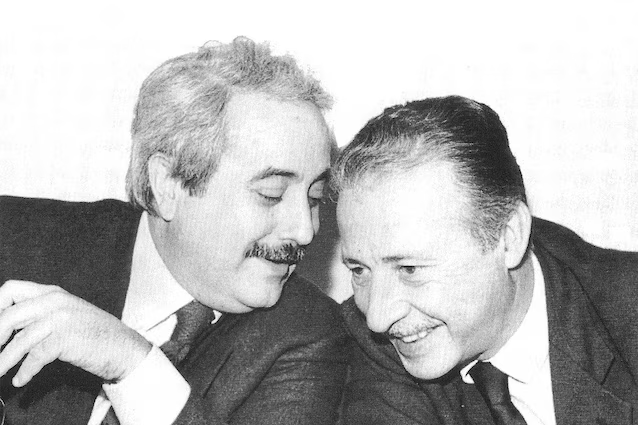
The attack just happened 57 days after the Capaci massacrein which Giovanni Falcone, Borsellino’s colleague and friend, was killed.
The massacre in Via D’Amelio was one of the moments most dramatic in recent Italian history.
Borsellino’s red diary
The massacre immediately appeared suspicious: it was clear that the attack had been carried out by Cosa Nostra, but some circumstances led to the suspicion that, behind the mafia, there were hidden instigators, interested in prevent Borsellino from continuing his work of investigation.
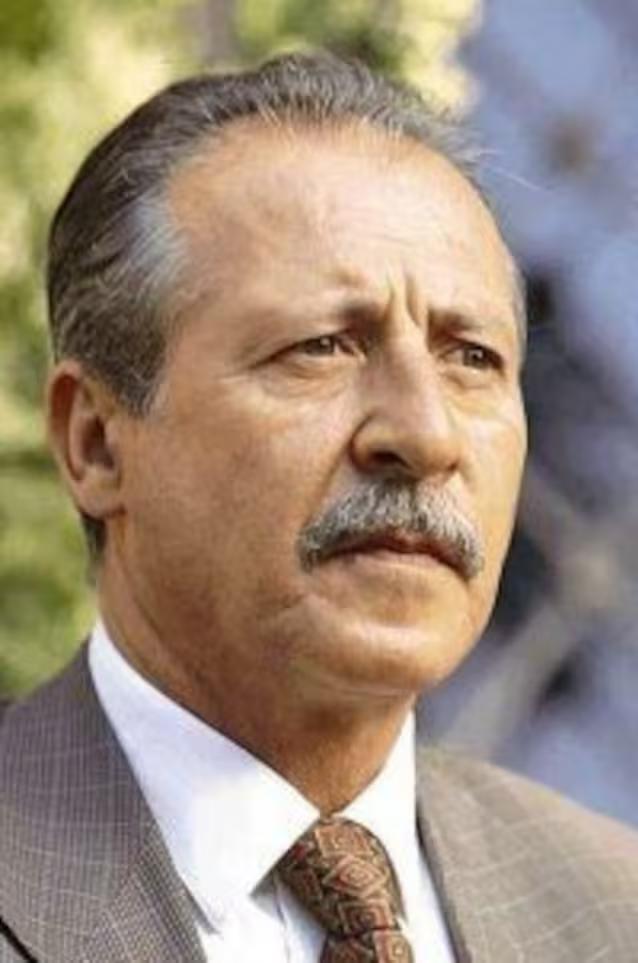
The first element that emerged was the disappearance of an important document: a diary with a red cover that Judge Borsellino always carried with him and on which he notes regarding his investigations.
The agenda was there at the time of the attack in the magistrate’s bag. After the explosion, the bag was recovered by police officers and returned to the family, but the diary was no longer inside, and since then it has never been found.
The suspicion is that Borsellino had noted involving facts representatives of the economic or institutional world and that for this very reason it was made to disappear.
The Scarantino misdirection
The disappearance of the diary was not the only anomaly. The investigations into the massacre were in fact undermined by red herrings and red herringsimplemented by the police, for the purposes of prevent us from discovering the truth on who had wanted Borsellino’s death.
The misdirection of the investigations is linked above all to the figure of Vincenzo Scarantinoa small-time criminal from Palermo, who was arrested in 1992 and two years later began to collaborate with justice.
Scarantino declared that he had participated in the organization of the attack and provided numerous details, but his depositions contained numerous contradictionsand they turned out to be largely false.
In 2008 another justice collaborator Gaspare Spatuzza provided a different reconstruction, admitting that he had personally stole the Fiat 126 and disproving numerous elements of Scarantino’s story. His statements turned out to be reliable, and they were crucial for the review of processes and the recognition of the innocence of some convicted criminals.
After Spatuzza’s statements, it emerged that Scarantino had been subjected to strong pressure psychological and induced to make false statements by the police. A central role in the affair was attributed to some police investigators, in particular the official Arnaldo La Barberawho passed away in 2002, who had directed the initial investigations into the massacre.
Scarantino’s false repentance contributed to directing the investigations to via d’Amelio su slopes wrong and to protect any “hidden instigators”.
Other red herrings and the opening of investigations into De Gennaro
After Scarantino’s depositions, the misdirections continued and also other repentants made false statementsand some were convicted of slander.
Furthermore, the fact that, before his death, Borsellino was not there appears suspicious never been heard by the magistrates of Caltanissetta who were investigating the Capaci massacre.
The role of the Sisdethe Italian civil secret service of the time, which contributed to guaranteeing Scarantino’s reliability. For months, involvement of Bruno ContradaSisde leader who served a long prison sentence for external participation in a mafia association, whose conviction was subsequently revoked by the Supreme Court because, according to the European Court of Human Rights, at the time of the events the crime was not sufficiently defined by Italian law.
Recently, some magistrates have raised possible suspicions responsibility of Gianni De Gennarodeputy director of the Anti-Mafia Investigation Directorate at the time of the events and head of police from 2000 to 2007. In November 2026, the Caltanissetta prosecutor’s office has entered De Gennaro in the register of suspects for misdirection. According to the accusatory hypothesis, De Gennaro he would have put pressure on a repentantSalvatore Contorno, to prevent him from giving some testimonies, and would have contributed to the destruction of documents relating to the investigations.
The prosecutor’s office had requested house arrest, but the GIP rejected the request, not believing that elements had emerged that would justify the measure. At the moment, therefore, involvement in red herrings it remains an unproven suspicion. The former police chief is committed suicide a few days later registration in the register of suspects.
Why the red herrings? Possible hidden instigators and the State-mafia negotiation
An important question remains: Why were the screenings organised? Because they wanted to prevent us from discovering who organized the killing of Paolo Borsellino?
The most realistic hypothesis is that the misdirections were determined by the will of protect interests external to Cosa Nostra. The suspicion, as we have said, that the massacre in Via D’Amelio, although carried out by the mafia, had “hidden instigators”.
One hypothesis is that the massacre was carried out to prevent the judge from deepen investigations into the relationships between organized crime and political and economic environmentsparticularly in relation to an investigation into mafia and contracts that he was carrying out. The massacre could therefore have been ordered by entrepreneurs or politicians who risked being investigated by Borsellino.
Furthermore, it was hypothesized That the magistrate had become aware of sensitive information on the relationships between the mafia and institutionsin relation to the negotiation between the State and Cosa Nostra started after the Capaci massacre.
As is known, after the killing of Falcone, some representatives of the institutions sought an interlocution with the mafia bosses to find an agreement and prevent further massacres (but the negotiation was not completed). It is possible that they wanted to prevent Borsellino from investigating the matter, but the suspicion is not proven, also because it is not certain that the judge was aware of the negotiation (although the probability was high).
