After almost thirty years, a 17th century wreck found in Salcombe Bay, England, has been identified as the Dom van Keulen. The Dutch ship sank in 1633 while returning from Morocco with a cargo of gold, gum arabic, saltpeter and hides, documenting the intense trade of the time.
The wreck of a 17th century ship discovered in 1995 in Salcombe Bay, in Devonwith more than 400 Moroccan gold coins on board, it was identified after almost thirty years: it’s about the Dom van Keulena Dutch merchant ship owned by Amsterdam merchants João de Pas And Andrea de Azevedo, shipwrecked in 1633 during the return journey from Morocco to the Netherlands.
The story is reconstructed by a new publication by British Museum“From Morocco to the Coast of England: The Story of the Dom van Keulen and its Remarkable Cargo”.
For years the identity of the vessel had remained a mystery: there were even those who believed that it was one ship of the Barbary corsairsthe North African pirates who represented a serious threat to the English coasts at that time.
The archaeological history of the wreck begins in early 90swhen the divers of the South West Maritime Archaeological Group they spotted on the seabed some cannons and wooden fragments.
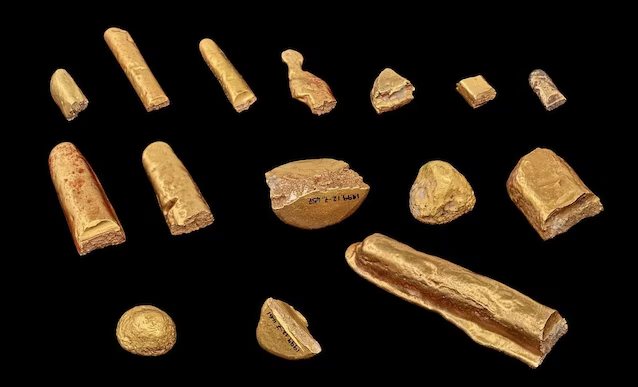
In April 1995, diver Ron Howell noticed a small gold bar on the seabed, followed by a cluster of gold coins nestled in a groove in the rock.
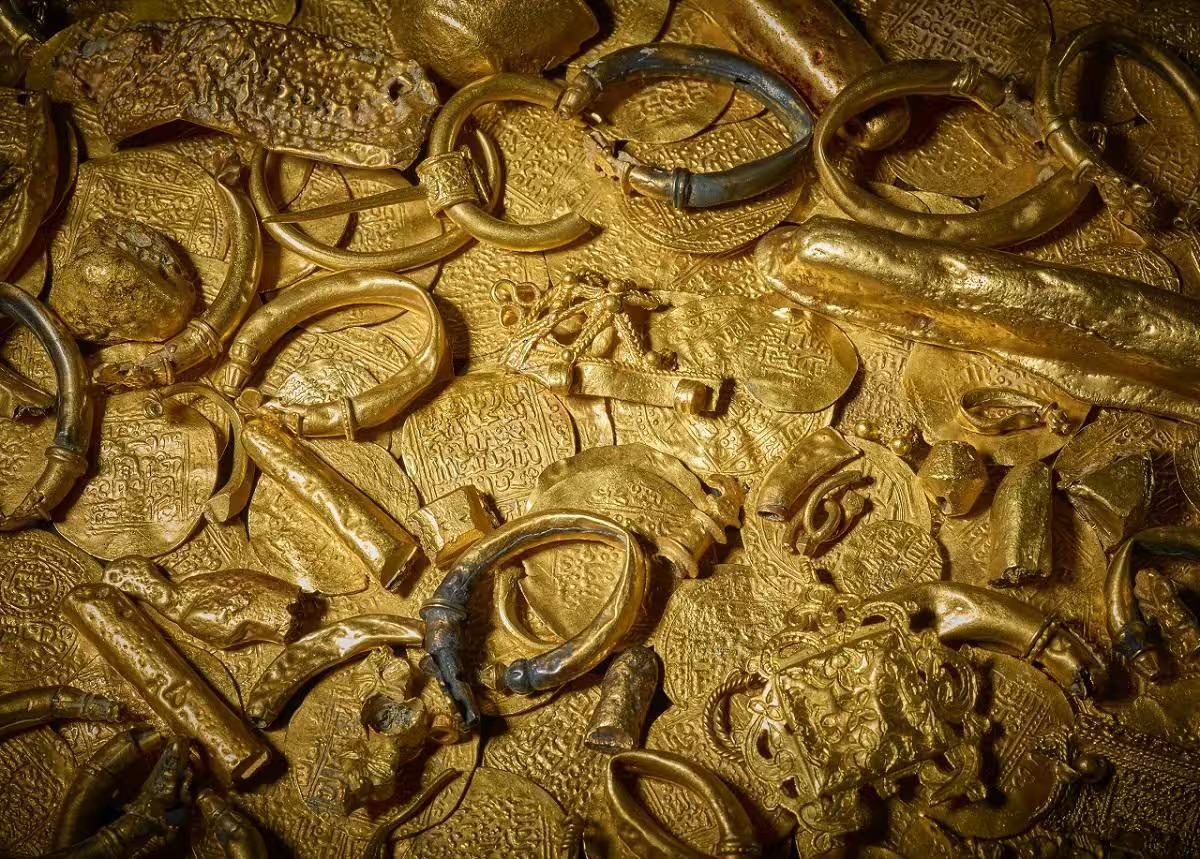
Subsequent investigations made it possible to recover 445 coins minted under the Saadian dynastywho ruled the Morocco between the 16th and 17th centuries.
The most recent coin, minted in Marrakech in 1632 under ruler al-Walid, helped date the shipwreck.
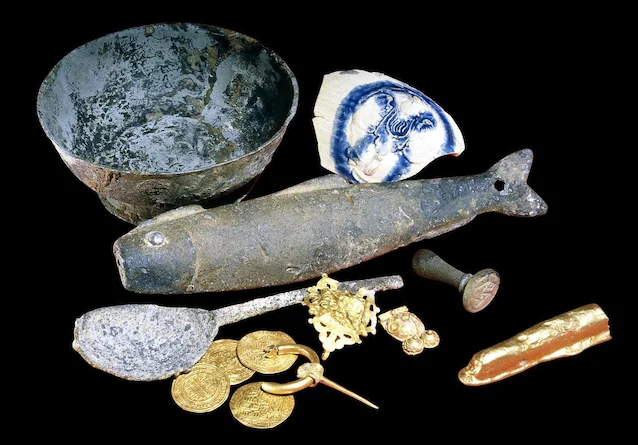
They were also identified earrings, pendants and jewelery fragments, none of which are intact: some were burnt and twisted, others stripped of enamel and precious stones, probably because the entire set was destined for the crucible to be remelted. Among the jewels, some were clearly of Moroccan make, while others showed European or African characteristics.
The ship’s cargo also included ceramics Rhenish, pewter pottery and objects related to the daily life of the crew.
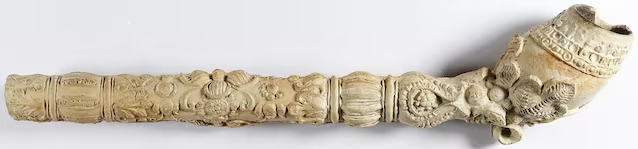
Among the finds on board are a Dutch made bowl and spoona mercantile sealone fish-shaped sounder used to measure the depth of the sea, a baroque clay pipe decorated with foliage and flowers and even some pills made almost entirely with conifer resin, probably pine, preserved in a ceramic container, as well as broad bean seeds.
Chemical analysis revealed that when crushed, one of the pills still released a strong lemon aroma after almost 350 years on the seabed; it is hypothesized that they could have served against seasickness.
These materials, together to fragments of naval equipmenthave helped guide identification towards a vessel from north-western Europe.
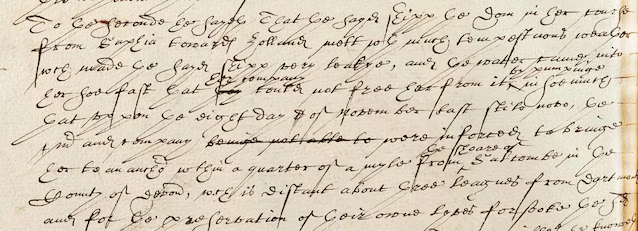
There turning point in the process of identifying the wreck came thanks to the archival research of the independent maritime historian Ian Frielwhich identified documents relating to among the records of the British High Court of Admiralty a Dutch vessel called Dom van Keulen.
The cards describe his last tripstarted from Moroccan port of Safi in August of 1633 and headed towards Amsterdam, nei Netherlands.
During the crossing the crew encountered particularly adverse weather conditions: the ship took on water and the commander was forced to drop anchor in Salcombe Bay. The crew and passengers abandoned ship in lifeboats, reaching the shore safely, while the Dom van Keulen sank at peak.
The documents found by Friel also allow us to reconstruct the consistency of the original load left Morocco for Holland. The vessel carried approx 9,000 “Barbarye ducketts” (as Moroccan dinars were called at the time), 150 bags of gum arabic, 64 bags of saltpeter And 320 goatskins.
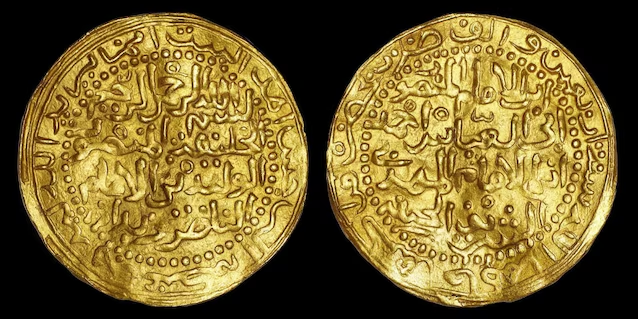
The analysis of the ingots recovered from the seabed confirmed that gold had origins in West Africa: the most famous Saadian ruler, Ahmad al-Mansurhad conquered the gold-bearing region around Timbuktu in 1591, earning the nickname al-Dhahabi, “the Golden”.
African goldcoined by the Moroccan sovereigns, circulated in international markets and it could have been later recast to produce coins intended for European exchanges. Dom van Keulen thus documents a economic network which connected the Moroccan coasts, the Netherlands and the British world.
The wreck offers significant testimony to the 17th century maritime tradewhen Dutch merchants had intense relationships with Morocco and West African trade networks.