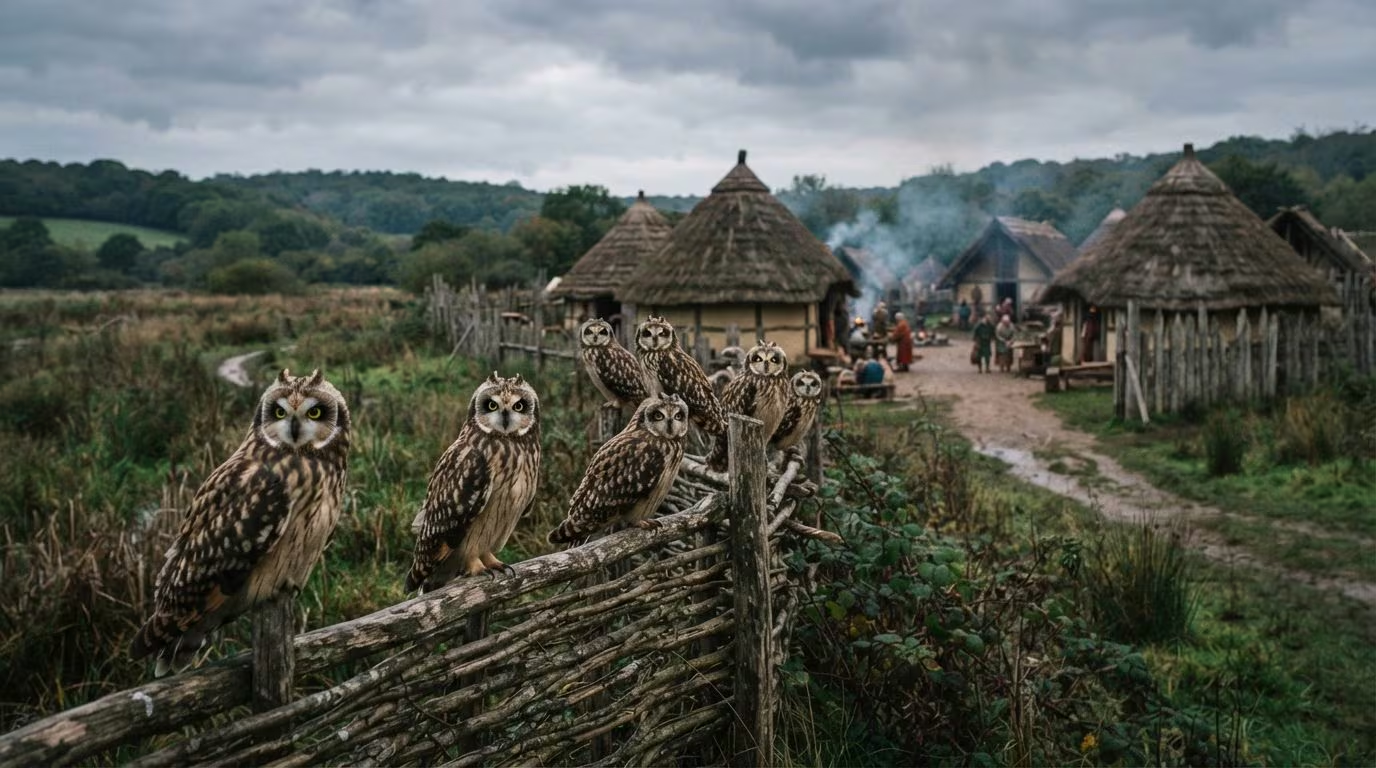
An accumulation of 8000 bones found in a Roman ditch near Cambridge (England) known as the “frog cemetery” is believed to be the result of the activity of short-eared owls and other birds of prey. A new study has excluded the hypothesis of a ritual deposit, and reconstructed an episode of predation that occurred around 1,800 years ago.
For a long time, the accumulation of approx 8000 frog bones and other small animals in an ancient ditch near Cambridgein England, has raised questions about its origin, but a new study has solved the mystery: those responsible are i owls of swamp and others birds of preywho gathered in the area around 1800 years ago for a banquet seasonal favored by the environmental changes of the Roman era.
The remains, found during preventive archaeological excavations conducted as part of the works to upgrade the A14 road (between Cambridge and Huntingdon), come from the site of Bar Hilla settlement area frequented between the Iron Age and the Roman period. Their concentration had fueled various hypotheses – from trapping in the ditch to extreme cold, to a possible intentional deposit – but none had been convincing.
The answer comes from an archaeozoological study published in the journal Environmental Archaeology, conducted by Paul Clarkson of the University of Bournemouth together with Vicki Ewens, senior zooarchaeologist at the Museum of London Archeology (MOLA), who found the bones between 2016 and 2018. The team analyzed 12,683 faunal remainsof which 9,135 were concentrated in the ditch in question alone – a channel approximately 14 meters long, on the western side of a roundhouse – for a minimum number of 469 individuals. Most of the remains belong to frogs common, but they were also present in the depot toads, voles, shrews And mice.
The main suspects are i short-eared owls (Asio flammeus), probably joined by other birds of prey, including the harriers (Circus cyaneus). The evaluation ofage of amphibiansperformed through observation of the bone developmentsuggests that many specimens were died during the autumn or winter of their first or second year of life. The authors therefore hypothesize that a exceptional concentration of prey attracted predators to the area, where they would hunt and stop during the same season.
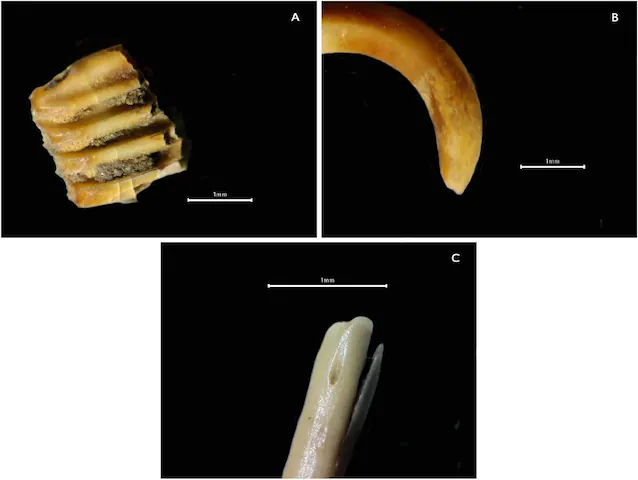
But why were thousands of bones located in exactly the same place? One possible explanation concerns the behavior of birds of prey. The owls they regurgitate the undigested parts of prey in the form of wadssmall piles containing bones, hair and other debris. If the animals used a restricted area such as roostthese wads could accumulate in its immediate vicinity.
The moat, due to the simple force of gravity, would then have helped concentrate and preserve the remains: the bones that ended up in the depression would have been less exposed to dispersion and natural agents than those left on the surrounding surfaces.
The next filling of the moat, a certainly anthropic action, would have further favored their conservation. It is therefore not necessary to imagine that the owls deliberately chose that place to deposit their bones. Most likely, the roost was located near the moat, and the bad weather they did the rest.
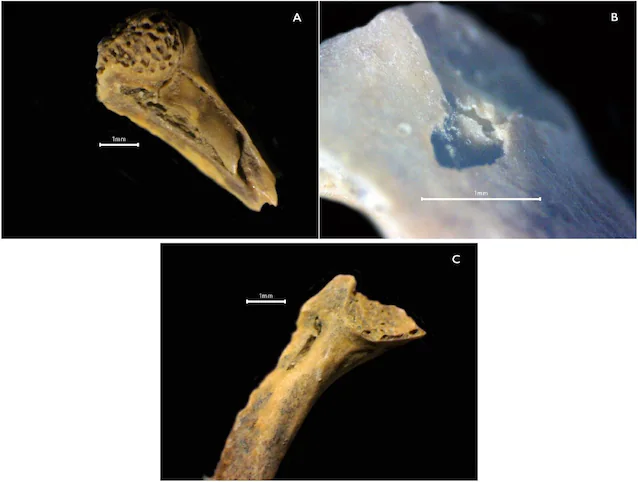
Deposit formation is consistent with this reconstruction. In fact, archaeological evidence indicates that the ditch was filled in a single episodeprobably between the 2nd and 3rd centuries AD
The authors also hypothesize that the environmental transformations of the Roman era have favored the presence of birds of prey: the retreat of wetlands, reclaimedthe formation of open spaces caused by deforestation and the presence of pools and small bodies of water would have created suitable conditions both for the hunting of owls and for the reproduction of amphibians.
It remains to be clarified so that predators could frequent that area of the settlement undisturbed: Short-eared owls are in fact animals shynot inclined to stop in places regularly crossed by people and other animals.
One possible explanation is that the area, for some reason, may have been little frequented during autumn and winter (time of year of death of the amphibians) or used for seasonal activities. However, these are hypotheses not demonstrated directly by the finds.

The accumulation of bones it would therefore not be the result of a collective sacrificeas previously believed, but the indirect testimony of an episode of predation which occurred around 1800 years ago. A seemingly enigmatic deposit that gives back ecological information on the relationships between wildlife, environment and human settlements in Roman times.