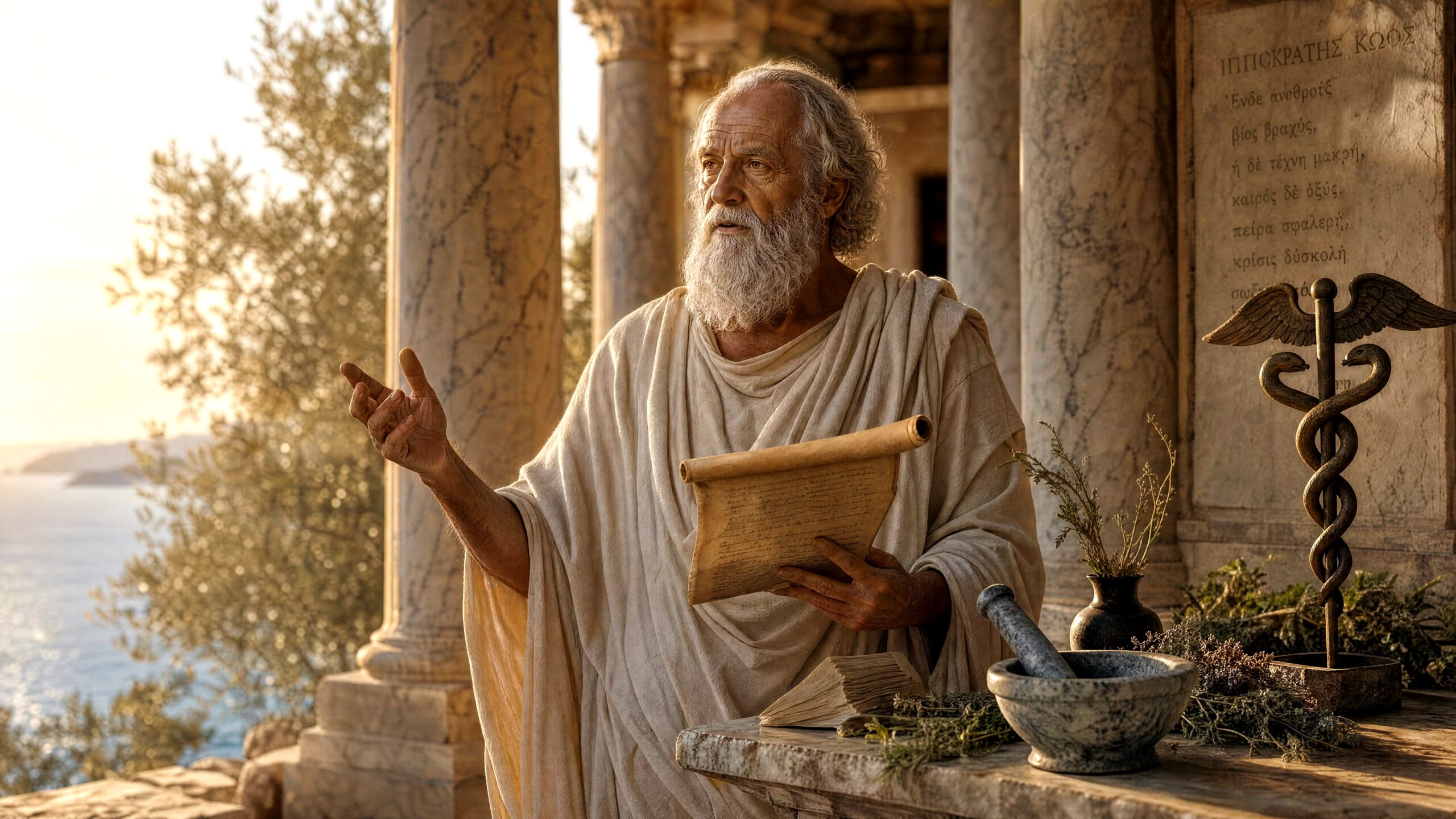
From magical-religious rites to a science based on empirical observation: this was the change that medicine underwent thanks to Hippocrates of Kos. His legacy does not lie in individual discoveries, which are now outdated, but in his rational and scientific approach.
Hippocrates of Kos (or of Kos), born in 460 BC. C. and died in 370was a Greek doctor, considered the father of Western medicine. He lived in an era of great flowering of Greek culture and was capable of making an extraordinary contribution to scientific progress. Before him, medicine was based on magical-religious explanations. Hippocrates developed a rational conceptionbased on the observation of the patient, the diagnosis of the disease and the prognosis of the possible course. For the first time, the medicine became a science. Hippocrates was the author of numerous works (although it is not known which were written by him and which by his followers), including the famous Oath of Hippocratesstill the basis of medical ethics today.
Who was Hippocrates of Kos
Biographical information on Hippocrates they are very incomplete and based largely on sources after his lifetime. Probably, he was born around 460 BC. C. on the island of Kos, Greece. His family, made up of Heraclides and Phenarete (Praxitea, according to other sources), was aristocratic and passionate about medicine.
His father, Heraclides, was also a doctor. The young Hippocrates received his first training in Kos and traveled to different regions of the Greek world to deepen his knowledge. The stages of his travels are not known, but it is certain that he stayed in Thessaly, where according to tradition he spent the last years of his life. He probably had two childrenThessalus and Draco, both doctors. He died around 370 BC in Larissain Thessaly.
The principles and thoughts of the father of scientific medicine
Hippocrates revolutionized the concept of medicineto the point of being considered the founder of modern medical science. It should be remembered that, until the 5th century BC. C., medicine was based on theurgythat is, on magical-religious beliefs: doctors tried to obtain the healing of the sick through the intercession of the divine, sometimes leading them to temples of Asclepiusthe god of medicine.
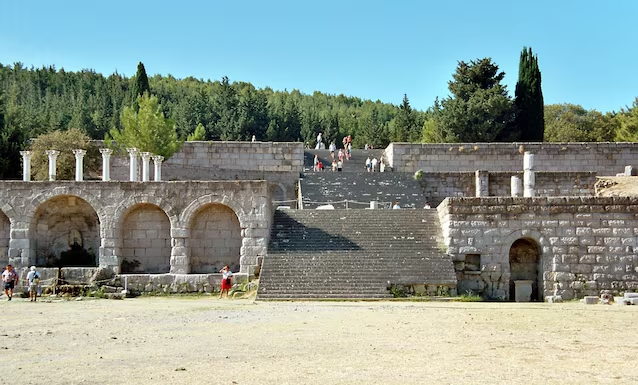
Hippocrates introduced a new approach, proposing to study diseases “scientifically”. and, consequently, diagnose and prescribe treatments. For this reason he observed the patient and he studied the symptoms rationallyobserving the conditions and, subsequently, the course of the diseases. Hippocrates was also interested in environmental conditionsas well nutrition and lifestyle of the patient: he had understood that these elements heavily influence people’s health.
Based on empirical observations, Hippocrates developed the humoral theoryaccording to which health depended on the balance of four humors present in the body: blood, phlegm, yellow bile and black bile. When the four humors are balanced, the individual is healthy; when one prevails over the others the disease develops. Furthermore, a person’s temperament derives from moods.
Today we know this theory has no scientific basisbut it nevertheless constituted an invaluable advance and has been the basis of medicine for many centuries.
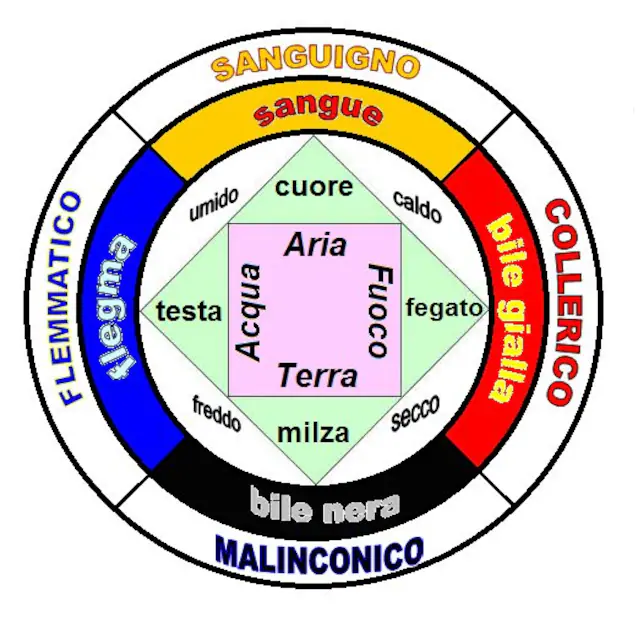
A curiosity. Hippocrates and his followers believed that the prevalence of one or another humor also influenced the mood of people. For example, if black bile prevailed a person was melancholic; if the yellow one prevailed he was angry. Therefore today the word mood is also used to indicate the psychological condition of a person.
The works and the oath
They are attributed to Hippocrates approximately sixty medical textscollected in Corpus Hippocraticum. The texts helped found medical science and started a slow but unstoppable progress. Among the treaties of Corpus include:
- Of epidemics (Epidemics), with descriptions of diseases and clinical observations on patients.
- Of airs, waters and places (De aere, aquis et locis), which analyzes the influence of environment and lifestyle on health.
- Prognostic (Prognostikon), which deals with the signs through which the doctor can predict the evolution of diseases.
- Fractures (De fracturis), dedicated to fractures and their treatment methods.
It is impossible, however, determine which texts were personally written by Hippocrates and which from other doctors who followed his teaching.
What is certain is that the Corpus Hippocraticum also includes the very famous Oathwhich every doctor had to pronounce. The oath establishes some fundamental principles of the medical professionsuch as respect for the patient and the obligation to limit damage as much as possible
I will regulate the standard of living for the good of the sick according to my strength and my judgment, I will refrain from causing harm and offense.
I will not administer to anyone, even if requested, a deadly drug, nor will I suggest such advice; similarly to no woman will I give an abortifacient medicine.
(…)
In whatever house I go, I will enter for the relief of the sick, and I will abstain from any offense and voluntary damage, and among other things from any corrupting action on the bodies of women and men, free and slaves.
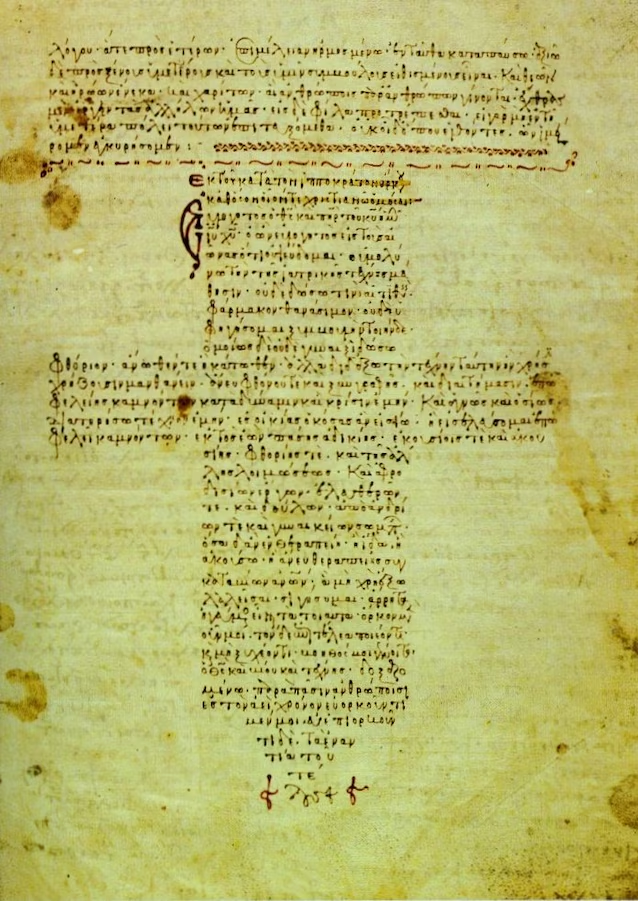
Even today, despite the enormous social and cultural transformations that society has undergone, the oath remains at the basis of the professional ethics of doctors. However, we do not know whether the oath was personally written by Hippocrates.
The legacy of the Greek doctor
The main legacy of Hippocrates it does not reside in individual discoverieswhich today we know to be without scientific foundation: Hippocrates did not know, for example, the modern theory of microbes and infections, nor much other knowledge of modern medicine. The doctor, however, left another, and more important, legacy: the idea that medicine is not a magical-religious practice, but a rational sciencebased on experience and observation. Starting with Hippocrates, doctors understood that they had to study the patient carefully and, only on the basis of observation, formulate the diagnosis and prognosis on the possible course of the disease.
Furthermore, we owe the discovery to Hippocrates the importance of dietexercise and lifestyle in maintaining health.
The influence of Hippocrates passed from Greek to Roman medicineespecially through Galen, the famous doctor who lived in the 2nd century AD
In the following centuries, the name of Hippocrates remained the very symbol of medicine.
Even today the name is associated with the idea of a medicine based on observation and ethics professional.
Sources
Massimo Fioranelli and Pietro Zullino, I, Hippocrates of Kos, Bari-Rome, Laterza, 2008,
Hippocrates, the father of clinical medicine and Asclepiades, the father of molecular medicine
Giorgio Cosmancini, The long art. History of medicine from antiquity to today, Laterza, 2011