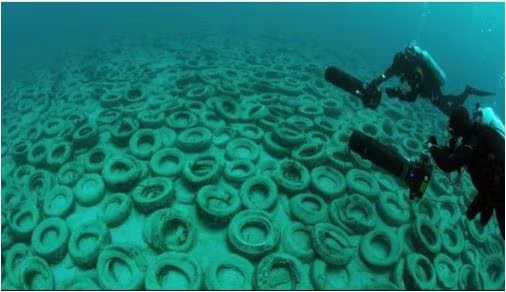
In the 1970s, Florida threw between 1 and 2 million tires into the sea to create an artificial reef. Osborne Reef was intended to become an oasis for fish and plants but the project turned out to be an ecological disaster that is still being cleaned up today.
In the early 1970s, Florida had a problem: mountains of used tires which filled landfills and could not be disposed of. A group of fishermen, divers and local politicians got the green light to implement an idea that seemed ingenious at the time: tying them together and anchoring them to the seabed 1.3 miles offshore (about 2 km) off the coast of Fort Lauderdale (in Broward County) to make them a artificial coral reef. After a short time, the project turned out to be a failure and over the years it has become one of the most studied cases of what not to do at sea. The reason was simple: to hold the tires together there were only nylon ropes and steel clips which were destroyed with the arrival of the first hurricanes, causing the tires to damage the existing coral reefs which on paper they wanted to imitate.
According to the Florida Department of Environmental Protection (FDEP), they ended up in the water between 1 and 2 million tyres. Being hollow donuts, the creators of the project were convinced that they would become a perfect labyrinth of dens and shelters for fish. But to work, an artificial reef must be stablethe corals that form natural reefs, in fact, attach themselves to the seabed and grow slowly over the years, generation after generation.
The tires did not, being tied only with nylon and steel clips they moved and, as the magazine explains US Navy Currentsa few seasons of hurricanes and tropical storms were enough to break and corrode them. Within three years many had already been moved and in time they spread out over approx 34 acres (about 14 hectares). Additionally, the smooth rubber was more attractive to certain species of algae than to corals and other reef organisms.
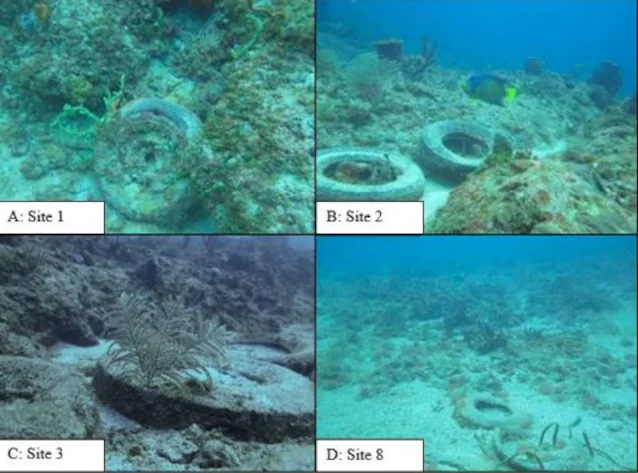
The paradox is that the fake barrier has damaged the real one. Ahead of Fort Lauderdale is the Florida’s Coral Reef which, according to the Florida Senate, supports 71,000 jobs and is worth 1.1 billion dollars the year in tourism. The 2024 FDEP survey, done with sonar and artificial intelligence, found tires in all four reef complexeson a strip approximately 8 km long, also next to colonies of staghorn coral (Acropora cervicornis), protected species.
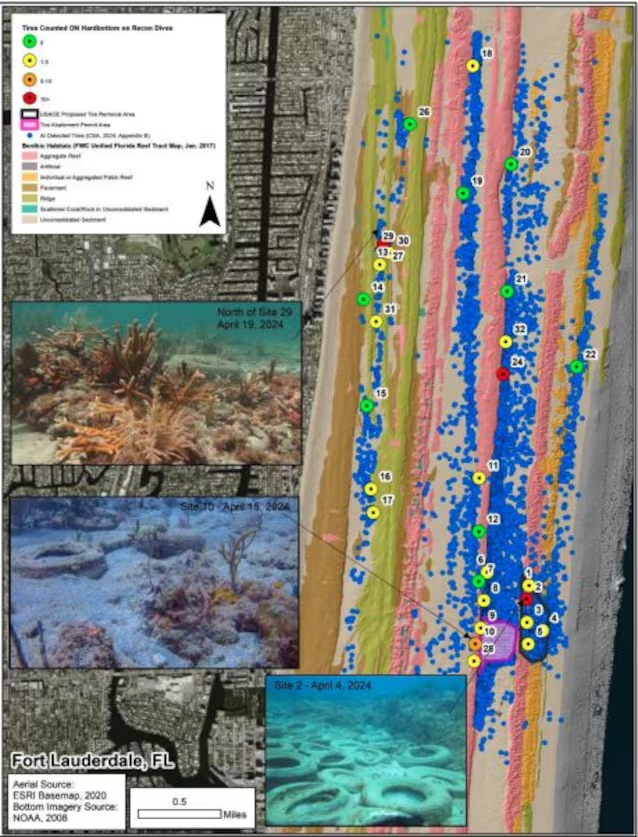
The first attempt to recover the tires was made in 2001 and cost over $17 per tire. In 2006 the NOAA Marine Debris Program (the US federal agency program dedicated to marine waste) funded a survey to understand how to recover and dispose of it. The turning point came by transforming the reclamation into training: between 2007 and 2009 Navy, Army and Coast Guard divers recovered over 72,000slinging them into nets raised with inflatable balls, at about $2 each. The tires ended up in Georgia as fuel for cement and paper mills. Since 2015 the work has passed to the FDEP: at the end of 2025 the tires recovered were approximately 600,000. But the 2024 survey still had about it 521,000 visible on the seabed.
With the Restoration of Osborne Reef Act of 2023 Florida asked the FDEP to go beyond removal. On the cliff the tires will be carefully lifted, and those stuck in the rock will even be able to stay where they are, if removing them would cause more damage. The plan then envisages removing the corals grown on the tires to replant them on the nearby reefs (1,400 had already been moved by May 2024) and transplanting around 98,000 colonies grown in the nursery. Estimated cost: approx 137 million dollarsin a maximum of 14 years, funds permitting. In FDEP projections, tire removal will continue at least until 2033.
