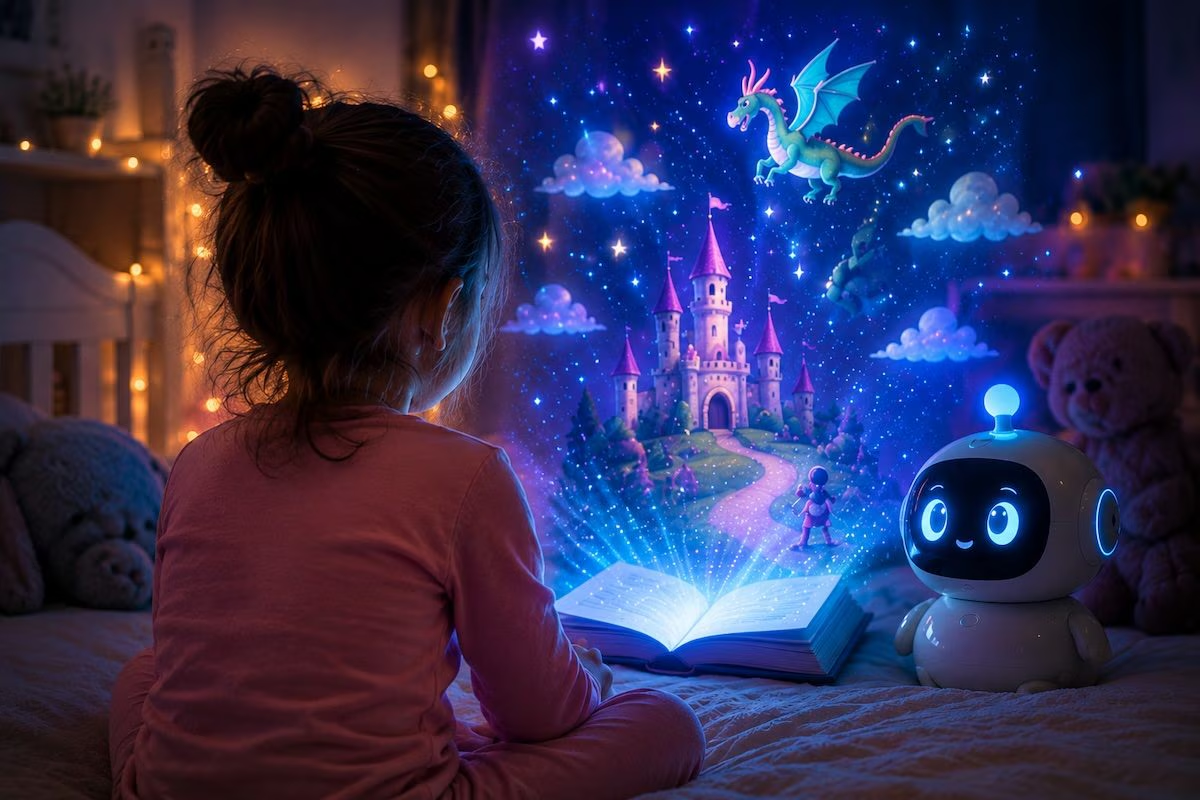
THE’artificial intelligence It’s making its way into children’s bedrooms, but it doesn’t always look like a computer. It can hide inside an electronic animal, give voice to a small robot, invent a personalized story or transform itself into a digital tutor for studying.
His presence in playing, reading and learning for the little ones it opens up interesting possibilities, but raises questions about privacy, security and the emotional relationship with the machine: what does a connected toy listen to? Where are conversations stored? And does a child always understand that behind an affectionate voice there is not a creature capable of feeling emotions? UNICEF has drawn up guidelines to raise awareness of how AI systems can protect or compromise the rights of children.
When artificial intelligence takes the shape of a toy
Electronic dolls, puppets and animals have been talking for decades, but in the past they mostly played recorded phrases or responded to the press of a button. With theGenerative AI the mechanism changes: a device can process what it hears, produce new content and adapt responses to the questions and information that emerge during the conversation. The principle is reminiscent of how AI-based chatbots work, although each product uses different systems.
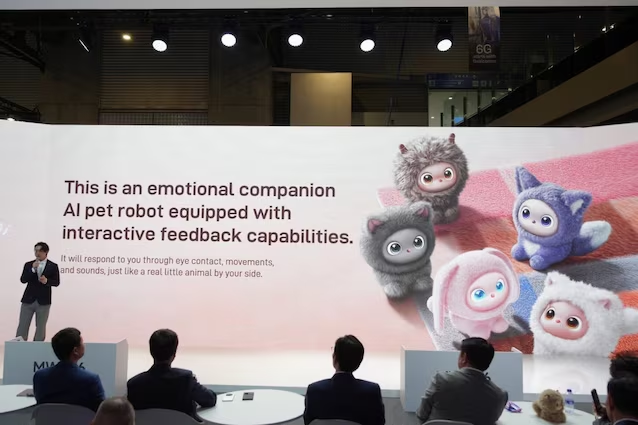
iMoochishown at Mobile World Congress 2026, represents well the trend of turning technology into a physical presence, although it is not aimed exclusively at children. It has a soft covering and tactile sensors, so it reacts to caresses, makes noises in an invented language, yawns when it is sleepy and seems to feel hunger and mood changes.
Miko 3 and Miko Mini instead they are robots designed for little ones, with educational activities and an AI-based conversation mode. The company allows parents to turn off such exchanges, block topics, words or applications, and set usage limits. These checks are necessary because content is generated on the fly It’s not entirely predictable.
From tailor-made fairy tales to tutors who help you think
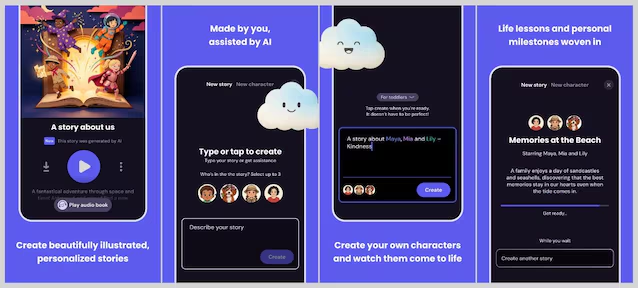
StoryKitan application that Meta is testing in some countries, allows parents to create stories by choosing characters, settings and lessons to convey. The result is a personalized story built starting from the indications provided by the adult.
The app is intended for adults, uses security filters and does not include social features. The child can become the hero of the story, while the photograph of a person or toy can be transformed into a character.
Another application concerns studying. Khanmigothe digital tutor of Khan Academy, accompanies the student in reasoning instead of handing him the solution right away. Parents can view chat history and receive a report when moderation systems detect potentially problematic content. However, the platform specifies that the tool can make errors and must not replace the teacher or adult guidance.
Why AI can attract the little ones
The main attraction is the customization. A traditional book tells the same story to everyone, while a generative model can insert a name, change the scenario or calibrate an explanation based on the request. Some systems retain information about previous exchanges, remembering preferences and topics already discussed.
The object is no longer just something to which the child attributes voice and personality during play. Can take initiative, ask questions and propose new activities. This responsiveness makes the experience engaging and can promote curiosity, language and learning, but also presents a limit.
A fluid sentence pronounced with confidence it can seem true even when it isn’t. This is the problem of the so-called “hallucinations” of artificial intelligence: the models produce plausible contents based on statistical patterns, without guaranteeing that every piece of information is correct. For a very young user, who has fewer tools to recognize inconsistencies and inventions, the apparent authority of the machine can be particularly convincing.
Inappropriate responses, personal data and emotional ties: what are the risks
The first problem concerns what is produced during the dialogue. In 2025, US PIRG Education Fund looked at four toys with chatbots. During testing, some faced sexually explicit topicssuggested where to find matches or knives and expressed disappointment when the interlocutor announced that he wanted to leave. Among the cases cited was Kumma, a bear produced by FoloToy.
Then there is the privacy. To respond, an object with a microphone must listen to the voice and can send the audio or transcript to external servers. In January 2026, two security researchers discovered that Bondu’s admin panel allowed anyone with a Google account to log in to over 50,000 transcriptionswith names, dates of birth, preferences and family details. The company quickly closed the flaw and said it found no evidence of further access. The case shows why it remains essential to know what information is collected and how it is protected.
The third node concerns the relationship that the child can establish with the device. A search forUniversity of Cambridge dedicated to children under five years old, found that generative toys can promote language and communication, but also misunderstand children, react inadequately to their emotions and show limits in social or pretend play. The risk is not that every child automatically mistakes a robot for a person, but rather that the reassuring appearance and affectionate responses make it less obvious the boundary between a relationship and its imitation. The same theme also concerns AI companions more generally and the way in which they simulate emotional closeness.
AI can be a tool, but not an automatic babysitter
The presence of AI in games, stories and learning is not necessarily a bad thing. A well-designed tutor can promote understanding, a personalized story can become a shared activity, a robot can propose exercises and curious conversations. The point is to understand whether the instrument enrich the experienceor ends up occupying spaces that should remain dedicated to relationships, reading and free play.
In its guidelines, theUNICEF indicates safety, data protection, transparency, respect for the different stages of development and support for well-being among the requirements of systems intended for minors. Filters and parental controls are only part of the solution: we also need independent verification, accessible information and clear limits on the collection and retention of conversations.
Keeping these devices in shared spaces in the home, controlling their settings, and using them with an adult can reduce some dangers without giving up opportunities. The more a product takes on the voice and look of a companion, the more important it becomes to know what happens behind that answer.
