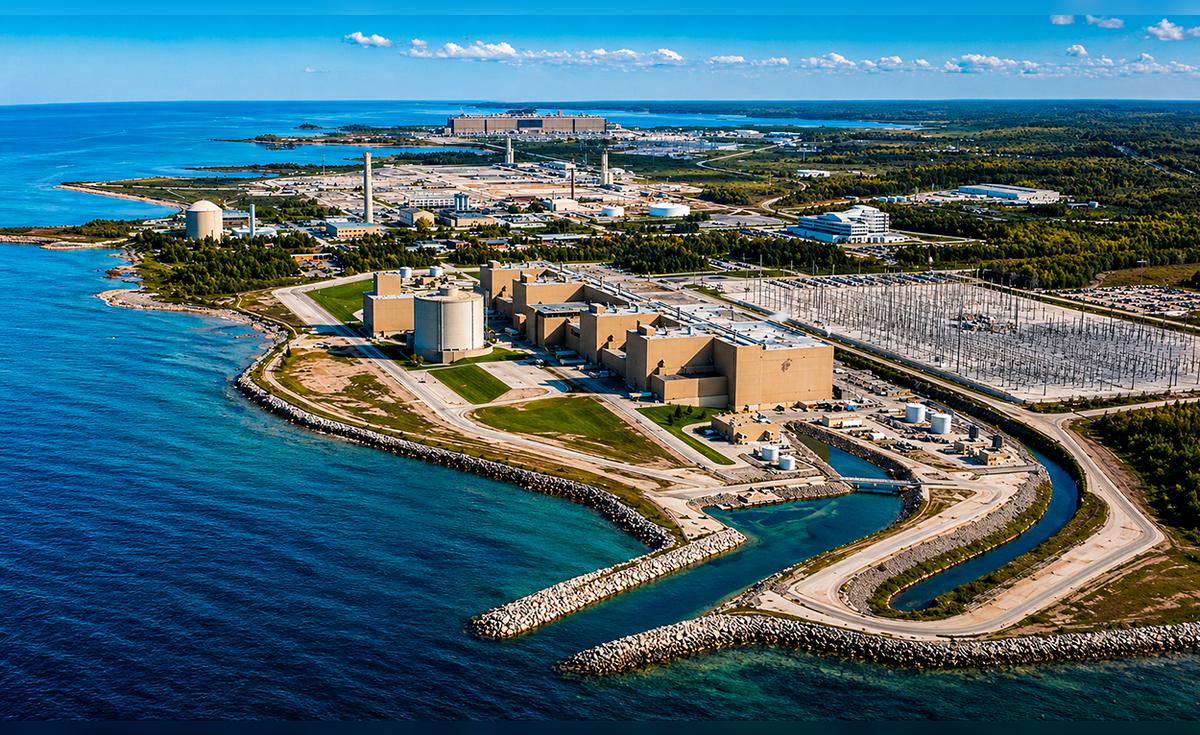
The nuclear power plant with the greatest uninterrupted activity resides in America and reaches almost 7 GW of maximum power. This complex exceeds 4,000 MW registered in Chernobyl during 1986, a scale that the IAEA highlights within the global electricity supply. The leadership of said infrastructure is based on the effective availability of its units rather than on the simple nominal installed capacity.
However, it is valid to specify that Kashiwazaki-Kariwathe Japanese giant, remains outside the comprehensive operational podium due to not being fully operational since Fukushima. Although TEPCO reactivated Block 6 this year, subsequent delays in its commercial return due to a minor electrical leak prevented the Asian facility from displacing the American colossus, according to Reuters. Currently, technical stability defines which facility leads the world’s atomic energy generation.
What is the largest nuclear power plant in continuous operation with almost 7 GW, above Chernobyl before the accident?
Bruce Nuclear Generating Stationunder the management of Bruce Power in Ontario, Canada, holds the title of the largest continuously operating facility of its type in the world. The complex resides on the eastern shore of Lake Huron, specifically near Tiverton, where it uses pressurized heavy water CANDU technology to power turbines and supply electricity. This infrastructure integrates eight reactors distributed in two main sections called A and B.
The current power of the site reaches up to 6,550 MWa figure that represents a current maximum clean energy capacity higher than the levels reached by Chernobyl prior to its tragedy in 1986. That massive performance positions the plant as a fundamental pillar of the Canadian electricity system. In fact, such nuclear plants satisfy approximately 50% of the total consumption in their geographical region.
The project arose during the 1960s after the success of Douglas Point, the pioneer of national commercial modules that entered service in 1967. Building work began two years later to expand the network to the current units. Today, this North American megaconstruction exceeds in scale any other energy base of its kind within the American continent.
What future awaits the Canadian plant?
The plant promotes the Bruce C project, an ambitious expansion to enable 4,800 additional MW in its current property. According to the Canadian Impact Assessment Agency, the proposal ranges from soil conditioning to the definitive closure of a plant with an estimated useful life between six and ten decades.
This initiative is going through a phase of integrated federal analysis without yet representing a final construction resolution. Directors are seeking to create a nuclear supply option in Kincardine, within the territory of the Saugeen Ojibway Nation, as the government maintains that nuclear power has been the stable backbone of Ontario’s clean electricity system for years.
Apart from this expansion, the company is developing a technical renewal scheme to boost generation to 7,000 MW by 2030. Reports from World Nuclear News estimate that this work will inject close to 238 billion Canadian dollars into the national Gross Domestic Product (GDP) throughout its operational history.
What plants make up the list of the largest atomic complexes in the world?
Kori–Shin Kori, Hanul and Hanbit facilities in South Korea lead the top 10 along with Tianwan in China and Barakah in the United Arab Emirates. The global inventory also includes the French stations of Gravelines, Paluel and Cattenom, although experts suggest caution when comparing these infrastructures because some lists add nearby units or extensions under the same complex.
On the other hand, the Ohi plant in Japan appears in official records despite the partial restarts and regulatory reviews after Fukushima that condition its activity. The Japanese giant Kashiwazaki-Kariwa maintains the title as the main reference by installed volume; However, it lacks full current operation and remains excluded from any ranking based on constant electricity production.
Top 10 of the largest nuclear power plants in the world. Photo: LR-MB
Plans to secure the reactor after four decades of the disaster
40 years after the explosion in Chernobyl reactor 4, the commemoration of this catastrophe takes place under the shadow of the war conflict in Ukraine. Reuters reported that the protective arch over the damaged unit requires urgent repairs valued at 500 million euros due to war-related deterioration. This historic incident transformed Pripyat into a global emblem of desolation and mass evacuations following the release of radioactive material in 1986.
The International Atomic Energy Agency (IAEA) demands the full restoration of the New Safe Confinement to prevent greater risks. Rafael Grossi warned that timely and comprehensive rehabilitation “remains essential to avoid further degradation and ensure long-term nuclear safety.” Although the entity did not detect immediate radiological increases or failures in the supporting elements, the current structure lost primary shielding functions.
