
A small rock shelter of the Eastern Carpathiansin Romaniais offering new insights into the technological capabilities of Neanderthal: the site is called Abri 122/1200and is found in the Vârghiș Gorgesat Mereștiwhere the latest archaeological research has revealed a rich Middle Paleolithic complex (between 120,000 and 50,000 years ago). The new study, with Monica Mărgărit of the University of Târgoviște as leader, was published in the Journal of Quaternary Science and focused on animal remains intentionally modified by man, to understand if the animal bones did not only constitute food waste, but given the alterations observed also tools to carry out technological activitiessuch as leather processing.
The context is particularly interesting because Abri 122/1200 preserves a substantial lithic industry and an abundant one fauna. Previous research had already documented remains of large herbivores, such as members of the dei family bovidsbelonging to the genres Boss And Bison, goats And cave bear (Ursus spelaeus).
The bones present a high degree of fragmentationcompatible with activities slaughter and exploitation of carcasses. Already during previous archaeological campaigns, fragments of long bones had been identified which seemed to have been produced through percussion, probably during the extraction of the marrow. Some fragments also had characteristics compatible with theirs use as tools.
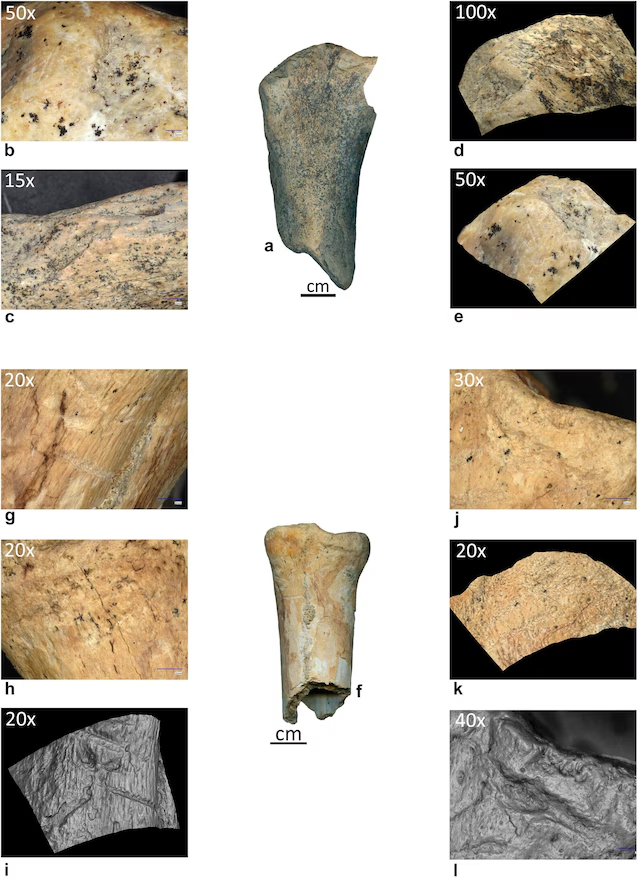
The new work brings attention precisely to this aspect: animal bones they did not necessarily constitute only food waste. The traceological analyses they have in fact highlighted how these have been deliberately exploited. Some fragments could be selected and modified for use, showing how Neanderthal technology was not limited to stone. Although these fragments were not frequently worked or adapted for precise use, their shapes or characteristics were perceived as useful for carrying out a certain task. The importance of the discovery therefore goes beyond the single find. The intentional use of bone documents a greater variety of raw materials available to Neanderthals and suggests that, alongside the production of lithic tools, these groups could exploit systematically also materials obtained from animal carcasses.
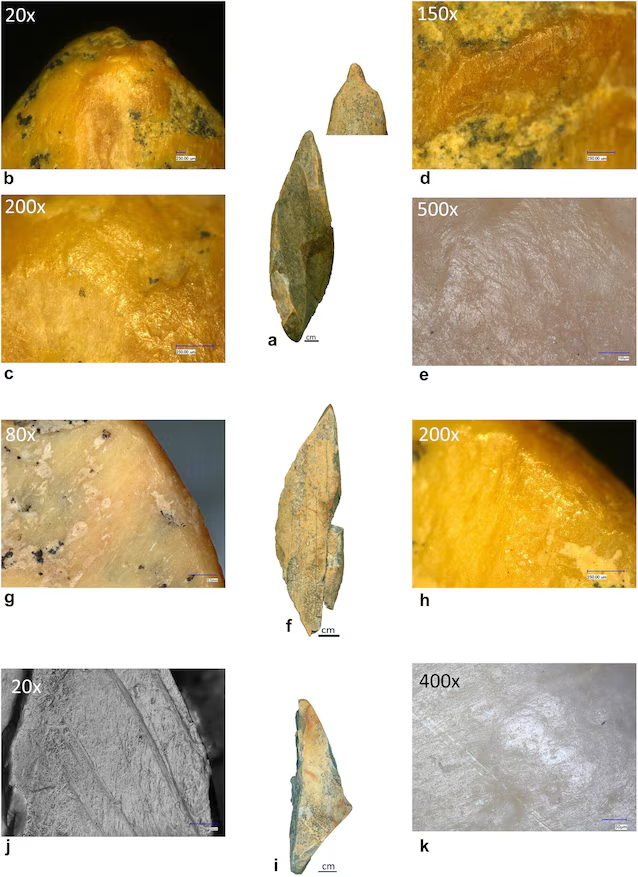
Abri 122/1200 is also a particularly important site for reconstruction the Neanderthal presence in the Carpathians. The most recent chronological research indicates that archaeological levels with Middle Paleolithic industry could date back to around 230,000 years ago. The evidence from the site thus contributes to an increasingly complex picture of Neanderthal technology: a system in which stone represented a fundamental component, but in which even the bones of animals exploited for food could become raw material for new activities.
