Artemis III will launch in 2027 with Italian astronaut Luca Parmitano as pilot of the Orion capsule. The mission will not reach the Moon yet, but will test Blue Origin and SpaceX landers in Earth orbit in preparation for the first crewed moon landing expected in 2028.
New ones revealed details of the Artemis III mission of NASA which will start in 2027 with the Italian ESA astronaut Luca Parmitano in the role of pilot of the Orion capsule. The four astronauts will not reach the lunar surface, but the mission, which will last approximately 14 days, will take place in low earth orbit and will serve as a “dress rehearsal” of the complex operations necessary to bring humans to the Moon again. The first moon landing crewed aircraft from the Artemis program is now planned with Artemis IV in 2028near the lunar south pole.
NASA is trying to speed up the Artemis mission, especially after China announced the launch (postponed to 2027) of the Chang’e-7 probewith the aim of searching for water ice at the Moon’s south pole.
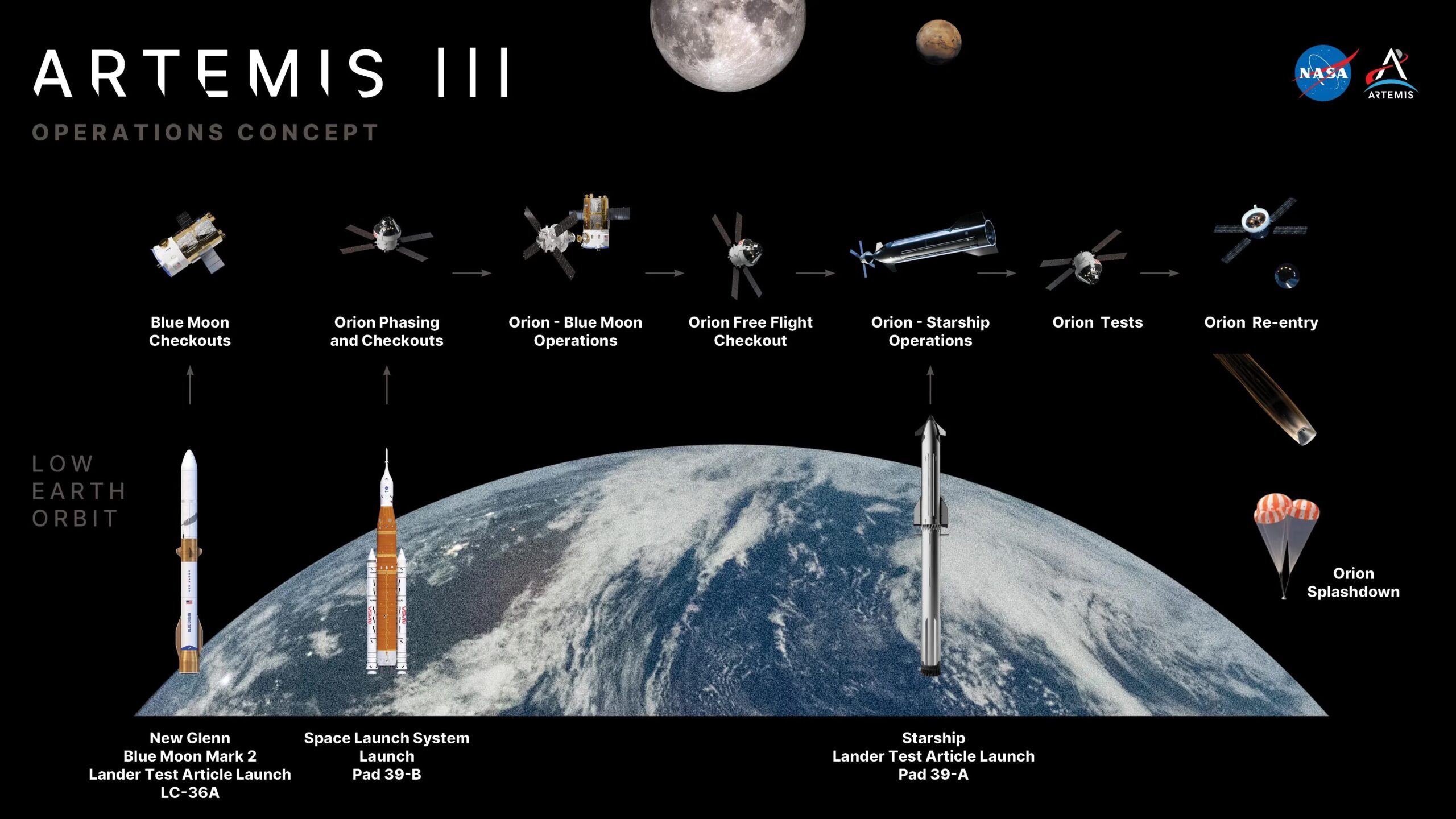
NASA astronauts will fly together with Parmitano Randy Bresnikcommander, Andre Douglas And Frank Rubio. The most spectacular and important task of the mission will be to do meet and hook up Orion in orbit with experimental versions of the two lunar landers currently being developed by Blue Origin, Jeff Bezos’ (Amazon founder) company e SpaceX, Elon Musk’s company. To do this they will be necessary three vehicles launched with three different rockets in the span of a few days, a configuration NASA has never experienced before. The goal is to test hardware, software, guidance systems, communications and operating procedures before attempting the same maneuvers much farther from Earth.
Parmitano’s role will be particularly important. As Orion pilotthe Italian astronaut will participate in the maneuvers necessary to approach and attach the capsule to the two experimental landers. Europe will also have a second fundamental role in the mission: ESA will provide the Orion European Service Modulewhich provides the capsule with propulsion, electrical power, thermal control, water and oxygen for the crew.
Artemis III will first test the Blue Moon lander and then Starship
The complex sequence of Artemis III mission will begin even before the astronauts launch. Blue Origin will throw first an experimental version of the lander Blue Moon Mark 2placing it in a circular orbit at approximately 440 km altitude. The vehicle will be able to remain in orbit for up to 30 daysgiving NASA some leeway in coordinating launches.
Only After have verified that Blue Moon is working correctly, they will leave from the Kennedy Space Center the Space Launch System (SLS) rocket, Orion and the four astronauts. Orion will initially enter an Earth orbit very ellipticalwhich will then be progressively modified using the European service module, until it reaches an almost circular orbit at approximately 555 km altitude. In the first two days Parmitano and the rest of the crew will check the capsule’s systems and prepare the first one rendezvous (the encounter between two spacecraft) with Blue Moon.
Once it reaches the lander, Orion will carry out the first hookup ever between the capsule and a commercial lunar lander. The astronauts they will open the hatch and enter in the Blue Origin vehicle, where they will spend approx two days controlling the internal environment, control systems, avionics and especially life support functions that will be used in future missions to the lunar surface. It will therefore be the first opportunity to verify in space how Orion and a commercial lander really work as a single system.
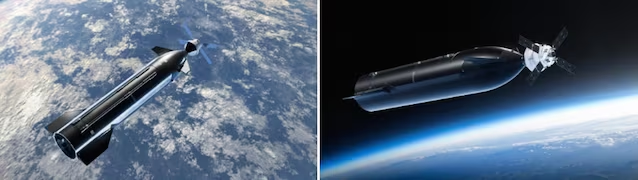
After separating from Blue Moon, Orion will have to prepare for a second meeting, this time with a SpaceX’s Starship Version 3. Starship will launch later because its experimental version is designed to remain in orbit for a shorter period and will be positioned at approximately 380 km altitude. Orion will then have to change its orbit again to reach it.
The docking with Starship it will last as long as possible two hours and, unlike what will happen with Blue Moon, the astronauts they will not fit in SpaceX’s vehicle. The objective will above all be to verify the behavior of the two coupled vehicles, the communications, the software, the controllability and the stresses produced during coupling and separation. The coupling geometry will also be different since Orion will connect laterally to the Blue Moon cabin, while with Starship it will use a docking installed on the front of the gigantic SpaceX vehicle.
A test mission before the moon landing in 2028
The reason so NASA turned Artemis III into one test mission in Earth orbit is to test for the first time all these systems directly, since doing so during a lunar mission would be far riskier. The astronauts will remain in Earth orbit relatively close to Earth and will be able to verify the procedures that will then be indispensable when a future crew has to transfer from Orion to a lander headed towards the south pole of the Moon.
In fact, the difficulty does not only concern individual vehicles. In fact, Artemis introduces a much more complex architecture than the Apollo missions which consists of the Orion capsule, commercial landers, different control centers and different companies that will have to communicate and operate as a single system. Artemis III will therefore also serve to understand how to coordinate NASA, ESA, Blue Origin and SpaceX during rendezvous And docking, maneuvers that require very high precision.
Once testing with Starship is complete, the crew will have up to five additional days to conduct other tests. NASA will further test Orion’s survival suits, the sensors used for the dockingthe acoustic and thermal conditions inside the capsule and the procedures that would allow astronauts to independently carry out some medical evaluations if it is not possible to immediately communicate with mission control.
They are also expected cell biology experiments and preliminary tests of the procedures that will be used to bring them back to Earth in the future samples collected on the lunar surface. Once the mission is over, Orion will re-enter the atmosphere and will land in the Pacific Ocean off the coast of California, where the crew and capsule will be recovered by NASA and the US Navy.
If all tests are successful, the procedures tested by Luca Parmitano and by the other three astronauts in 2027 they will become the base of operations for Artemis IVwith which NASA aims to 2028 to land astronauts on the Moon again for the first time since Apollo 17 in 1972.
