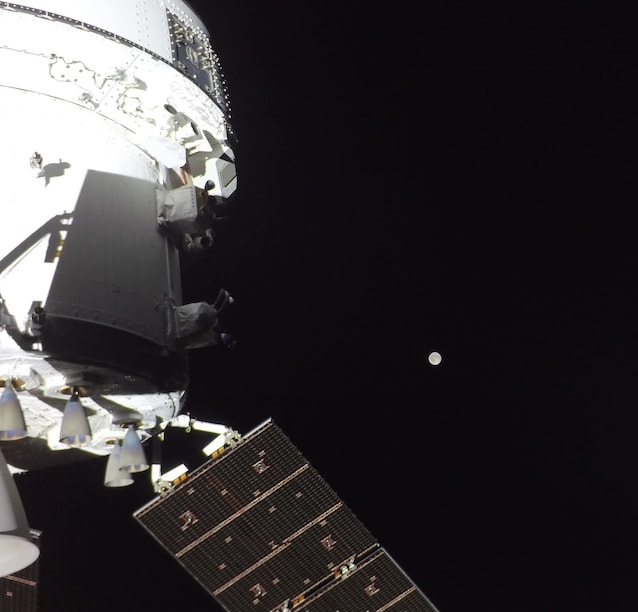
Two and a half days after the launch of Artemis II, the Orion capsule with the four astronauts of the mission on board it passed halfway between the Earth and the Moon: 244 thousand km from us, 200 thousand km from our natural satellite. In about two days Reid Wiseman, Victor Glover, Christina Koch and Jeremy Hansen will be the first to make a flyby of the Moon from the 1972the year of the last Apollo mission, which was also the last time humans went beyond low-Earth orbit.
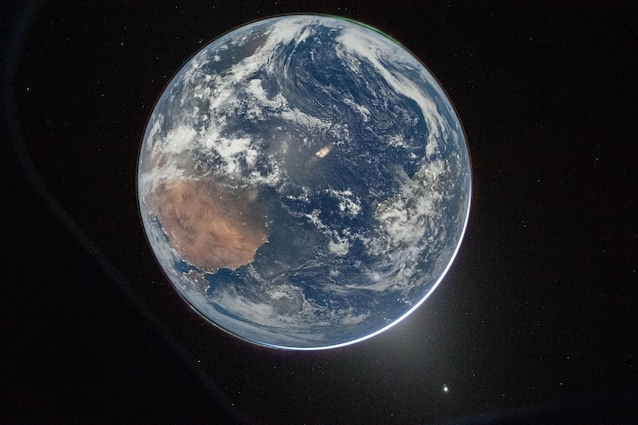
In these two days the astronauts of the mission and the cameras mounted on board the Orion spacecraft are giving us a gift extraordinary images of our planet seen from a distance that humanity has not reached for over half a century. Like this photo of the Earth seen in its entirety: it is the night side of the Earth (which is why the details are a bit scarce and confusing), illuminated by the ashen light of the Moon, i.e. the sunlight weakly reflected by our satellite. In this image we see the eastern portion of the Sahara Desert and the Iberian Peninsula, surrounded by the Atlantic Ocean. You can also see a lowercase one at the bottom right “crescent of Earth” illuminated by the Sun and, even further down and further to the right, a small bright dot: it is the planet Venus.
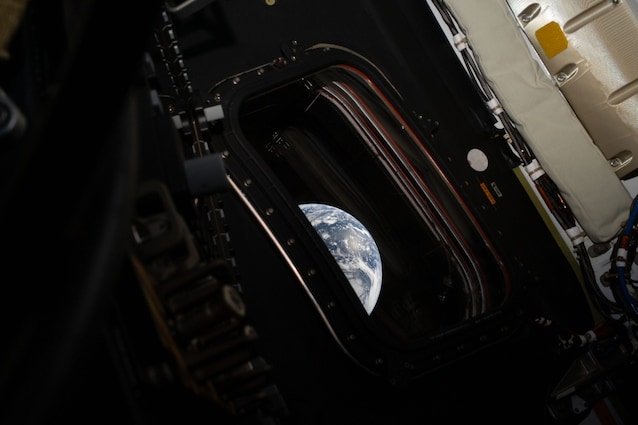
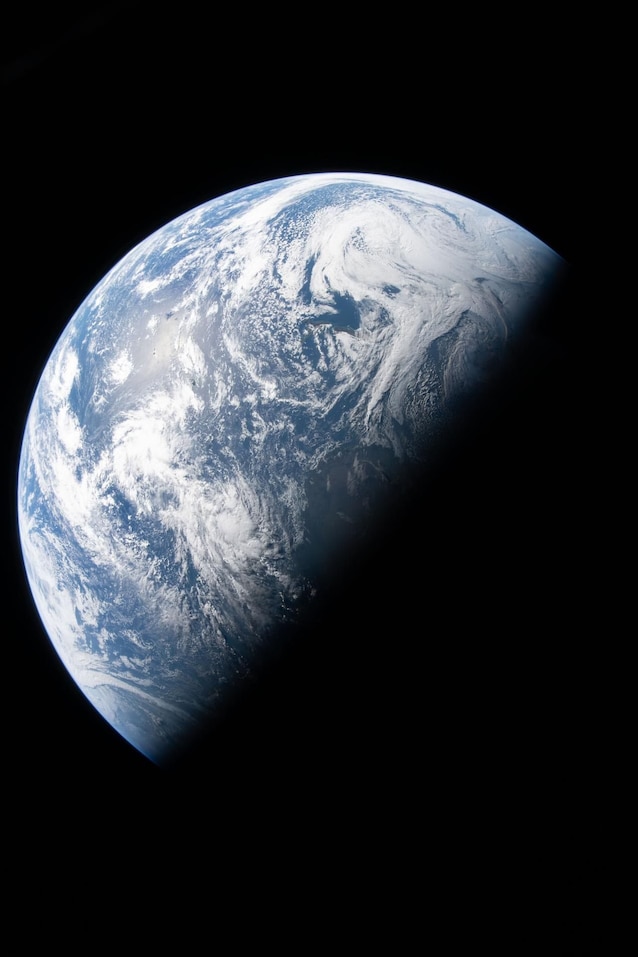
We have already seen images of Earth taken by the mission Artemis I at the end of 2022, but these are much more exciting because this time, on board Orion, there are human beings. Look for example at this photo in which the Earth peeks out from a porthole of the Orion spacecraft: it is an extraordinary view that has been closed to humanity for over half a century, and which has now become possible again thanks to Artemis II!
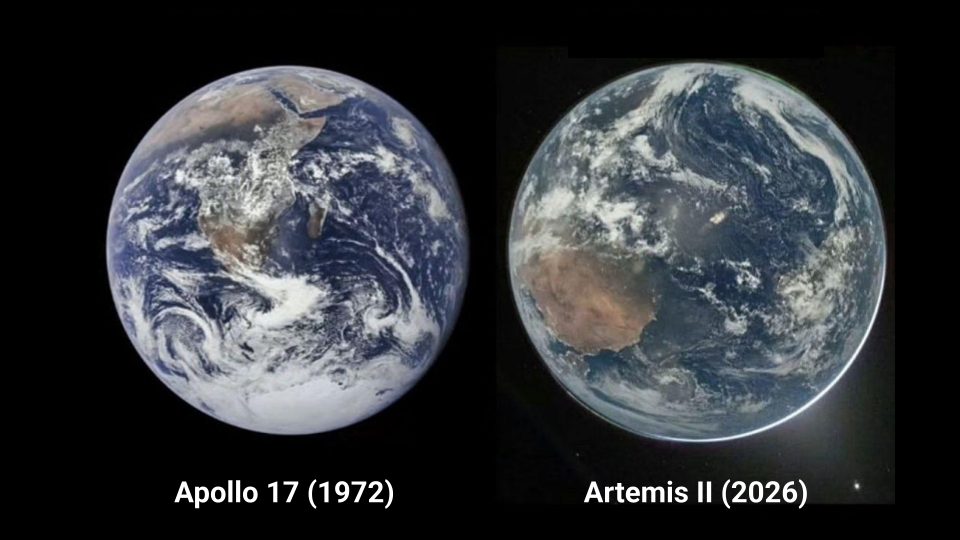
On the cover of this article we have included a comparison between one of the last images of the Earth seen in its entirety by human beings (with the Apollo 17 mission in 1972) and the first taken in the new millennium with Artemis II. Our planet doesn’t seem to have changed at all: blue as far as the eye can see, white clouds with their hypnotic geometries and the emerged lands, where we humans live.
It’s impressive to think about how little our planet has changed and how much we have changed: in 1972 there were 3 and a half billion of us, today we are over 8 billion. Technology has made great strides: we have the Internet, artificial intelligence, smartphones. But our fascination and wonder at seeing our planet from afar remains unchanged. And today with the Artemis program we want to return to the Moon with a more ambitious goal than then: to build a lunar base and establish continuous human permanence on our satellite.
Artemis II will not see a descent of astronauts on the Moon (for that we will have to wait until 2028 with Artemis IV) but it will be a fundamental step to test the maneuvers and systems that will allow future moon landings with humans on board. But there is no doubt that the emotion remains very high also for the “human” value of this enterprise: in two days, for the first time since 1972, four human beings they will be able to see the Moon up close with their own eyesflying over our natural satellite at a few thousand kilometers above sea level and observing what has always been impossible for us mere mortals to see: the hidden side of the Moon.