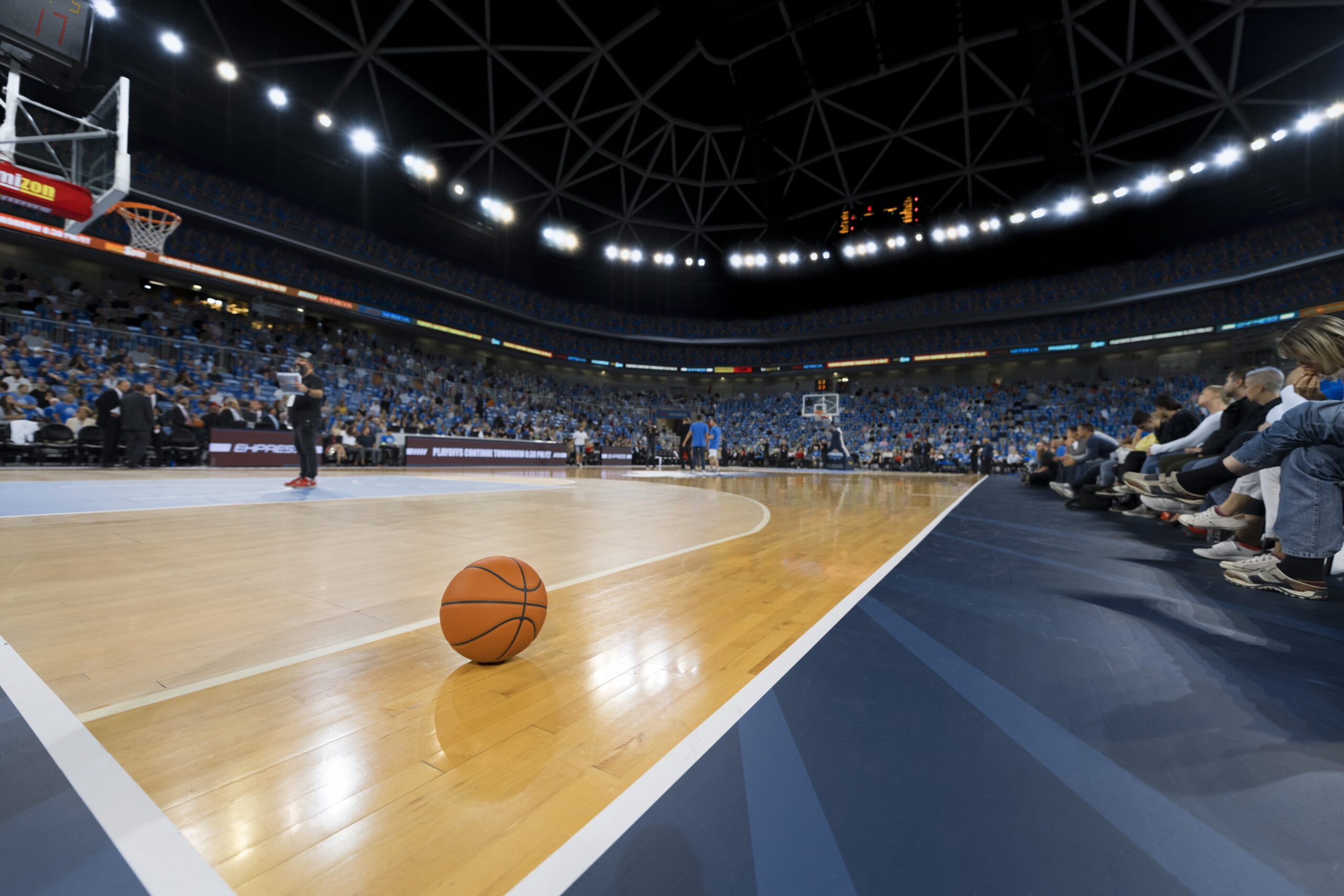
If you close your eyes and think of a game of basketball most likely among the first sounds that come to mind, together with the sound of the ball that bounces and “Swish “ of the retina, there is the “squeak ” of the shoes that make friction on the lucid floor in parquet. But have you ever wondered why you play right on the parquet? Although today it is scientifically proven that the wood offers unique advantages for athletes, its adoption was a happy historical coincidence. Basketball was born in 1891 within a gym of SpringfieldMassachusetts, and the first game was held on the surface that that structure already owned. It was only with the subsequent global diffusion of sport that it was understood how much that random choice was, in reality, the technically ideal solution due to the resistance and elasticity of the wood. From the absorption of impact to the surface friction, the “hard” wood of maple, oak and beech is still used in all basketball courts of the maximum competitions such as theNBA (National Basketball Association) or Europeans and World Cup organized by Fiba (International basketball federation).
The birth of basketball as a closed sport
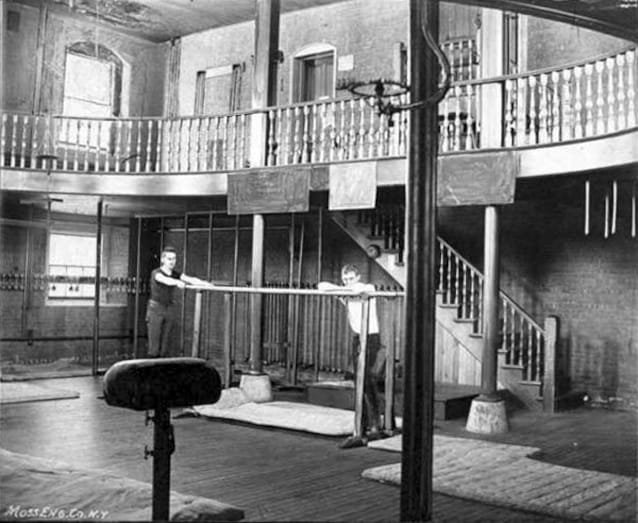
The history of the basketball court in parquet It is intrinsically linked to the very invention of sport. In the winter between 1891 and 1892, at the International Ymca Training School Of Springfield, Massachusetts – Today Springfield College, a physical education teacher named James Naismith he invented a new game to satisfy an assignment of his superintendent, the Dr. Luther Gulick. The goal was to offer students an indoor activity that was less inclined to accidents compared to American football and that maintained them active during the rigid winters.
The first game of “Basketball Ball“It was held… within one gym. The choice of the game surface was not based on performance but it was simply the existing floor which, as usual for the structures of the time, was in wood. For the baskets, on the other hand, they were used Two baskets of wicker For the collection of peaches nailed to the balustrade of the balcony of the gym.
The rules (13 initials) and the equipment used by Naismith, from the ball to the number of players, from the dribble to the baskets: everything has evolved and it was all modified, except for an element, Parquet as a game surface. This continuity has transformed a random choice into a strong tradition. From that distant winter, basketball has spread all over the world involving more than 300 million athletes. With the professionalization of sport, the wooden floor was coded as it standard and his propertyinitially not considered, were later scientifically validated as ideals.
Parquet science in basketball: the advantages of wood
The forces involved in basketball are manifold: continuous jumps, sudden shots, Repeetary changes of direction. On an area too hard (like concrete), the impact would be downloaded directly on joints athletes (ankles, knees, back), causing accidents.
It is precisely here that the unique properties of wood come into play. Materials such as themaple, oak or beech are classified as “hard woods” (hardwood) because their high density and compact fiber make them extremely resistant to continuous impacts, avoiding chips and dents. At the same time, they have aelasticity Natural that makes them ideal for the biomechanical needs of a sport such as basketball.
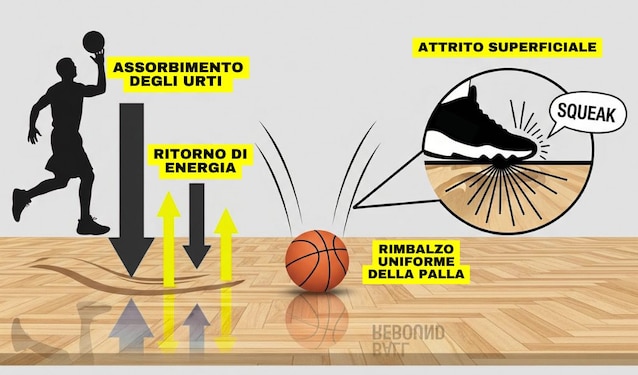
- Shock absorption (Shock Absorption): the ability of the floor of absorb the energy of an impactlike the landing of an athlete after a jump. A more “soft” floor dissipates a greater quantity of strength, reducing stress on ankles, knees and back of the athlete.
- Vertical deflection (vertical deflection): Define how much the floor sinks under the weight of the impact.
- Brace of the ball: the wood must guarantee the uniformity of the rebound of the ball over the entire surface. A good field must have a high and constant rebound in every point.
- Surface friction (Surface friction): It is the famous “grip” or the adherence of the surface, the one that makes the shoes “squeak”. The friction must be balanced, high enough to allow players to stop and change direction without slipping, but not so high as to block the foot and cause injuries.
To these concepts is added that of return of energy. The parquet absorbs the impact but also returns part of the energy, ensuring a rebound of the uniform and predictable ball and helping the push of the athletes during the race and jumps. In modern fields in Europe and America these properties are standardized and certified by international regulations such as the En 14904 and the standards EVEN THOUGH.
The existence of these complex rules is guided by a double necessity. First of all as we have already said, the athletes’ safety: a floor that does not correctly absorb impacts or that has a wrong friction can cause serious injuries. Secondly, thecompetitive equity: To ensure that a world championship is fair, a field in Milan must behave biomechanically in the same way as one in Manila or Los Angeles or the ball must bounce the same way and the surface must have the same grip.
The eye also wants its part: the iconic NBA parquet
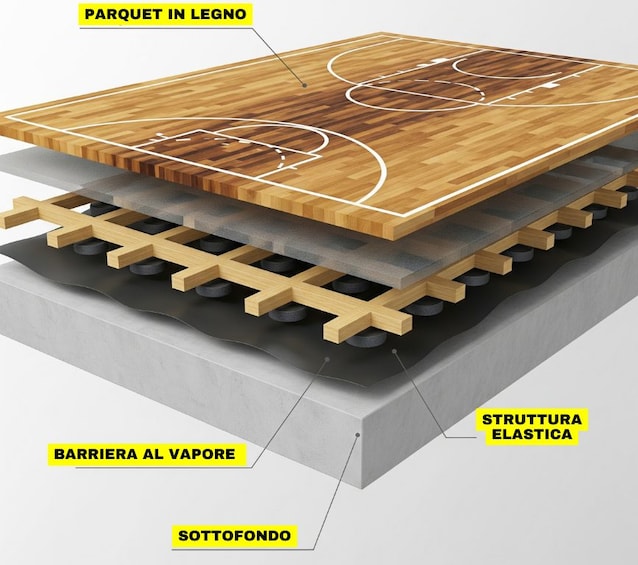
Wellness for athletes is one of the reasons that have allowed the persistence of parquet as the official surface of basketball but let’s face it, these floors also have an aesthetic impact not recently making the fields iconic and prestigious. A professional basketball court is not a simple layer of wood, but a complex multilayer system. A concrete or concrete base is placed a vapor barrier to protect from humidity. Above one is positioned elastic sub -structural (in foam or with wooden strips on rubber pads) which guarantees the absorption of impact. The final layer is the parquetfor which the choice of wood, which is finished with paints Able to give an excellent surface friction, it is essential.
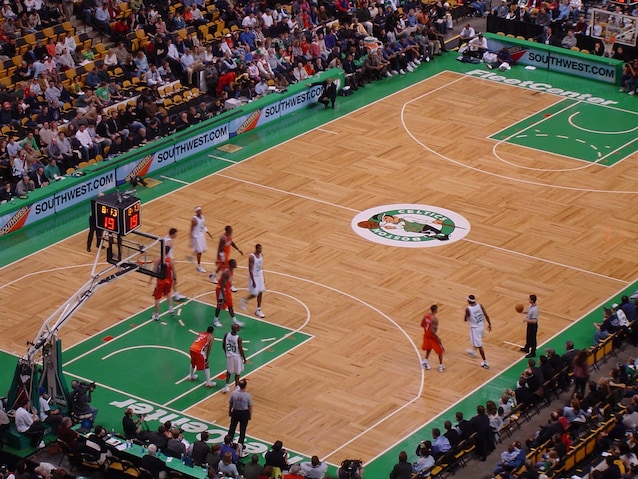
In the most famous championship in the world where the strongest players on the planet collide, the NBA (National Basketball Association) the standard is the American maple wood (Maple) which has excellent impact resistance and dents and with its light color it improves the visibility of lines and ball. The wood can be painted with the colors of the teams and “decorated” at will with drawings, logos and sponsors. The only exception on the type of wood is the historic parquet of the Boston Celticsthe 18 times NBA champions. Their field is made in red oak (Red Oak) woven Instead of the traditional maple since, due to the lack of fine timber in the second post -war period, the first parquet was assembled using wooden waste, and to keep them together they were arranged in that particular reason, which since then has become the iconic symbol of the team.
Wood, despite being the official material for the maximum world competitions, is not the only alternative for the surfaces of the basketball courts. In recent years, several alternatives have spread to respond to budget and versatility needs. For example the sortsynthetic uperifices Like those in PVCs, they offer great durability and water resistance, ideal for multipurpose gyms. A new technological frontier is represented by LED glass floors which form real “intelligent fields” already approved by FIBA – International Basketball Federationcapable of viewing lines, replays and statistics directly on the game surface.
