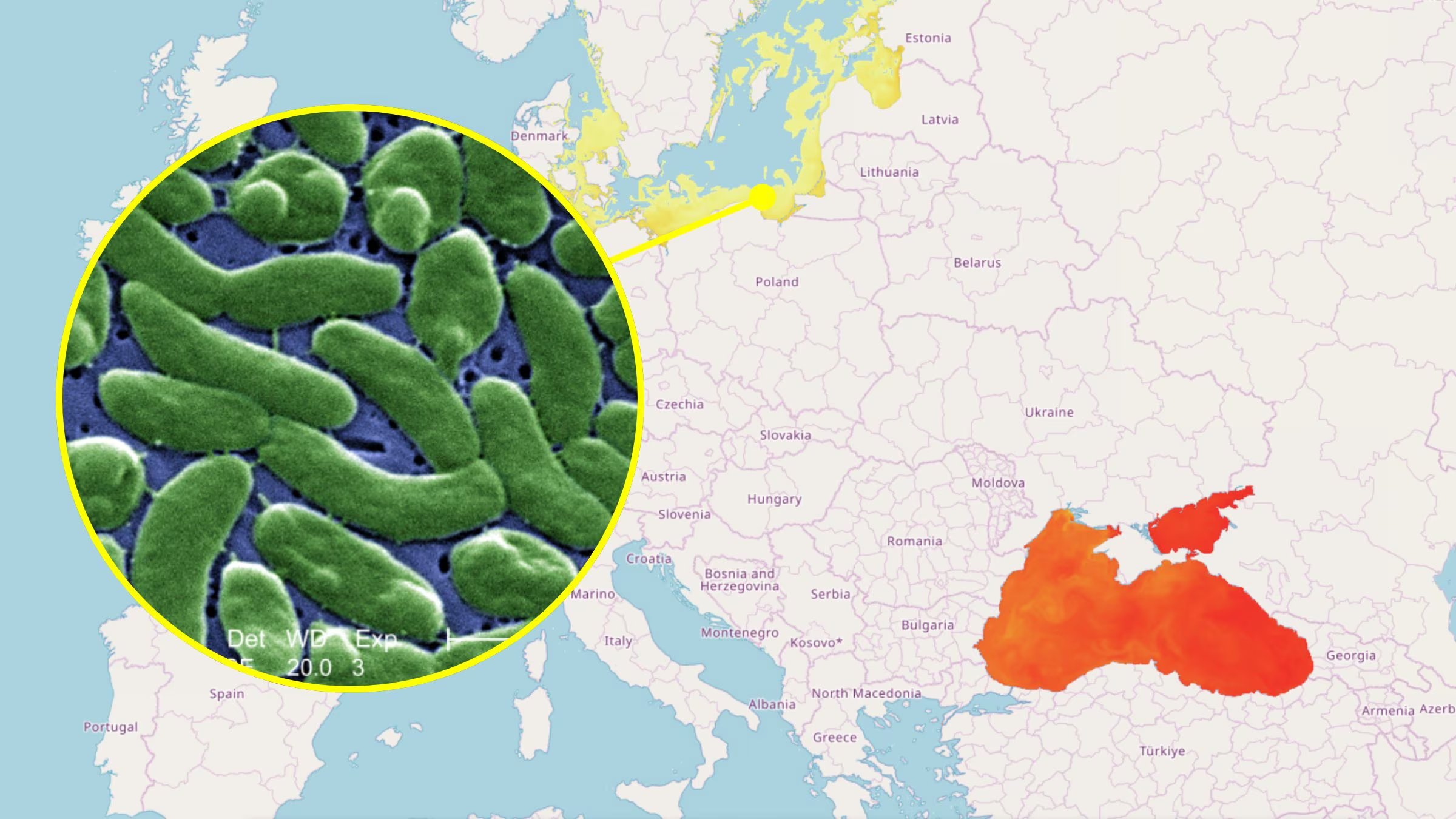
In the last few hours, the news of the alleged presence of the Vibrio vulnificus (known as “flesh-eating bacterium“) in the waters of Strait of Messina. In reality, everything seems to have arisen from the decontextualized sharing of a scientific study from the University of Messina dating back over twenty years ago (2005) and, probably, from the echo of recent news coming from United States. Overseas, in fact, the American CDC reports an actual increase in infections along the east coast, linked to the expansion of the bacterium.
The last one to reassure the situation of the Italian seas weekly bulletin (1-7 August 2026) of ECDCthe European Center for Disease Prevention and Control. Although climate changes and the progressive warming of waters are actually favoring the proliferation of this pathogen (contractible by ingestion or contact with open wounds) in other areas of Europe (such as the Baltic Sea or the Black Sea), Italy is not currently considered an exposed area.
The Vibrio Vulnificus in the Strait of Messina: a case from 21 years ago
The news circulating in recent days refers to a study, published in 2005 in the magazine Research in Microbiologybased on seawater and plankton sampling conducted even earlier, between 2002 and 2003. It is therefore not a recent findingnor the consequence of new monitoring in the field: it is research from two decades ago, which has come back into circulation without the correct temporal context.
The 2005 study documented the presence of the bacterium in the Strait in very low quantities, mostly detectable only through molecular biology techniques (PCR) and not through traditional laboratory cultures, a data consistent with a sporadic presence and not with a worrying spread.
How the flesh-eating bacterium is contracted and symptoms: data from the CDC
According to the CDC (US Center for Disease Control and Prevention), the Vibrio vulnificus it is a bacterium that lives naturally in some coastal waters, particularly brackish ones and more warmwith a greater presence between May and October. It belongs to the Vibrio group, whose infection in humans is called vibriosis.
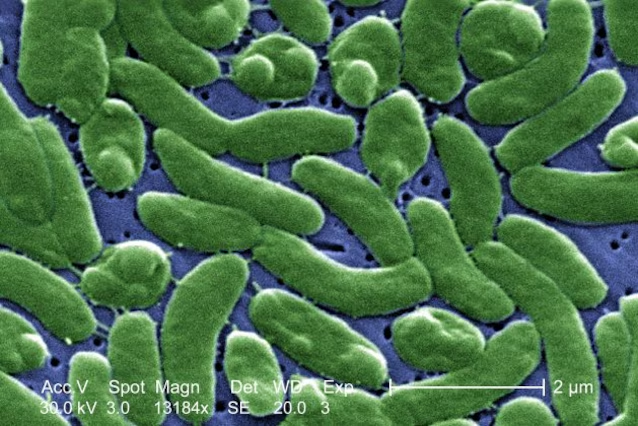
Contagion occurs mainly in two ways: through one open wound exposed to contaminated sea or brackish water, or through the consumption of raw or undercooked seafoodespecially oysters. In the case of ingestion, the symptoms manifest themselves with watery diarrhea, abdominal cramps, nausea, vomiting and fever; in the case of skin exposure, redness, swelling, pain and, in the most serious cases, a rapidly progressive soft tissue infection (necrotizing fasciitis) may appear.
The CDC’s September 2023 HAN (Health Alert Network) note specifies that approximately 150-200 infections from Vibrio vulnificus and that approximately one in five people affected do not survive, sometimes within 24 to 48 hours of the onset of symptoms. The same note highlights how infections on the US east coast increased eightfold between 1988 and 2018, with an expansion of the geographic range of approximately 48 km per year, a phenomenon linked to the warming of coastal waters. In Florida, 14 cases with two deaths have been recorded to date in 2026, as reported by the Florida Department of Health, while in 2025, out of 33 cases recorded, there were five deaths.
Where is it today: what the European map says
The Vibrio vulnificus prefers warm and low salinity waters. ECDC reports that rising sea temperatures linked to climate change are making these conditions more frequent in some European areas, particularly in Baltic Seain sections of North Sea and in Black Sea.
To monitor the phenomenon, ECDC has developed the Vibrio Viewera map that estimates on a daily basis the environmental suitability of European waters for the proliferation of Vibrio, by cross-referencing satellite data on sea surface temperature and salinity. By consulting the tool, Italy and the Strait of Messina are not, to date, among the areas with a suitability index capable of justifying an alert level for this pathogen.
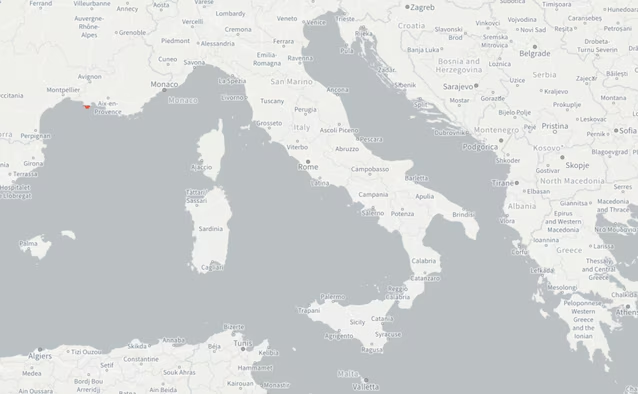
The model monitors five large sea basins overall: in addition to the aforementioned North and East seas, it covers the Atlantic-Iberian coast, the north-western continental shelf and the Mediterranean Sea. The system returns a continuously updated picture, combining historical findings with short-term projections.
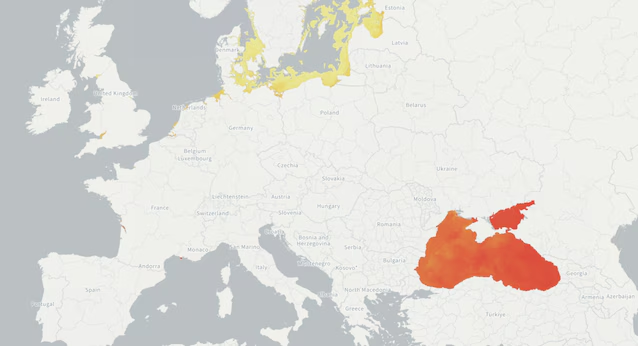
The data is confirmed in the ECDC weekly bulletin (Communicable Disease Threats Reportweek 32, 1-7 August 2026): based on the forecasts of Vibrio Viewerin the five days following publication (until 12 August 2026), 47 municipalities in 12 regions of five countries (Bulgaria, France, Germany, Poland and Romania) were at risk. The warnings are mainly concentrated along the French Atlantic coast and in the northern and eastern basins, and none of these involve Italy. The statement reads:
Climate warming is expected to increase the suitability of coastal areas for bacterial growth. As sea surface temperatures rise in different parts of Europe, environmental conditions that favor the proliferation and geographical expansion of Vibrio are becoming increasingly common.
How to prevent infections according to health authorities
Even in areas where the risk is lower, such as Italy, the ECDC recommends some general precautionsillustrated in the guide “Vibriosis: staying safe in warm waters“:
- avoid bathing in sea or brackish water in the presence of open wounds, recent cuts or recently performed piercings/tattoos;
- cover any wounds with a waterproof plaster before entering the water;
- wash hands and wounds thoroughly exposed to sea water or raw seafood carefully with clean water and soap;
- always consume well-cooked seafood;
- Seek medical attention promptly if you experience symptoms such as redness, swelling, or rapidly worsening pain around a wound exposed to seawater.
People who are immunocompromised or have chronic liver disease are considered to be at increased risk of developing a serious infection and should take these precautions with particular caution, as indicated by both the ECDC and the CDC.
