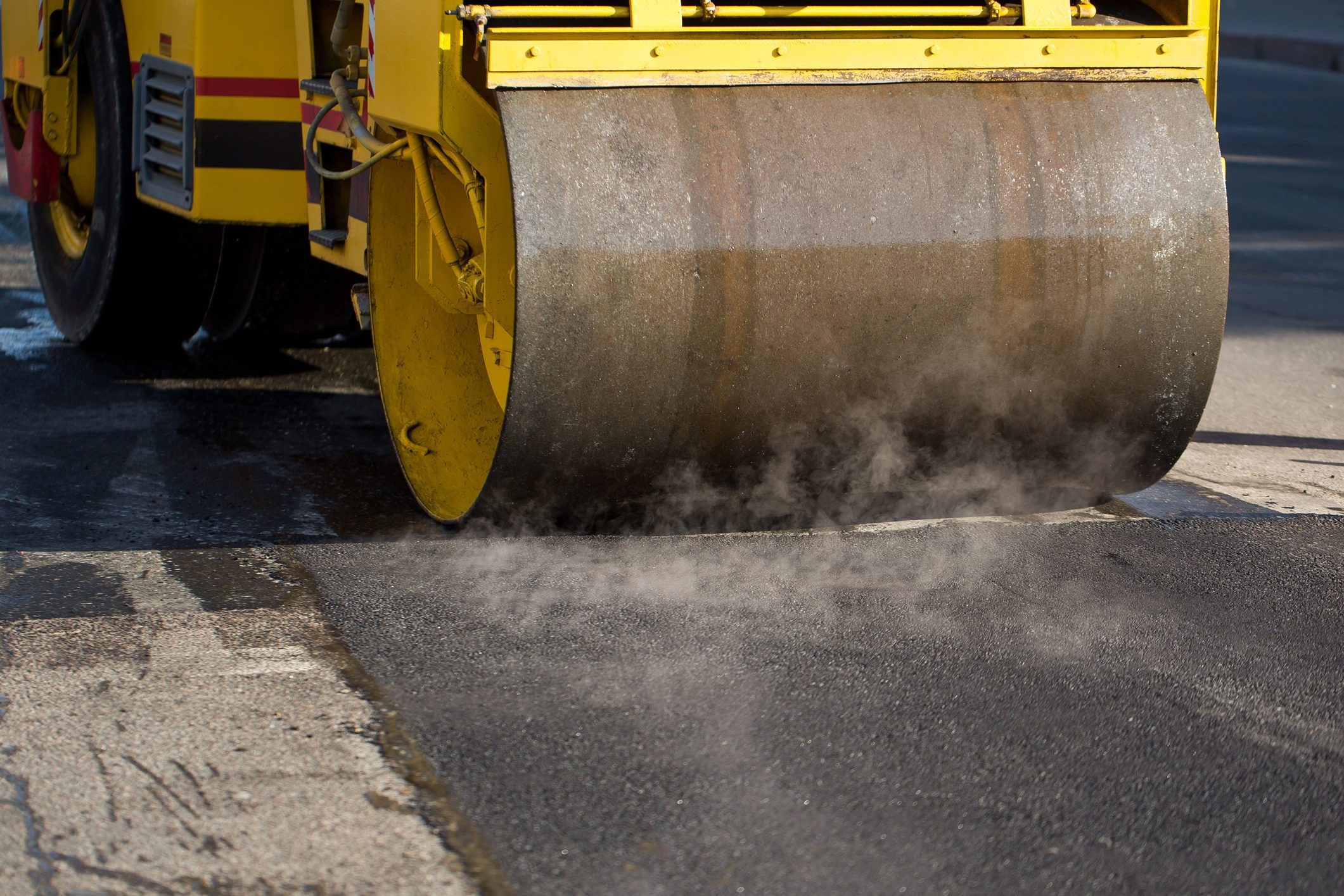
One of the strongest signs we notice when a road paving, in addition to diversions and construction tools, it is a strong and pungent odor wafting through the air, so typical that many immediately associate it with roadworks. The characteristic smell of asphalt arises from the emissions of volatile organic compounds (VOCs) issued by bitumenthe viscous residue from petroleum refining used as binder in the streets (not to be confused with the asphalt real, that is the finished mixture of bitumen and aggregates such as sand or gravel). In particular, during the production stages These substances release complex mixtures of light hydrocarbons and pungent gases (such as hydrogen sulphide H2S). These molecules, because of their volatility and high temperatures used in processes, they tend to quickly pass to the gaseous phase, thus reaching our nostrils which associate them with the typical smell we know. Once the final asphalt is completed, emissions are minimal at room temperature, but with heat they can increase: for this reason in summereven when the road is completed, the emission of VOCs may continue a little longer than normal. If for us the smell of new asphalt can be a simple olfactory nuisance, for asphalt workers, it can cause irritation to the eyes and nose: furthermore, some of these volatile compounds are classified as possible and probable carcinogens for humans by the International Agency for Research on Cancer (IARC), precisely because of occupational contexts and long exposures.
What is bitumen, chemical composition
The bitumen it is the heavy residue of petroleum distillation. At room temperature, it is a solid or very viscous material which, once heatedforms a dense liquid with optimal characteristics for the final asphalting of roads. Chemically it is an extremely complex mixture: it mainly contains hydrocarbons, both aliphatic and aromatic (PAHs – polycyclic aromatic hydrocarbons) but also other substances containing elements such as nitrogen, oxygen and sulphur. These classes of molecules make up the binder and give elasticity to asphalt, but also include potentially odorous volatile species.
When bitumen is heated (above 100°C) some of its lighter components evaporate, generating the odor we have. According to studies on the emissions of heated bitumen, among the volatile organic compounds identified in asphalt emissions we find again thehydrocarbons and other molecules including hydrogen sulfide (H2S), a colorless gas with a characteristic “rotten egg” odor. This mixture of substances is why asphalt smoke has such a distinctive odor to our nostrils.
Health effects
Asphalt vapors contain chemical compounds potentially harmfulespecially in the employment sector. In particular, acute effects such as eye irritationskin and respiratory tract in exposed workers. In addition to the complex mixture of hydrocarbons, aldehydes and PAHs, substances such as benzenean aromatic compound classified as a human carcinogen. Furthermore, according to the IARC classification many aromatic compounds present in bitumen are classified in class 2A or 2B, respectively probable And possible carcinogenic to humans, in particular in the occupational field and for prolonged exposure. In the first case (Group 2A, probably carcinogenic to humans), it means that there is limited evidence of carcinogenicity in humans, but sufficient in animals; group 2B (possibly carcinogenic to humans) includes compounds for which there is limited evidence of carcinogenicity in humans and less than sufficient in animals.
Also the H2S can represent a health risk, but always and above all for those who work in this area. In fact, for both PAHs and hydrogen sulfide, outdoor concentrations typically remain very lowso the smell of asphalt is mostly a olfactory discomfort for the population rather than an acute danger. This does not apply to the workers of the asphalt, which they must adopt precautionary measures (ventilation, personal protection, etc.) to minimize exposure to these substances.
The role of summer heat and smell
Temperature is the key factor which favors the formation of asphalt odor. Already in the hot asphalt production (typically between 140 °C and 180 °C) large fractions of VOC are released, but if temperatures close to 200 °C are reached, the number of these molecules released into the air increases significantly. Not only that, even once the asphalt has been laid (to be clear, when the workers leave and the “fresh” black/shiny and somewhat soft layer of brand new road remains) this process can continueparticularly in summer. With the summer sunan exposed road surface can even reach surface temperatures of 60–70 °Cundergoing sufficient heating to evaporate volatile fractions of the newly laid bitumen.
