The Chamber of Deputies unanimously approved a amendment of the Sport decree which provides for the closure from the swimming pools open to the public if they present suction nozzles not up to standard. The debate reached Parliament after several people, mostly children, lost their lives in recent weeks after being trapped against the intake vents.
For those who do not adapt, the risk is there closure immediateplant: probably, the controls will be strengthened, while for theadjustment of public swimming pools, the Government will allocate 4.7 million for 2026.
It must be said, however, that these provisions are not yet official: as reported on the website of the Chamber of Deputies, now the measure passes to the other branch of Parliament, i.e. the Senate.
Immediate closure of the plant: what the amendment provides
The approved text intervenes on the water recirculation system, i.e. on the system that aspirates and purifies the water from the pool. According to the amendment, «in swimming pools public or private intended for one public users including those for collective use, the recirculation system for purification and, in particular, the water intake outlets such as grills background, nozzles or any other material used for the purpose, must ensure safety designed to prevent swirling suction phenomena with a suction cup effect towards every part of the bathers’ bodies”.
In case of violation, the immediate closure of the plant until the obligations set out therein are fulfilled. The regulation then specifies that «the further obligations and responsibilities provided for by current legislation regarding the safety, management and maintenance of swimming pools and swimming facilities remain unaffected», and in the last part it dedicates a passage to economic coverage: for the adaptation of public swimming pools «a fund with an endowment of 4,725,000 euros for the year 2026».
Why a swimming pool sucks water: how a nozzle works
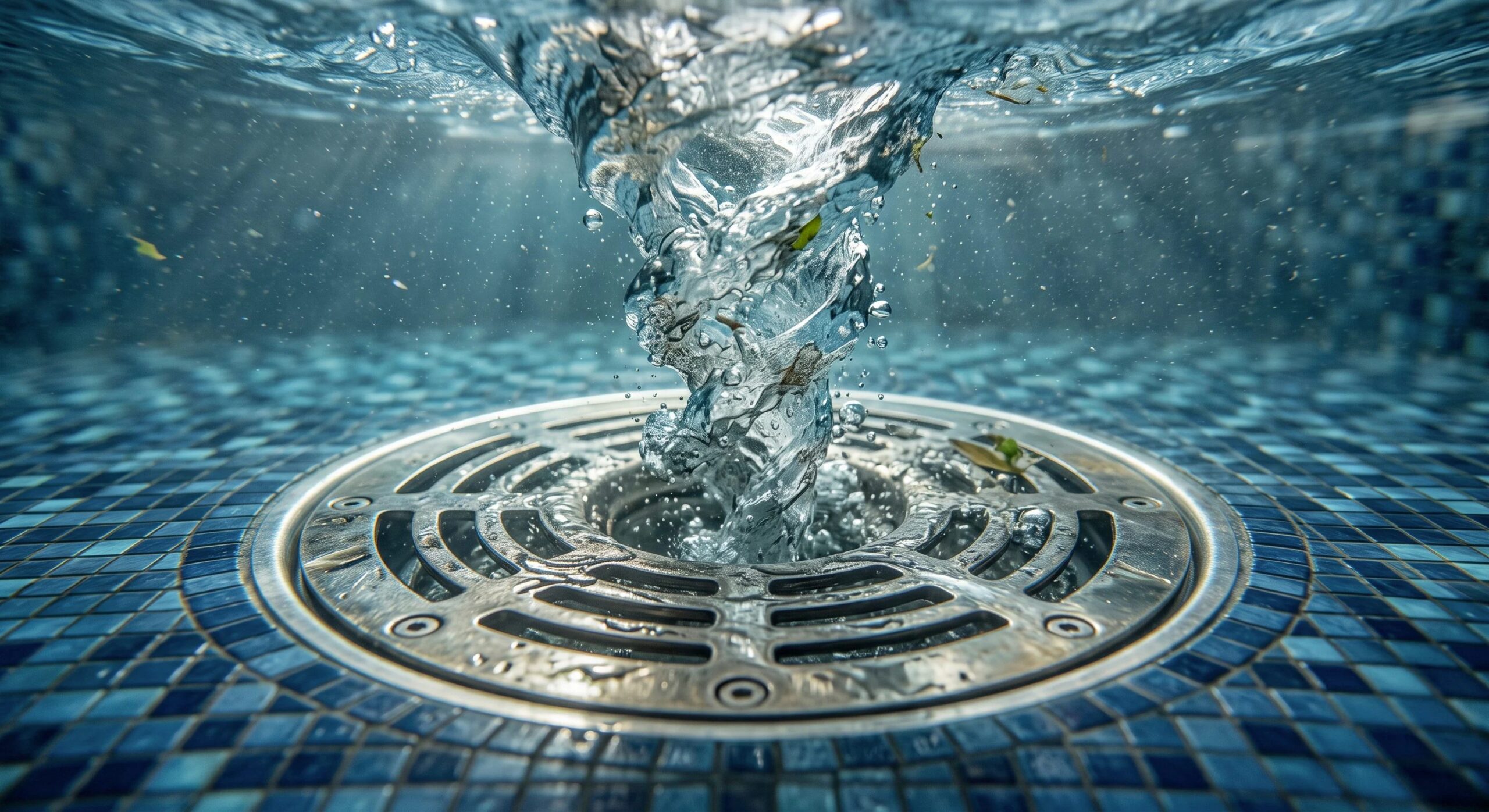
To understand the risk that non-compliant vents or grilles represent, we need to start from a simple question: because a swimming pool sucks in water? Each tank must be equipped with a filtration systemotherwise the water stagnates and microorganisms and algae potentially harmful to health can proliferate. The system then aspire the water from the tub, the purifies and the re-enters. And this is where the nozzles: To make the cycle work, the pumps generate a pressure difference which pushes the water towards the nozzle. To keep the water clean, the suction must therefore be quite rapid.
Multiplying the pressure difference created by the pump for the area of suction nozzlewe obtain the force that “sucks” a body in the immediate vicinity of the nozzle. The values may vary depending on the size of the pool and the number of nozzles, but we are talking about rather large numbers. For a single suction system we are talking about forces comparable to the weight of a body of 150-250kg which crushes the bather against the grip. These are more than enough forces to trap a person, especially a child or teenager.
The mechanism that makes everything so dangerous is the so-called «suction cup effect». When a body rests on the nozzle, the pump continues to generate a vacuum but the water no longer flowsbecause the grill is blocked by the body itself. Thus one is created vacuum-like situationwhich is extremely difficult to get rid of without turning off the system. It’s the same principle (on a much larger scale) as when we cover the with our hand mouth of a vacuum cleaner: the hand remains attached precisely because it prevents the passage of air.
But be careful: this It doesn’t mean that swimming pools are dangerous in itself. The risk is avoidable if manufacturers and installers comply with regulations, if maintenance is done correctly and if swimmers pay attention.
And it is precisely here that standard grilles and outlets make the difference. A single suction device is more dangerous, because it must necessarily produce a greater suction force: for this reason, in swimming pools to use publicthe rules require at least two devices connected to each other, sized so that, if one is obstructed, the other (or others) can still pass the 100% of the flow ratepreventing the depression that traps from forming.
The European rules (the technical standards UNI EN 13451-1 and UNI EN 13451-3, supported in Italy by UNI 10637 for the sizing of pipes) then establish some stakes concrete: the speed of the water on the grate must not exceed 0.5 m/s (about 1.8 km/h), the one in the piping of suction 1.7 m/sthe holes in the grill must have a maximum diameter of 8 mm and every grid must pass entrapment test of hair, obstruction and load.
There are also peripheral suction grillsspecifically designed to distribute the pressure difference over a larger surface area and reduce the net suction force near the outlet.
