Between big boys and those who are kept, “We’ll work when we grow up” by Antonio Albanese seeks but doesn’t find bitter laughter
In “We will work when we grow up” the intentions are clear. To create a comical picture of a generation that has failed under its vices and laziness, in the tradition of an Italian comedy which has sung of Italians’ rude gestures and subterfuges always with the grimace of a bitter laugh. What is missing from Antonio Albanese’s new film, his second consecutive outing as director after the plastered One Hundred Sundays, where the outburst of civil anger ended up being eaten up by the rhetoric, is if anything the execution.
Which fails to explode the harsh irony of this lopsided story, at the cinema from February 5th with Piper Film, a down-the-funnel tale of four losers lost in the umbilical cord of a typical immobile and immovable Italy, which is a village on the lake (Orta), which is made up of little bars and petty wisdom, of local police and snake relatives.
What is it about We will work like adults
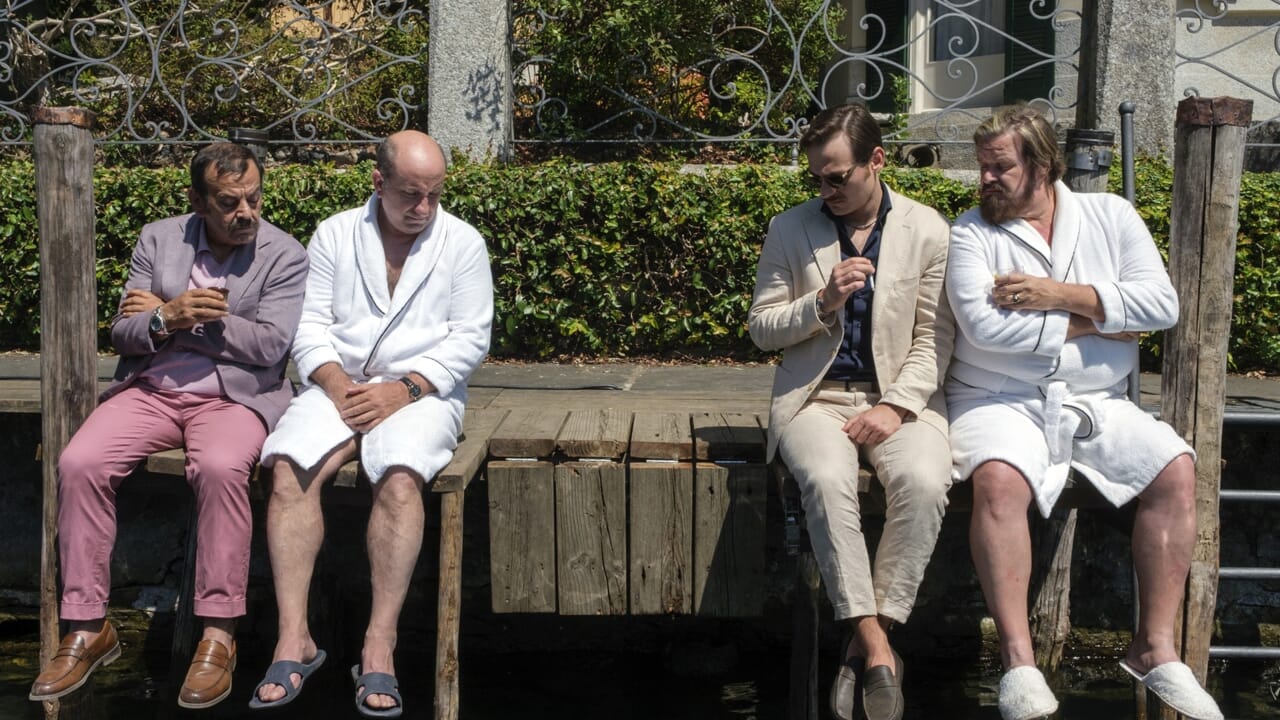
At the center of the story are Umberto (Albanese), heir to a fortune squandered between dreams of a failed artist and too many ex-wives; his son Toni (Niccolò Ferrero), just released from prison for various troubles; the plumber still in his mother’s house Beppe (Giuseppe Battiston) and then Gigi (Nicola Rignanese), who instead was denied the inheritance because his rich aunt who had just died left him nothing except a heavy hangover to work off.
In short: the immortal, all-Italian characters of big babies, mama’s boys, crooks, wealthy and spendthrifts respond to the call. Which the screenplay by Albanese and Piero Guerrera places in a stubborn refusal to grow up, ready to celebrate this evening together but unsuitable for a hangover that ends up becoming a sheep’s night, which they survive by dodging responsibilities and their own small pettiness.
On the way home they hit something with their car. There is blood on the light, but is it human or animal? From here We will work as adults (a title which is not so centered on the dynamics in question) tries to install a mystery of human sadness, a stage of progressive meanness and meanness to which to entrust the ‘I don’t want to see and I don’t want to hear’.
Typical masks in rigid comedy
A film where the attempt to make comedy about situationism, fueled by continuous meetings and bizarre visitors who arrive at Umberto’s house in this interminable night, however calcifies into a controlled and predictable irony, always staged and far from spontaneity. The truthful pace between the lines is missing and there is a lack of organicity in these subdued tones, a problem that lies above all in how Albanese directs the scenes and the understanding between the actors.
The result obtained is that of a deadly rigid acting which is difficult to join in laughter, doubled in a dusty statement (which must reiterate what is happening every time) and sunk in sclerotic comic tempos. The ridicule of these archetypal masks (let’s face it, perhaps they have even had their day) is thus a half-act, a verbless proposition that revolves around twists without accents and without climaxes. Furthermore, the role of the feminine is also handled too poorly, which Worker will be able to pigeonhole only into the pairing – also entirely Italian and reluctant to disappear – of the petulant mother and the prostitute who gives caresses, on which the only deviations are those of the pain-in-the-ass cousin and the reckless daughter.
There was perhaps something to be gleaned from the melancholy of a feeling on the notes of ‘what we have never been’, but the tragic potential is the only guest who doesn’t knock on the door. From one of the greatest exponents of Italian comedy like Albanese, who has sunk his hands into the contradictions and hypocrisies of Italians, it is no sin to ask for better than this.
Rating: 5
undefined
