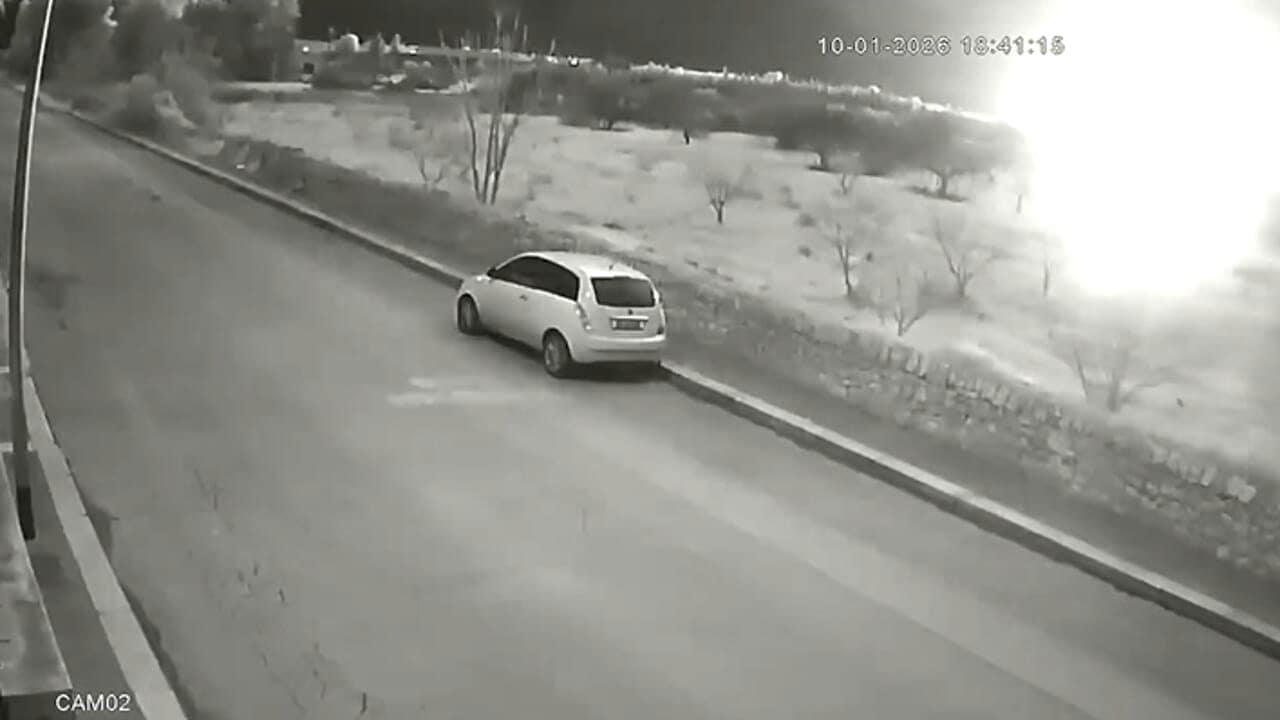
To provoke a intense glow accompanied by a loud and sudden roar in the sky of Casamassimain the province of Bari, around 6.40pm last Saturday, it would not have been a meteorite as initially thought. This is the opinion of the experts at PRISM (First Italian Network for the Systematic Surveillance of Meteors and Asteroids), a network of telescopes and cameras all sky which is part of the National Institute of Astrophysics.
Numerous reports from residents in the area, confirmed by footage from some surveillance cameras, of a strong flash of light apparently caused by the impact of something with the ground: we immediately thought of a meteorite or space debris, but none of the PRISMA network cameras that were nearby observed a fireball (i.e. a particularly bright trail) crossing the sky immediately before the sighting. This is also confirmed by the Sirius Astronomical Observatory in Grotte di Castellana, equipped with a chamber all sky which is part of the PRISMA network. In a speech on the observatory’s Facebook page, the president writes:
The event on Saturday evening, 01/10/2026 at approximately 6 pm, does not appear to be generated by the entry of a fireball into our atmosphere. (…) Analyzing the data collected by the Castellano sky camera, in fact, no luminous passage by a fireball was highlighted.
This is absolutely anomalous, given that an object capable of causing such a glow should have been easily observable. On the contrary, Typically a meteorite does not produce flashes of light when it impacts the groundbut it explodes when it is still in the air and ends its fall without a trail of light. In this case the lack of visibility of the wake may also be due to the fact that at that moment the sky was cloudybut according to PRISMA scientists there are no conditions to support the meteorite hypothesis.
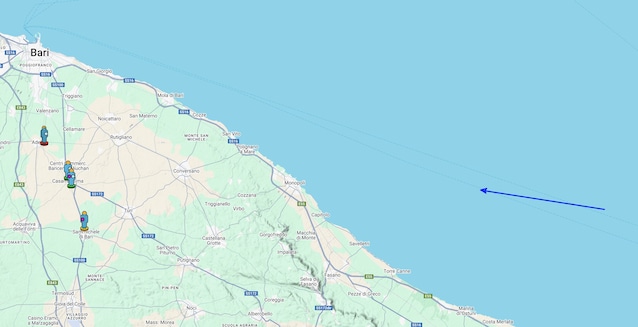
In short, at the moment we don’t know what caused the strong glare in the province of Bari. So what happens now? Probably, the first thing to do will be look for meteorite fragments in the possible impact zone. The reports collected thanks to the specific form on the PRISMA website are useful for this. However, there are only 5 reports, of which 4 in the area around Casamassima and one in Sicily. Based on the reports, PRISMA experts establish through triangulation a possible trajectory and, starting from this, a possible one impact ellipse. Naturally, the fewer reports there are, the less precise the estimates will be. Now we need to wait for PRISMA to calculate the impact ellipse within which searches will then be carried out for any fragments that could explain the glow.