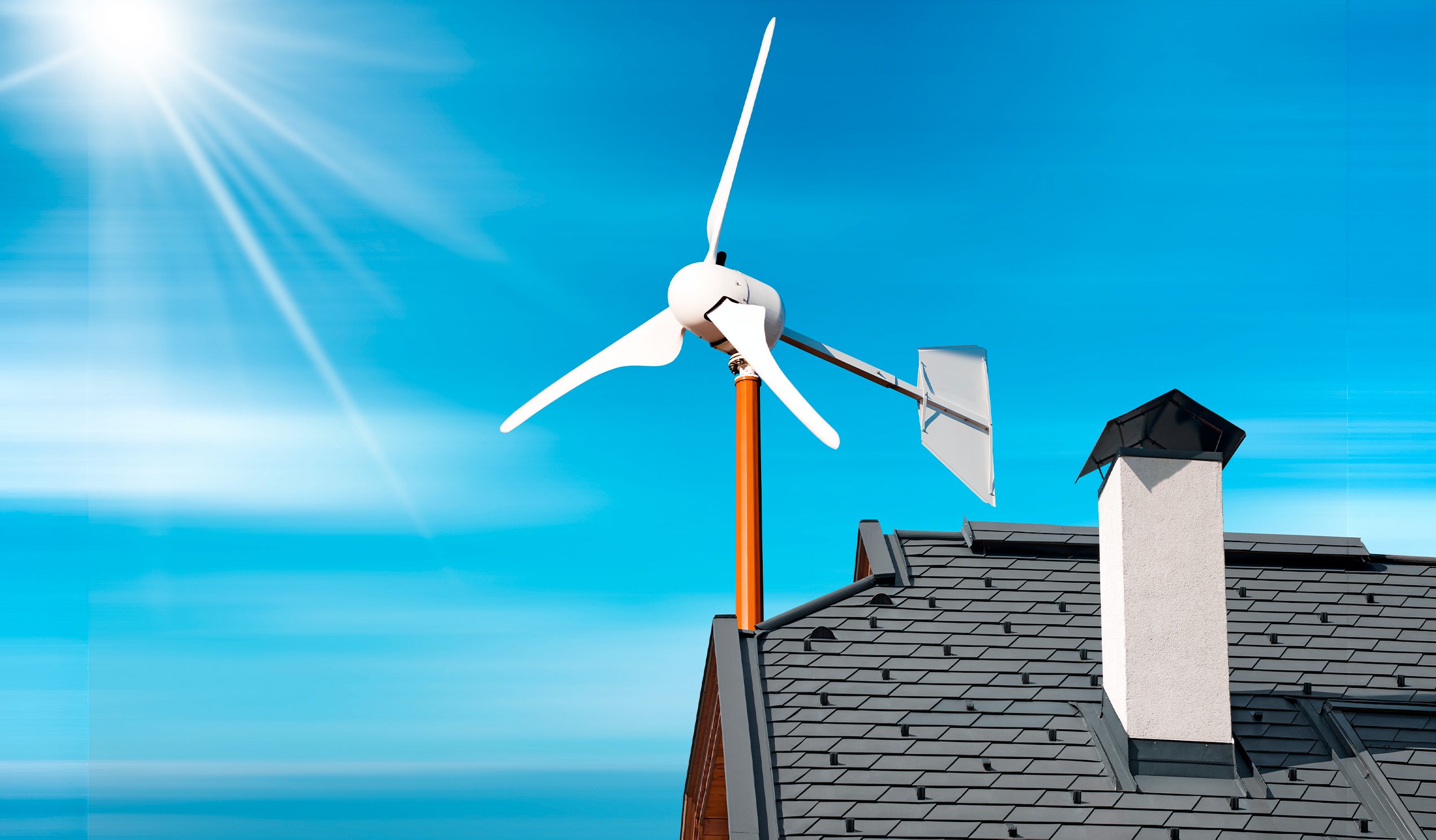
Domestic wind power refers to wind turbines under 20 kW designed to transform wind energy into clean energy for use in individual homes, farms and small communities. These turbines are not yet as widespread as photovoltaics, but they are experiencing a growth phase. The updated data of GSE, Terna, RSE, IEA And IRENA show that, thanks to more compact vertical technologies and integration with hybrid systemsthe so-called domestic mini-wind farm (i.e. under 20 kW) can become an important piece of distributed energy generation, especially in windy and rural areas.
Data on domestic wind power in Italy and new technologies
In 2025 the GSEor the Energy Services Managera wholly public company that has a central role in the Italian energy system, published the GSE FER Statistical Report 2023. Declares that national wind power has achieved 12.2 GWwith an increase of +0.48 GW compared to the previous year. Public datasets show that systems under 20 kW remain few but are growing, especially in agricultural contexts.
In 2025, there Energy System Research (RSE) confirms an increase in local wind energy producibility and a growing interest in impact studies on micro-wind energy in future climate scenarios. RSE has also intensified studies on the matter, to more precisely estimate the yield of wind power in windy rural areas. These analyzes are becoming fundamental for planning the expansion of small-scale wind power, especially to support energy communities and agricultural companies.
In parallel, theNational Agency for new technologies, energy and sustainable economic development (AENEAS) continues to develop hybrid micro-grids designed for isolated areas: systems that combine micro-wind, photovoltaic and storage to guarantee energy continuity even where the network is weak or absent. These solutions are becoming increasingly reliable and replicable.
In Southern Italy, several municipalities and universities they are experimenting with vertical turbines installed on public buildings: the objective is to evaluate not only the performance in windy urban contexts, but also the acoustic impact and architectural integration. The data collected, integrated into the 2025 GSE and Terna monitoring, are helping to define more precise guidelines for the adoption of domestic wind power in cities.
International projects
Globally, theInternational Renewable Energy Agency (IRENA) documents a sharp increase in the use of 5 to 20 kW turbines in islands and remote communities. These systems, often inserted in hybrid micro-grids, are progressively replacing diesel generators, with reductions in emissions. In Northern Europe, particularly in Denmark and the United Kingdom, the International Energy Agency (IEA) reports experimental projects that integrate vertical turbines directly into buildings. The goal is to reduce noise, improve urban wind capture and make domestic wind energy compatible with city architecture.
In the United Statesthe data of National Renewable Energy Laboratory (NREL)the most important American public laboratory dedicated to research on renewable energy and energy efficiency, have shown that domestic wind power continues to spread, especially in agricultural and ranch contexts. Here they are often combined with batteries and photovoltaics, creating hybrid systems that guarantee energy autonomy and reduce dependence on the grid.
The future of mini-wind power for homes
A clear picture emerges: domestic wind will not replace photovoltaics, but it can become a strategic ally in windy areas and rural energy communities. The future will depend on three key factors:
- more efficient and silent vertical turbinesalso suitable for urban contexts.
- integration with photovoltaic and storage systemsto ensure continuity and stability.
- public pilot projectsnecessary to validate performance, costs and real impacts.
In this fast-moving scenario, domestic wind power is no longer a niche experiment but one of the promising ways to make the energy of the future distributed, resilient and sustainable.
