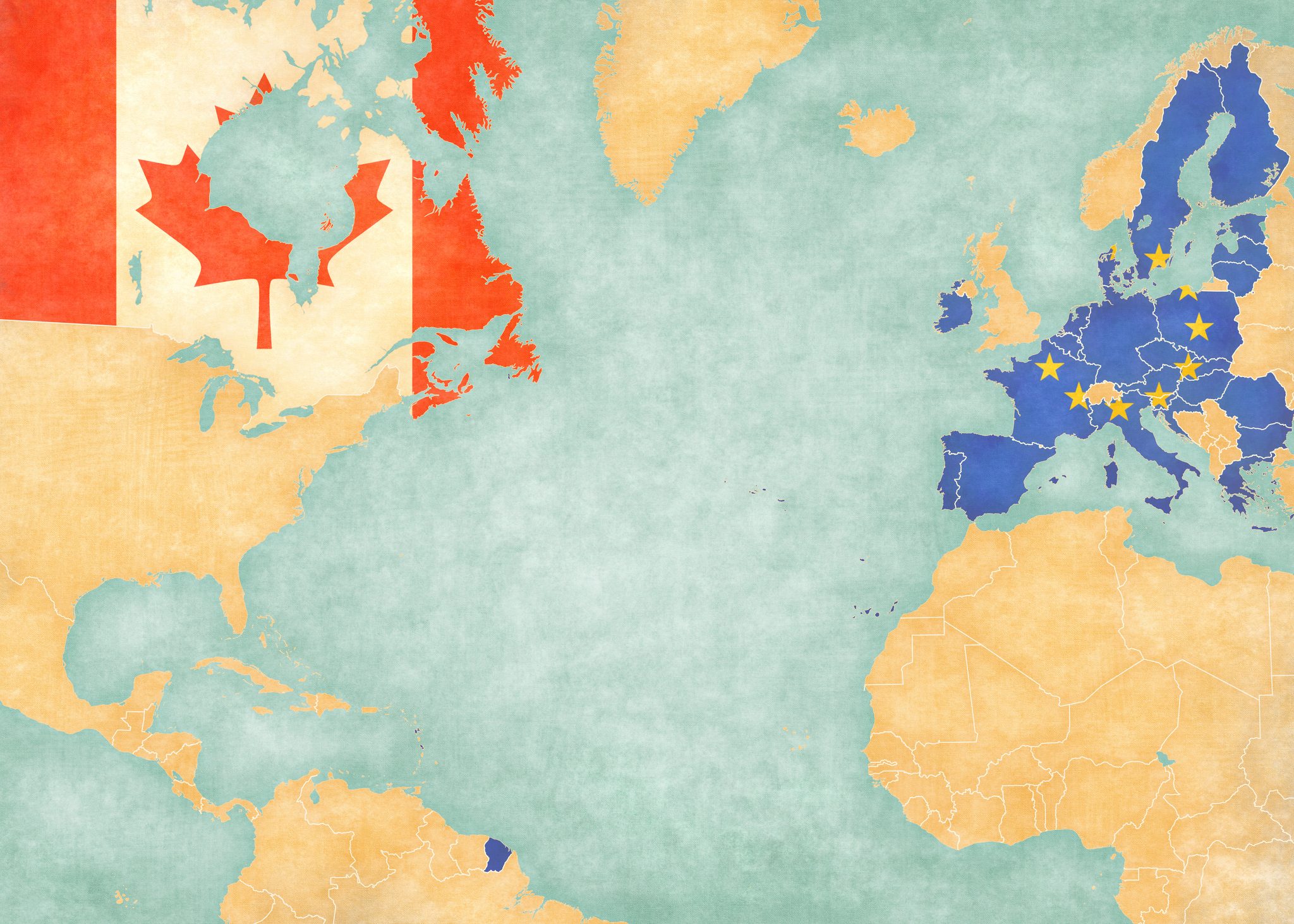
In his annual State of the Union address (SOTEU) in front of the European Parliament in Strasbourg, Ursula von der Leyen announced that the European Union is ready to open the door to Canada because he gets it status first «associate member». For the President of the Commission, the EU and Canada see “the world with the same eyes”, listing the sectors in which to collaborate, from a technological alliance, to the integration of defense industrial bases and a joint project onArctic.
The announcement, however, does not come as a surprise: the Canadian prime minister Mark Carneyexpected in Strasbourg for a speech tomorrow 17 September, had already declared a few days ago that he was aiming for a “single alliance” with the European Union. All this while the relationships between Ottawa and Washington they live one historical break: Carney’s European trip follows the failure of trade negotiations with the United States last month, which triggered a series of retaliatory tariff measures.
It must be said right away that status of “associate member” it doesn’t exist yet for the European Union: however, it is not the first time that the possibility of introducing an institution of this type has been discussed. Already in May 2026, the German Chancellor, Friedrich Merz, had proposed the same idea for Ukraine, with the aim of giving new impetus to talks aimed at ending more than four years of war with Russia.
What is ‘associate member’ status: trade agreements with Canada
As mentioned, to date there is no “associated member” of the EU, given this possibility it doesn’t exist. It is in fact one category not provided for by the Union treatieswhich does not represent full membership of the Community and does not even imply entry into the common market: Carney himself has reportedly instructed a special envoy to Europe to explore possibilities ‘short of full membership of the EU or its common market’.
The goal, therefore, seems to be to give life to one highly integrated cooperationa status tailor-made to also allow the EU to strengthen its role at a global level without however distorting the identity of the Union.
On a concrete level, the sectors of collaboration are clearly the most strategic ones. According to rumors reported in the press, Brussels and Ottawa are working to strengthen trade in goods, services and labour, in particular in energy, artificial intelligence, defense and critical raw materials. At the same time, there are discussions on the table for large projects such as submarine cablesdata centers, cloud infrastructures and satellite networks.
Among the hypotheses under study there would also be the reduction of trade barriersthe rerouting of gas pipelines to give Europe access to Canadian gas and even the right for Canadian citizens to live and work in Europe without a visa. It would, in fact, be an unprecedented relationship with the EU for a country outside the European continent.
How the EU accession procedure works
To understand how the European Union should move now, we must first know how it normally works EU accession procedurewhich is divided into three main steps and what it requires the unanimity of all 27 EU Member States. Let’s start with the applicationwith the application to be submitted to the Council of the EU and assessed by the Commission; in case of approval, accession negotiations follow, during which the candidate country implements European laws and standards (the so-called community acquis).
This is the longest and most complex phase, which requires years (if not decades) to allow candidate countries to adapt their legislation and demonstrate that they can meet the criteria Copenhagen, which provide:
- The presence of stable institutions to guarantee democracy, the rule of law, the human rights;
- A reliable market economy and capable of coping with market forces and competitive pressure within the Union;
- The ability to accept the obligations deriving from membershipincluding the ability to effectively implement the rules, standards and policies that constitute the body of Union law (theacquisition).
The last step concerns membership real, with a treaty which must be approved by the Commission, the European Council and the European Parliament, and then signed and ratified by all Member States.
What procedures should the EU put in place
The accession of Canada as a member state would be de facto impossible for a matter geographical: Article 49 of the Treaty on European Union provides, among other things, that each candidate country it must be a European state.
It is no coincidence that some experts interviewed by Politico considered the hypothesis unlikely, but not impossible: according to Ian Bond of the Center for European Reform it would be “extremely difficult to argue that Canada is a European country”, as has instead been done for Turkey. But even after passing this test, it would remain the obstacle of the economywhy Canada should erect one customs border with the United States and apply European duties and regulations on imports from the USA, with highly penalizing effects on its economy: the United States, in fact, absorbs approximately 70% of Canadian exports.
Among other things, as highlighted by ISPI, 10 out of 27 EU countries (including Italy) have not yet ratified the CETAthe trade agreement EU-Canada signed almost 10 years ago now.
Precisely for these reasons, the focus has shifted to intermediate formulas: Canada would therefore not become the 28th EU member state. At this point, the Union’s next steps depend on the type of institution they intend to create: if the objective is to create a strengthened economic relationship (the version that Canada seems to prefer), Not it would help change the EU’s founding treaties.
In this case, the legal basis would be theArticle 217 of the Treaty on the Functioning of the EU, which allows the Union to conclude “association agreements” with third countries, providing for mutual rights and obligations, joint actions and special procedures. It is the same article on which, for example, the 2014 association agreements with Ukraine, Georgia and Moldova are based. Small aside regarding Ukraine: Kiev has applied for membership to the EU at the end of February 2022officially becoming a candidate country the following June. Accession negotiations formally began in June 2024: Ukraine will now have to implement reforms to align with EU regulations and standards.
If instead the EU’s objective is to introduce a real status of “associate member”, which would allow countries such as Canada and Ukraine to become part of the European institutions, then the amendment of the Treaty of European Unionwith a possible revision of Article 49 of the Treaty of the European Union, which regulates the conditions of membership. This would require an extremely complex and long legislative process, with the final changes only coming into force once they have been made ratified by all member states.
