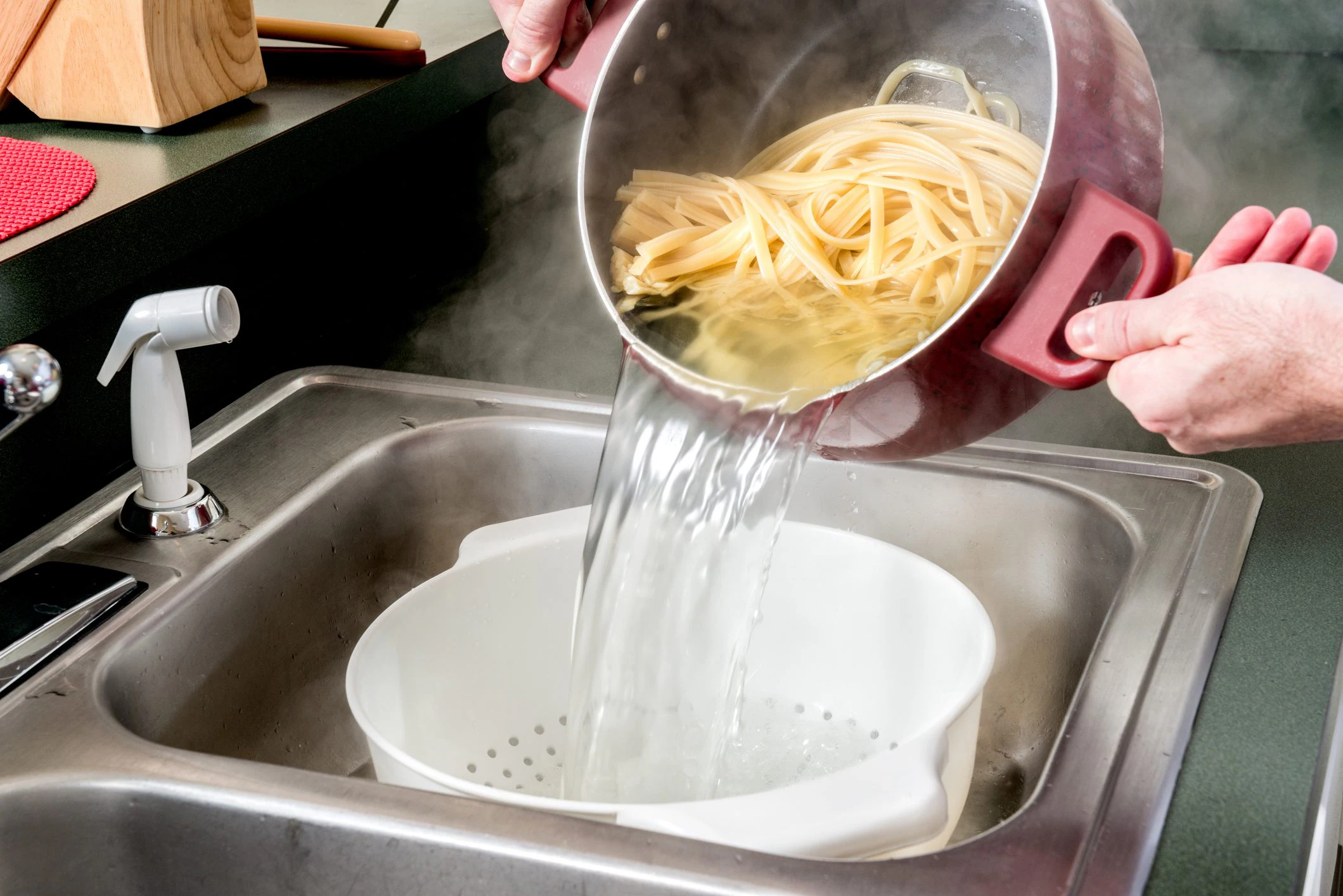
Draining the boiling pasta water into the sink generally does not damage the pipes, not even the plastic ones, because the contact with the 100°C water is too brief to compromise their integrity. However, you must be careful, some materials can be damaged or develop cracks.
There are small ones automatic gestureswhich are sometimes passed down for generations and which we often do without thinking too much about it.
Many of us, for example, they turn on the cold water in the sink before throwing away the boiling pasta water, for fear that it might damage i exhaust pipes.
But does it really make sense to do so?
Actually, No: if the implants are made of metal it is not a risky practice, they are able to withstand very high temperatures.
Even in cases where the tubes are in plastic (for example in polypropylene or polyvinyl chloride), their melting temperature is approximately 170°Cmuch higher than the temperature of boiling water.
Furthermore, the contact time with pipes it is very short: the water we drain into the sink is quickly directed to the drain pipes and the plumbing in the wall.
Instead, we should pay attention to the sink itself, especially if it is made of materials such as quartz And granite which are susceptible to temperature changes (thermal shocks) between room temperature and boiling water: they could be created cracks which would ruin the material in the long run.
Can boiling water damage drain pipes?
When the implants are made of metal there is no need to fear, but in the presence of the very widespread ones plastic pipes many doubts may arise.
The melting and softening temperatures of PP and PVC
Polymers like Polypropylene (PP) and the Polyvinyl chloride (PVC) they have melting temperatures around 170°Cmodifiable with the addition of stabilizers.
What is really important, however, is the so-called “Vicat softening temperature”a temperature at which the polymer begins to lose structural rigidity until being deformed by a needle during a standard test.
For the PP the softening temperature is decidedly higher than PVC because it is 118°Cif pure, but with the addition of iron powder can reach i 150°Cmaking this plastic very suitable for contact with hot water.
The PVC instead it has one lower heat resistancewith softening around the 75°C.
Because the duration of contact with hot water is important
In any case, pouring the water into the sink the most it will quickly flow towards the wall drainwithout creating too many problems for the plastics of the exhaust pipes.
In fact, these are normally a room temperature before the water is discharged and this would pass too quickly to be able to heat and soften the pipes: conditions very different from Vicat testduring which the temperature of the object is constant and increased degree by degree until the piece fails.
We can therefore continue to pour the cooking water into the sink, as many of us have done for decades: above all for home usethe plastic pipes are capable of resisting heat of the water discharged.
What happens to grease residues in pipes and sewers
Hot water can also help eliminate grease or organic residues adhering to pipes, such as soap or oil residues resulting from dishwashing: an advantage for our pipes, less so for the sewerswhere these residues can recondense.
This is also one of the reasons why in many states, such as Italy or Finland, the discharges from industrial plants have maximum temperature limits between 40 or 45 °C: especially in the presence of traps for fatsthe passage of water at high temperatures would favor the discharge of fats which must instead be captured and treated as waste.
Which sink materials resist heat: stainless steel, granite and quartz
And as for the sinks themselves? Heat resistance obviously varies from one material to another.
THE metal sinksprobably the most widespread genre in modern kitchens, are definitely able to resist to the heat of the water: thesteellike many other metals and alloys, is a excellent conductor of heat and is capable of rapidly distributing energy over its surface.
Furthermore, the melting temperatures are very far from that of boiling water: stainless steel melts above 1400°C.
As for instead composite materials such as granite or quartzthe matter is a little more complicated.
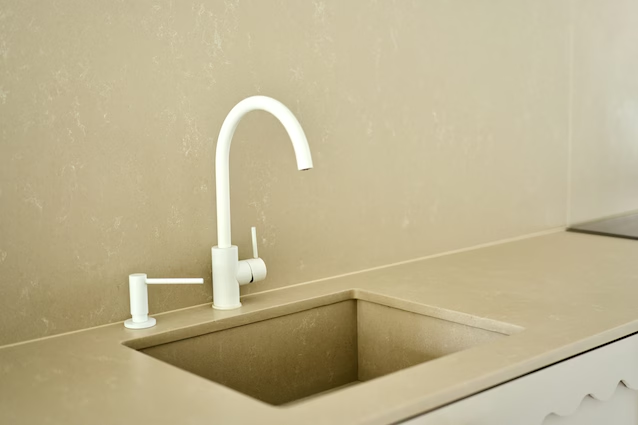
These materials are called composites precisely because, in addition to the mineral parts (granite powder and quartz powder), they are composed of percentages of organic resinsnecessary to aggregate and stabilize the powders in the desired shapes.
Can thermal shock cause cracks?
These materials are medium heat resistantto the point that it can withstand even brief direct contact with hot pans.
Despite this, however, greater caution would be necessary when pouring boiling water into quartz or granite sinks, especially if made of pure material, perhaps distributing it throughout the entire sink: they are in fact particularly susceptible to sudden changes in temperature and in this way they would be avoided excessive thermal shock over a small areato reduce the risk of formation of cracks and other damage.
The use of composite materials with organic resins allows them to increase their stability even against thermal shock, but they are still less resistant than stainless steel.
Sources
“THERMAL DEGRADATION OF POLYVINYL CHLORIDE”, D. BRAUN, Deutsches Kunststoff-Institut, Darmstadt, Germany “Improving the Vicat Softening Point of Poly (Vinyl Chloride) mixtures through blending with different polymers and inorganic fillers”, Egyptian Journal of Chemistry Physical and Mechanical Properties of Polypropylene Reinforced with Fe Particles, International Journal of Polymeric Materials Polyvinyl chloride Basic information, Chemical Book “DEWATERING AND RECOVERY OF FATS, OILS AND GREASE (FOG) OF GREASE TRAP WASTE”, Sandra Van Der Veen, Oulun seudun ammattikorkeakoulu 2013 “Melting Temperature Range for Stainless Steels”, British Stainless Steel Association New engineered stones: Development and characterization of mineral-glass composites Study of Thermal Properties of Granite Powder (Scrap) Reinforced Polyester Resin Composite “REGULATION OF WASTE WATER DISCHARGES”, Western ATO Area Authority Disintegration of Six Different Quartz Types during Heating to 1600 °C Thermal Stress Cracking in Granite