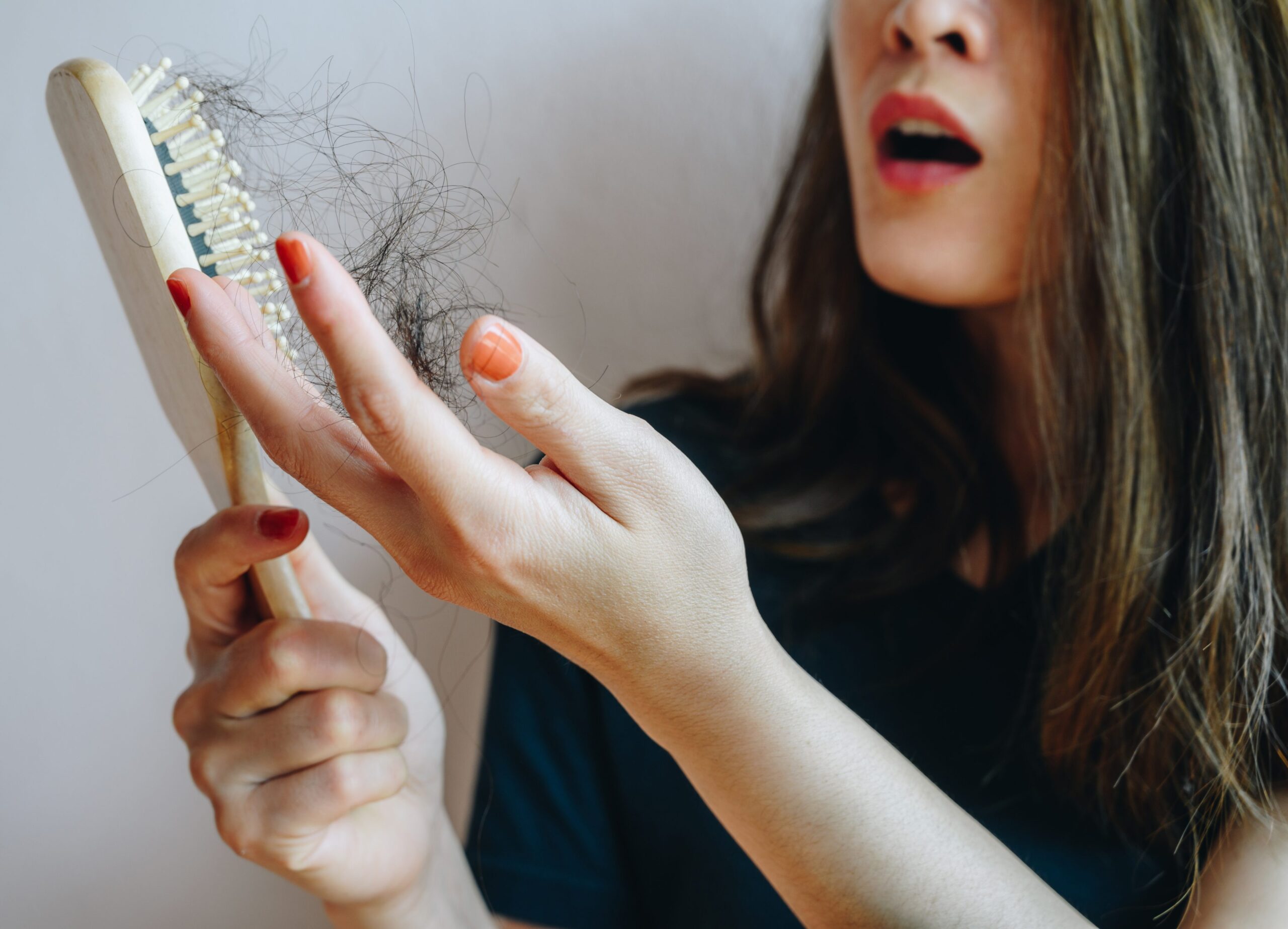
The stresseven the psychological one, like the ending of Game of Thrones, also has a strong impact on our hair, to the point of even having a name: telogen effluvium. The crucial point is that stress, psychological or physical, does not matter, alters the life cycle of the hair follicle causing cells to transition from the growth phase (anagen) to the resting phase (telogen). The first culprit, as always, seems to be the cortisolthe stress hormone. Furthermore, a stressful stimulus makes us activate the “fight or flight” response in which it is directly the norepinephrine to block hair growth because in these situations, unnecessary processes, such as having hair worthy of Rapunzel, are slow down or blocked completely. Usually, hair loss caused by stress is reversible and just reduce stress to return to normality.
What is telogen effluvium, stress-induced hair loss
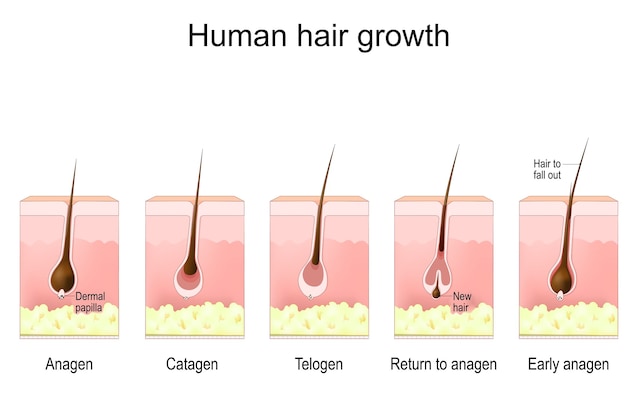
At any time in our lives, only the 15% of the hair is in the resting phase (telogen): stress prematurely and simultaneously pushes a large number of hair follicles to move from the growth phase (anagen) to the resting phase. It’s called no coincidence telogen effluviumliterally “hair loss in the telogen phase”. In addition to physical or psychological stress, telogen effluvium can also be induced by hormonal changesfor example during pregnancy (which in itself is already a “stress” for the body) or from some drugs.
The telogen effluvium is very democratic: it affects everyone to the same extentwithout differences in age, gender, ethnicity or preferences for TV series.
Hair loss is not immediate
From a technical point of view it is a type of non-scarring alopecia and is defined in medical terms as a very intense hair loss that occurs approximately 3-4 months after the stressful event. Well yes: your hair doesn’t fall out while you are preparing for that very difficult exam, but some time later.
When the hair passes from the anagen phase to the telogen phase, simply stops growing from 1 to 6 months (average 3), and in most cases, it remains attached. When after some time the follicle returns to the anagen growth phase, the previous hair comes “pushed” out from what grows, falling from our beautiful hair. This is why we don’t immediately see the effects of stress on our hair.
The role of cortisol: the hormone that inhibits follicles
The life cycle of hair is finely adjusted by many factors, just as stress impacts many different biological pathways: for this reason it is complex to identify a single person responsible for stress-induced hair loss. But some key mechanisms have been identified.
A study on murine models (mice, so to speak) carried out by Harvard University, has put the lens on the corticosteronethe mouse equivalent of human cortisol. The researchers noticed that in stressful conditions, excess corticosterone acts on the dermal papilla and blocks the release of a particular factor: the Growth arrest specific 6 (for friends, Gas6). Gas6 activates the stem cells of the hair follicle, triggering the growth phase: if it is not produced, the hair does not grow. By injecting Gas6, hair growth resumes although the stressful stimulus and high quantities of corticosterone are still present. In humans, stress activates the axis hypothalamic-pituitary-adrenal increasing not only cortisol concentrations, but also those of corticotropin-releasing hormone. Further in vivo and in vitro studies have in fact confirmed the ability of these hormones, cortisol above all, to alter the life cycle of the follicle and local skin homeostasis, for example degrading fundamental substances for the skin and the extracellular matrix.
The attack of the sympathetic nervous system and immune system
Stressful situations trigger the “fight or flight” response, activating the sympathetic nervous system and the release of adrenaline and norepinephrine. Precisely the latter, according to a study published in Cell last year, would act on follicle matrix cellscalled “hair follicle transit-amplifying cells”, for convenience HF-CTs). They derive from stem cells and replicate very quickly, making the hair grow. HF-TACs are directly connected to sympathetic neurons and particularly sensitive to the action of norepinephrinewhich induces necrosis: in short, it causes them to die prematurely. Prevent this interaction, both by “inactivating” the neurons connected to the hair follicle blocking norepinephrine receptors present on HF-CTs, prevented hair loss. Excess norepinephrine, among other things, negatively affected mitochondria of these cells, leaving them without energy to continue reproducing.
Stress also increases the production of proinflammatory molecules, such as some cytokines and substance P, as demonstrated by several studies. It increases the expression of some immune cells, causing them to penetrate the follicle and worsening situations such as alopecia areataan autoimmune disease in which the immune system attacks the cells of the hair follicle. Last but not least, the so-called increases oxidative stress and the production of free oxygen radicals: in short, the follicle finds itself in a toxic and dysfunctional working environment. All this slows down the regeneration of follicular cells and the resumption of hair growth activities.
And what can we do?
First, we can stay calm down. It may seem trivial, but reduce stress it’s the first rule to resolve telogen effluvium: worrying will only increase stress and… cause more hair to fall out. When we are stressed we sleep little, we eat worse, perhaps those who smoke smoke even more… Further worsening the microenvironment around the hair follicle.
The good news is that it is a temporary disorder and reversible: the source of stress is reduced, the hair grows again as before.
Sources:
Hughes EC, Syed HA, Saleh D. Telogen Effluvium Choi, S., Zhang, B., Ma, S. et al. Corticosterone inhibits GAS6 to govern hair follicle stem-cell quiescence. Nature (2021). Bai J, McMullen E, Sibbald C et al. The role of psychological stress in hair loss: A review JAAD Reviews, (2025) Scott-Solomon E, Brielle S, Mann A et al. Stress-induced sympathetic hyperactivation drives hair follicle necrosis to trigger autoimmune Cell, 2025 Thom E. (2016). Stress and the Hair Growth Cycle: Cortisol-Induced Hair Growth Disruption. Journal of drugs in dermatology: JDD.
