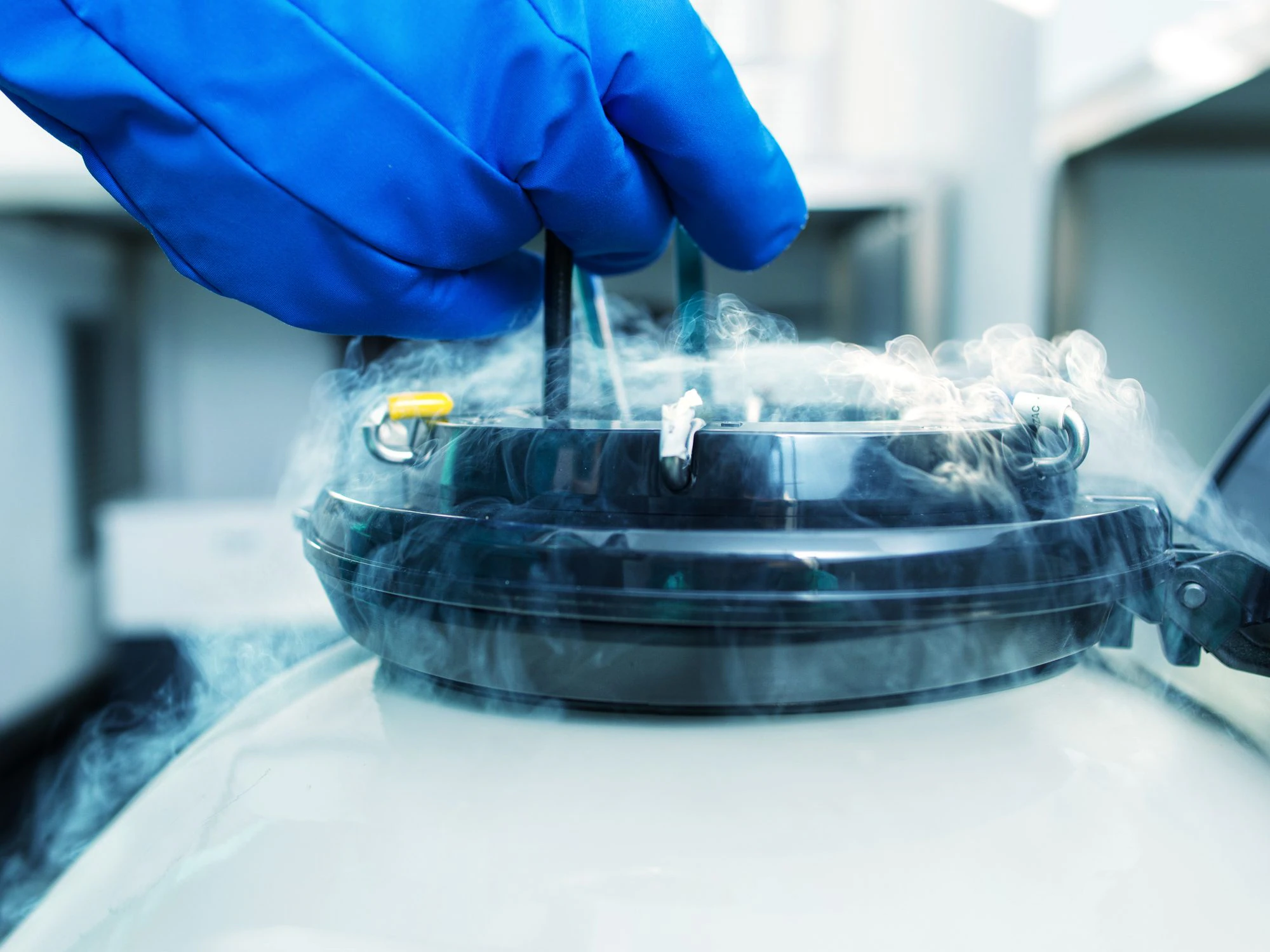
In Italy the topic of reproductive health and fertility is increasingly at the center of public and scientific debate. Among the most requested and discussed biomedical technologies is freezing of eggs (or Social Freezingwhen carried out by personal choice). This is a laboratory technique that allows you to collect and store female gametes (egg cells). liquid nitrogen at -196 °C to preserve its quality over time. In this way their biological age is “blocked” for possible future use through Medically Assisted Procreation (PMA) techniques. It is a path chosen both for medical reasons (diagnosis of infertility or patients with pathologies at risk of infertility) and as a personal choice. In the first case, you can access via National Health Servicewhich in the Decree of 25 November 2024 harmonized, both from an economic and requirements point of view, the services relating to egg freezing and access to PMA programs throughout Italy by inserting them into the Minimum Welfare Levels (LEA), fixing a 46 years old the maximum age to access the procedure reimbursed by the NHS. The situation at a private level is a little different and there are no limits set by law either for age or for costs, which can reach up to exceed 4000 euros.
Disclaimer: article for informational purposes. Evaluation and definition of each individual path must be discussed with a specialist.
Why eggs are frozen: medical reasons vs.Social Freezing“
A woman’s ovarian reserve is determined at birth and progressively decreases with age, both in terms of quantity and genetic quality of oocytes. Freezing gametes mainly responds to two needs:
- Fertility preservation for medical reasons: indicated for patients who must undergo oncological therapies (chemotherapy or gonadotoxic radiotherapy), ovarian surgery or who suffer from pathologies that compromise ovarian reserve (such as severe forms of endometriosis) or couples diagnosed with infertility.
- Elective preservation (“Social Freezing“): individual choice linked to the desire to postpone the search for pregnancy for personal, economic, work or relational reasons, protecting oneself from the physiological decline of fertility.
The preliminary steps before freezing
Freezing your eggs requires a series of preliminary steps. In accordance with the guidelines standardized by Guidelines on Medically Assisted Procreation (PMA) of 2024, before you can move on to the egg freezing step, they must be identified and collected. In fact, it is not enough to take just any gametes, but it is essential that they have reached the right level of maturation.
Oocyte stimulation
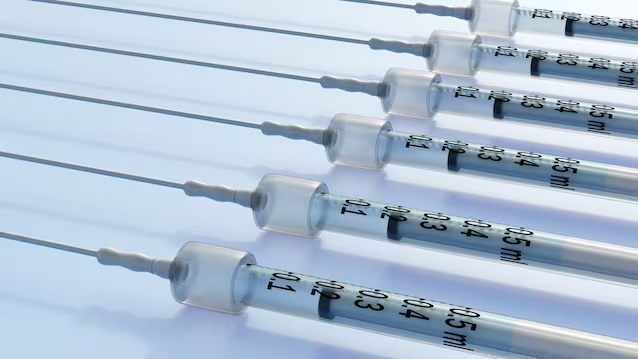
To obtain the greatest number of mature oocytes that can be frozen (or used for “fresh” PMA), we use ovulation-inducing drugsbased on hormones that stimulate the growth of oocytes. They are subcutaneous and must be carried out every day for cycles of approximately 8-10 days. Subsequently, the ovarian response is checked via ultrasound and/or hormonal monitoring.
Retrieval of mature eggs
The procedure pick-up oocyte collection (collection) can take place both during a spontaneous cycle (more rarely) and following the stimulation of follicular growth and oocyte maturation, which represents the standard of the procedure. Once the degree of maturation of the oocytes has been ascertained, we can proceed with the collection transvaginal routeunder ultrasound control and under local anesthesia and/or deep sedation.
In the event that the transvaginal technique is not applicable, the Guidelines provide for the possibility of carrying out the sampling for laparoscopic route or trans-abdominal. Once the retrieval is successfully completed, the retained oocytes suitable they are immediately transferred to the embryology laboratory, ready to undergo the freezing process.
Vitrification of oocytes
The oocyte is the largest cell in the human body and is mostly composed of waterfall: If cooled slowly, water inside it would form ice crystals which could cause serious damage to the cell, compromising its survival. For this reason, the old technique of slow freezing (slow freezing) has now been replaced by the modern standard: the vitrification.
The process, reported in depth in several studies, such as that of Herrero in 2011, is based on two key factors:
- Dehydration and cryoprotectants: before thermal blast chilling, the mature oocytes are immersed in solutions with a high concentration of cryoprotective substances. These molecules penetrate the cell, extracting free water, acting as a sort of biological “antifreeze” liquid.
- Ultra-rapid heat reduction: the gametes are instantly brought to -196°C by direct immersion in liquid nitrogen.
At these extreme speeds, the residual water does not have the material time to organize itself into a solid crystalline lattice, but passes directly to one glassy amorphous state (hence the term vitrification). The cell literally “hibernates” in a glass-like state, blocking any metabolic reaction and preserving the cellular structure intact over time, without suffering damage from ice.
The regulatory framework in Italy: Law 40 and guidelines
The Italian regulation on PMA and cryopreservation refers to Law 40/2004profoundly modified over the years by the sentences of the Constitutional Court.
Is egg freezing legal? Yes. While cryopreservation of embryos is permitted only for proven health reasons or temporarily before transferthe freezing of unfertilized gametes (eggs and sperm) is fully permitted, both for medical and precautionary purposes.
In Italy, access to the techniques of assisted fertilization (PMA) to use frozen oocytes is reserved for married or cohabiting adult heterosexual couples of potentially fertile age. Currently, the law does not allow single women or same-sex couples to fertilize their eggs.
National Health Service (NHS), LEA and regional differences
Economic access to treatment varies based on the clinical indication:
- Couples diagnosed with infertility or cancer patients or with pathologies at risk of infertility: cryopreservation is paid for by the National Health Service (against payment of the health ticket only or under a total exemption regime).
- Elective preservation (Social Freezing): it is not covered by the NHS and is provided exclusively privately.
With the updating of the Essential Levels of Assistance (LEA), which occurred with the decree of 25 November 2024, and the related tariff nomenclature, the homologous and heterologous PMA falls within the guaranteed level performance national. The decree adopts the tariffs and methods already in force in the Emilia-Romagna Region, thus standardizing the services at a national level. However, a chronological age limit is set (until the age of 46) to be able to access the possibility of reimbursement and a maximum of 6 cycles covered. However, disparities persist between Regions regarding waiting times in public facilities.
What is the maximum age and how much does it cost to freeze eggs: the difference between the NHS and the private sector
The age and costs of cryopreservation depend entirely on the clinical path undertaken, with a clear distinction between medical indication and elective choice.
In the public sector (SSN for medical reasons), according to the Tariff Nomenclature of the LEAs, the services of collection, vitrification and annual custody of the gametes have standard reimbursement rates set by the Ministry of Health for the affiliated structures. For the patient who accesses it for clinical reasons (such as before oncological therapies or for couples diagnosed with infertility), the entire process is paid by the National Health Service, by exclusively requesting payment of the regional health copay or taking place under a total exemption regime for pathologies. The maximum age, as anticipated, is set at 46 years.
For those who choose to freeze their eggs for personal or precautionary reasons, there is no single price list set by law. The social freezing it relies mainly on the private sector and, as it is a free market regime not covered by the NHS, each clinic applies its own tariffs. In general, by consulting the price lists of various clinics that offer the route, the total costs can also be around 4,000 eurosincluding preparatory specialist tests and during the procedure, cost of stimulation drugs and any annual fees for storage in liquid nitrogen. Regarding the maximum age, in the case of private individuals there are no set limits. However, it must be taken into account that, as also reported by the Guidelines on PMA, after the age of 35 reproductive capacity undergoes a more marked decline and greater risks of complications.
Egg freezing represents a biological guarantee, but not a mathematical certainty of future pregnancy: the success rate will always depend on theage at which the eggs were frozentheir total number and seminal parameters at the time of fertilization in vitro.
