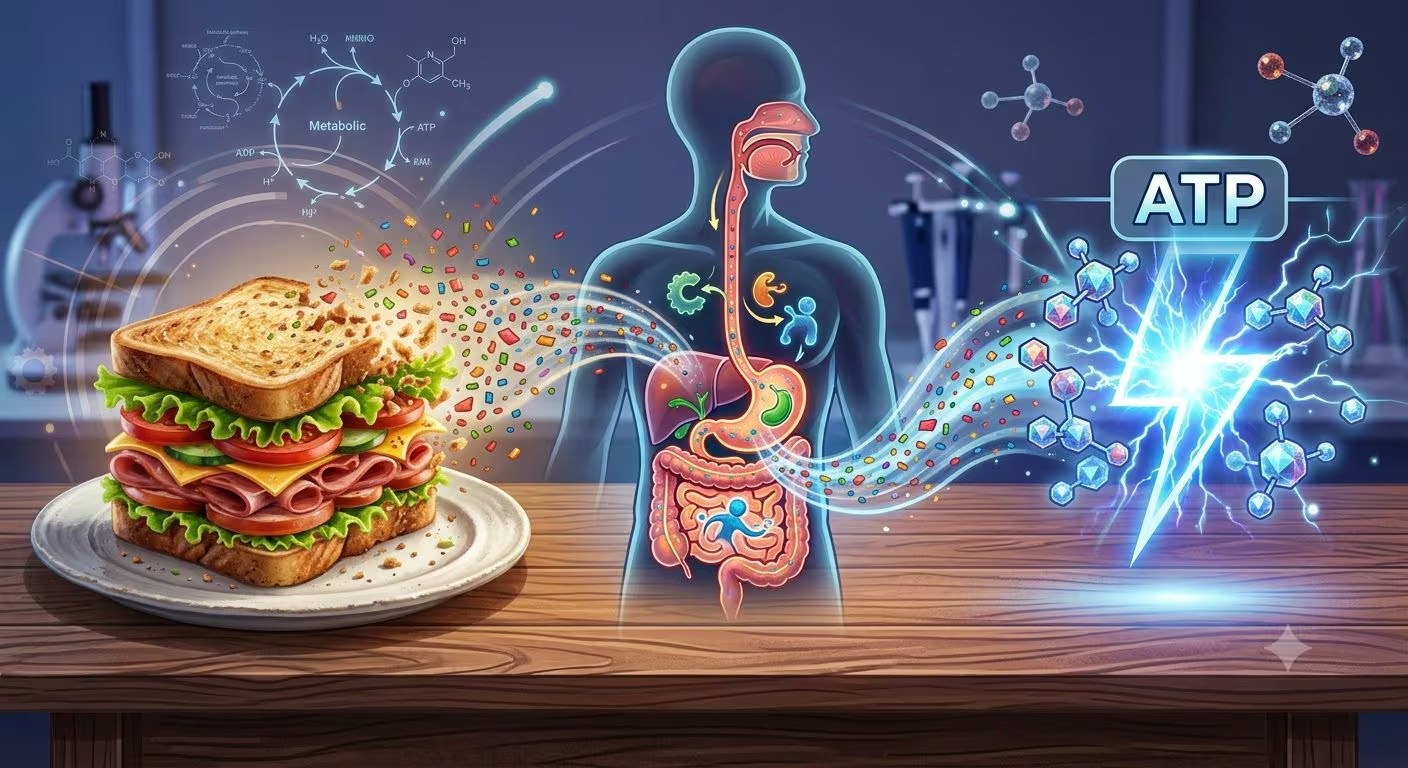
From the moment we bite into a sandwich to the moment our cells they get energyour body carries out a series of biochemical processes. It all starts with digestionwhich breaks down food into simpler molecules like glucose, ready to be absorbed. Once it enters the cells, the glucose it becomes the fuel of a sophisticated system: metabolism, as explained by the physiology entries published on StatPearls (NCBI Bookshelf, National Library of Medicine), as well as manuals and books on the subject, the set of reactions that exploit the matter we ingest to produce energy. Through a series of processes that you may have studied in high school, the glycolysisThe Krebs cycle and oxidative phosphorylation, our body produces theATP (adenosine triphosphate)a molecule which thanks to its properties acts as a trueenergy currency“of living organisms. Fats and proteins can also come into play: metabolism is a flexible network, capable of producing energy even starting from different molecules.
From bite to cell, digestion and absorption
Digestion begins in the mouth, where chewing fragments food (mechanical digestion) and saliva initiates the chemical breakdown of various substances such as starches thanks to the enzyme amylase. The process continues in the stomach, where the acidic environment and gastric enzymes begin to denature proteins.
The crucial stage, however, occurs insmall intestinewhere chemical digestion is completed thanks to the enzymes produced by the pancreas and liver. Here the three macronutrients carbohydrates, proteins and fats are reduced to their fundamental units: glucose, amino acids, fatty acids and glycerol. These molecules then pass through the cells of the intestinal mucosa to enter the bloodstream or lymphatic and reach the tissues, where they will be used as sources of energy or for the synthesis of new structures. These are mechanisms that have been widely studied and described in detail from high school to university books, up to the dedicated pages on StatPearls in the online version from the National Library of Medicine.
What is ATP and how is the body’s energy molecule obtained
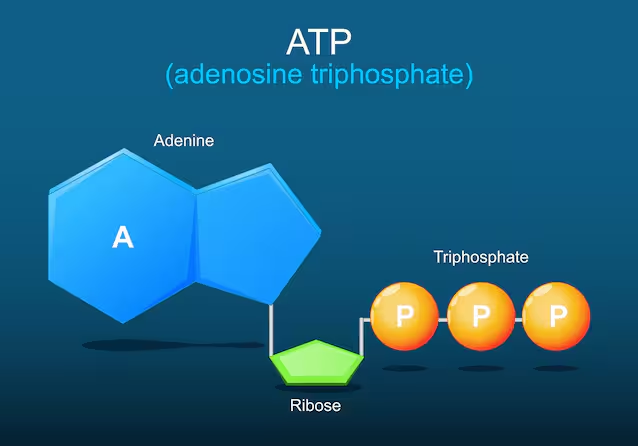
Since energy is neither created nor destroyed, it is necessary to draw energy from large molecules with numerous energy-rich bonds, such as sugars and fats, to deposit in the most easily transportable and spendable currency which is theATP, a molecule whose biochemistry is present in all biology books and which you can learn more about in the entry published on StatPearls (NCBI Bookshelf, National Library of Medicine). The energy of these molecules is contained in the form of potential energy in chemical bonds, as enclosed in many springs compressed between the atoms themselves. When enzymes break these bonds, we “free” the springs, resulting in kinetic energy which, through the necessary reactions, carries out useful work to build new molecules necessary for us.
Although carbohydrates, fats and proteins contain energy, they are not used the same way. Fats are great as long-term reserve: they are compact and very rich in calories. Amino acids (derived from proteins), however, are the fundamental bricks with which we build muscles and tissues; the body can also burn them for energy, but prefers them as construction unit.
And this is where the glucosethe absolute fastest molecule to exploit for the body’s immediate energy expenditure. Cells possess an ancient metabolic pathway and its origins, according to a phylogenetic reconstruction published in 2025 in FEMS Microbiology Reviews by a team from the University of Düsseldorf, date back to the first microbial organisms extremely efficient to dismantle it and transform it into ATP. This is why, on most occasions, it is glucose that acts as the ideal bridge between the end of digestion and the beginning of cellular energy production.
The centrality of glucose and the nature of metabolism
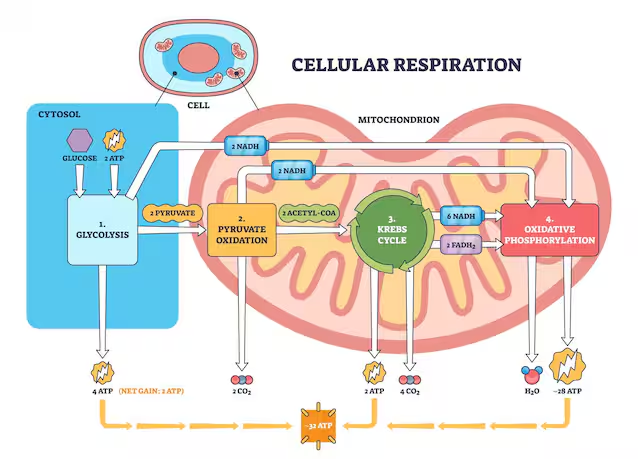
Once inside the cell, the glucose becomes the protagonist of one of the oldest energy engines in the living world. It all starts in the cytoplasm with glycolysis, a metabolic pathway shared by many life forms on Earth. The glucose molecule is split in two, releasing a small amount of ATP and energy-filled electrons. If the cell has oxygen available, the process moves to the mitochondria, the so-called “energy centers of the cell”.
Here, through the Krebs cycle and oxidative phosphorylation, those same electrons are used to drive some kind of “microscopic mill” which exploits the flow of protons inside it to assemble ATP. In total, from a single molecule of glucose, thanks to all these cellular processes, the cell manages to obtain well approximately 32 molecules of ATP!! A nice supply of energy.
Therefore trying to look at the overall picture, metabolism is the set of all chemical reactions that allow an organism to stay alivean ongoing dance between two forces: dismantling nutrients for energy and carbon (catabolism) and reusing those pieces to build and repair our own bodies (anabolism).
Each sequence of chemical reactions such as glycolysis, oxidative phosphorylation or the processes of dismantling fatty acids or building proteins and DNA molecules alone is but a cog in the great clockwork that is metabolism. An integrated system where different chemical pathways intersect, feed and consume each other in a way that is adaptable to the needs of the organism.
