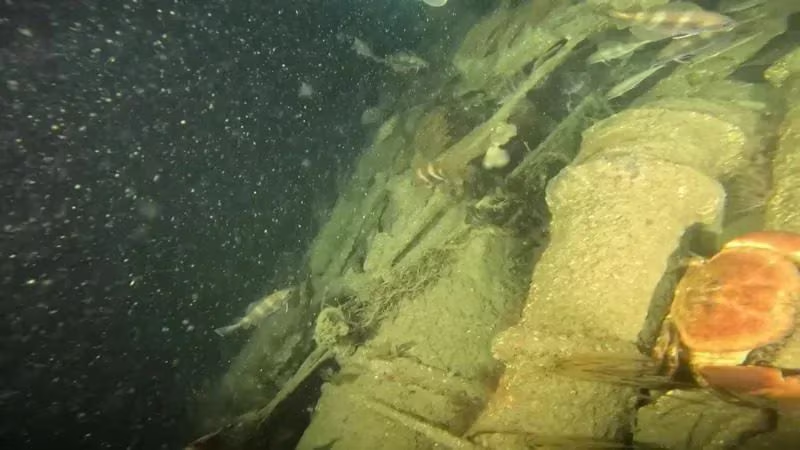
The German submarine U-672, which sank in July 1944 after a British attack, was identified off the coast of Devon, England. The U-boat wreck lies 70 meters underground; all 52 crew members survived the sinking.
Off the coast of Devon in southwestern England, a group of divers have identified the wreck of a German submarine disappeared during the Second World War. It is about theU-672a U-boats (German term used to identify the submarines of the German Navy during the two world wars, contraction of Unterseeboot“submarine boat”) sunk in July 1944 and remained unidentified for over eight decades. The wreck is located approximately 70 meters deepin the waters off the coast of Salcombeon the southern coast of the region.
The initial discovery of the wreck dates back to last summer, when the British team Skin Deeperled by Ian Taylor, spotted it. Afterwards, the group of divers Gasperados helped identify it, with the support of German naval historian Axel Niestlé. The recognition was based on comparison between the characteristics of the wreck and the historical information available on the submarine. U-672 belonged to the class VIICone of the most widespread among the German submarines used in the Atlantic, produced starting from 1938. The purpose of these boats was to sink enemy merchant shipping. The July 18, 1944 the submarine U-672 was intercepted by the British frigate HMS Balfourwho attacked him with depth charges. Severely damaged, the submarine could not continue navigation: the commander, lieutenant Ulf Lawaetzthen ordered the crew to abandon the ship and scuttle it. All the 52 crew members survived and were recovered and captured by Royal Navythe British Navy.
The discovery is of particular interest because the wreck remained on the seabed without certain identification for 82 years. A error in coordinates reported in naval documents would have contributed to complicating the location, making it more difficult to relate the site to the loss of U-672, marked in a different location. Identification allows you to associate finally a wreck to a documented episode of submarine warfare in British waters. The case demonstrates how much theunderwater exploration and the comparison with historical archives can integrate: identifying a wreck on the bottom is not enough, in fact, to determine its identity, especially when it comes to military wrecks that have been damaged and remained unexplored for a long time.
