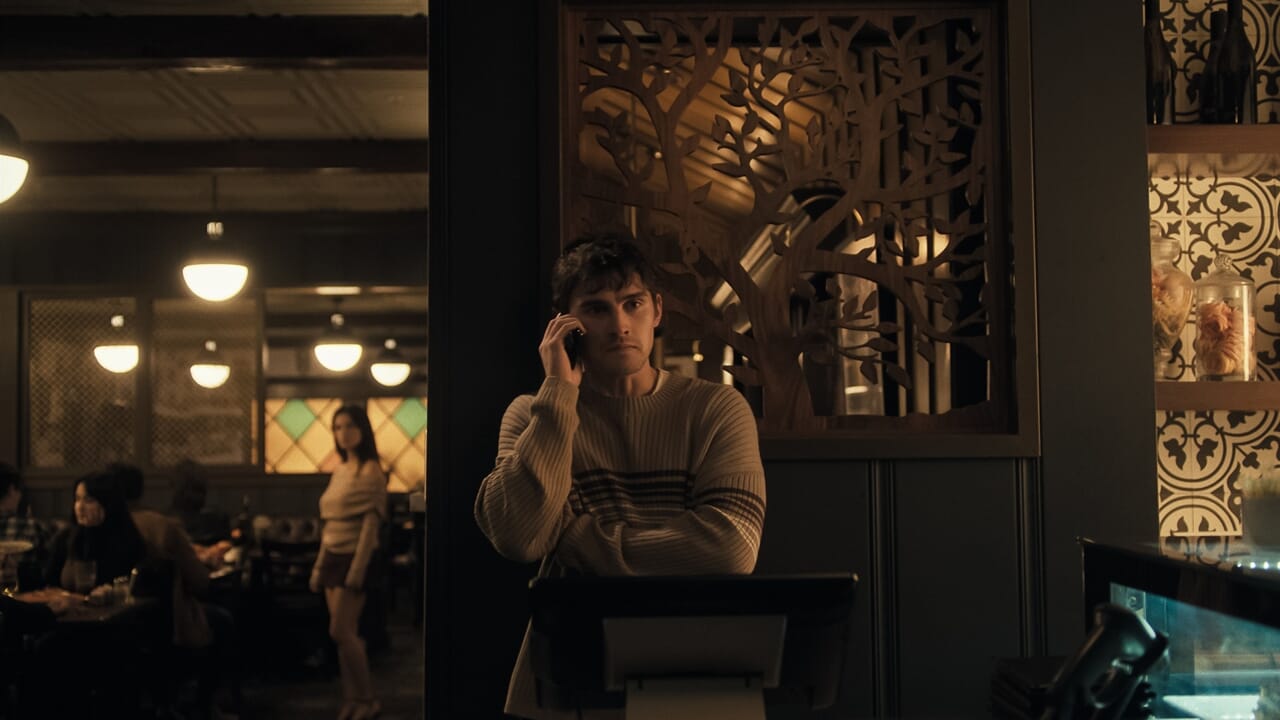
Get ready: “Obsession” is the new masterpiece of horror cinema
Horror cinema, the kind done well, has a task: to take the mental agitations of a society and bring them to an acute level. Dig into the middle areas, into that thin layer between thinking and saying. And from there he extracts the long shadow of how this society is formed, deformed, manifested and desired. Now, that of desire is a thorny matter. There is nothing wrong with desiring something, a verb that concerns us and not the other. What it says about us and doesn’t hurt the other. It belongs inside. In short, it is not like wanting, a verb to which desiring is twin and which instead already presupposes a sort of imperative, of projection onto the outside.
“Obsession” arrives at the cinema from May 14th. Who understood everything about this tension between desiring and wanting, the true crown of thorns of our contemporary world and more particularly of a certain generation. Curry Barker, an American director born in 1999, wrote and directed it. And we are certain of it here: Obsession marks a before and an after.
What Obsession is about
Bear (Michael Johnston) longs for but doesn’t want Nikki (Inde Navarrette). She is smart and sexy, he is the teddy bear – nomen omen – who is satisfied with being her friend despite the crush that burns inside him. Not that she ever outright rejected him. There was no way, because Bear never came out.
Except that Bear’s desire clots and becomes infected in a strange and terrifying way when he buys a wishing stick in a magic shop. The same superficial common sense that never made him expose himself tells him that obviously it’s stupid, that it won’t work. But deep down he hopes a little that those words he is about to pronounce will act in his place: I want Nikki to love me more than anything.
Works. Nikki suddenly begins to love him more than anything. She is always with him and never leaves him again. He moves permanently to his house and his sole objective is to satisfy his every desire. He holds him, follows him, even watches him when he sleeps and is a little too smiling when Bear talks to their friends (Cooper Tomlinson and Megan Lawless), who tell him that they’ve never seen Nikki like this. Which is not normal.
Focus of a generation
The great vertigo of Obsession then lies in the fact that Bear knows perfectly well that all this is not normal. He sees and suffers – or it would be better to say accepts – passively the progressive fanatical delirium of his new “companion”. In denying the evidence, Barker thus outlines a spineless male, causing psychosis and infecting a certain inadequacy of a generation that matured in the shadow of MeToo.
Gen Z is in fact the first generation to have been born with a purely male-centric conception of society and to have then received the healthier, or at least certainly different, idea of a new relationship and balance between the sexes. An epochal displacement which, because it was epochal, generated resistance, and which from that resistance saw the birth of new terrifying chimeras: ‘manosphere’, ‘incel’ and merry company. But on the other hand there are also performative cataclysms and exasperated hypersensitivity.
Obsession is a very lucid film in focusing and exacerbating this slippage. And he is equally astute in never evoking it in words but only in facts and turmoil, working on the rear and on reluctance. The border makes you uncomfortable: where does Bear’s disorientation end? Where does meanness begin? First he seems like an “ally”, then a victim, but what if he was finally a tormentor?
The triangulation of this protagonist is certainly expressed starting from the aberration of the social phenomena of which he is an expression, but the balance remains the individual choice. The lack of responsibility disguised as fragility crosses the deviant culture of repression and resentment.
In the middle are the sketchy coordinates of a generation that clings to astrology courses and tarot cards ordered on Amazon, to trinkets and cheap esotericism, to a spirituality that is entirely external and never internal in an attempt to avoid the asphyxiation brought on by feeling, rather than actually being, “short of time”. A generation that – partly rightly – perceives itself as screwed from the start and therefore finds itself gasping, misdirecting that matter of desire. Which translates into a vain, crippled, depressed and confused desire.
We will call it by its name: masterpiece
There is therefore no cinematic form that can better describe this catastrophe than horror can. Which collects the crawl of the threat, the infestation and the constant siege. For example, the work done on the film’s sound is crazy, with Nikki’s voice, screams and steps that won’t abandon you soon. Because Obsession is not at all a work of concept only, but also of a great implementation that flays alive scene after scene.
The strangeness crawls on the walls throughout the film, condensing in the retro and almost analogue aesthetic – and it is no coincidence: in contemporary horror there is an evident conflict between the sense of the present and that of the representation of the past, which by extension is the ongoing conflict between living the rules of the now and their rejection, between remembering the forms of before and taking refuge in them.
What is particularly striking is the way in which Barker elaborates the lie that Bear tells himself, his denial at all costs of what is actually before his eyes, in an attempt to preserve for as long as possible a vaguely misogynistic but certainly selfish fantasy. The director works with a couple of crux environments (the whole thing cost about a million; there’s no escape except for those who complain about budgets), but he gets every last drop of terror out of them.
The knowledge of Nikki there in the room raises hairs on one’s arms, disturbing because it is always clearly visible, a fright announced and maintained, an entity capable of reversing from excessively tender to downright chilling in the blink of an eye – Navarrette’s performance is one for an anthology: she will be a new queen of horror.
Also to be praised is the obstinacy in the opposite direction with which the author refuses to place the whys and wherefores to the reasons for the film. He avoids all logic and collapses all footholds in the field of the inexplicable and the disturbing, over which he spreads blood, disgust and an acrid irony that drags one into discomfort – bread for Barker’s teeth, who comes from YouTube and the comedy duo “that’s a bad idea”, of which he was part with Tomlinson.
When Obsession finally explodes there’s none for anyone. It’s a condemnation, it’s a brand. Now it’s too early to call it that, but we’ll do it in ten years: masterpiece.
Rating: 9
undefined
