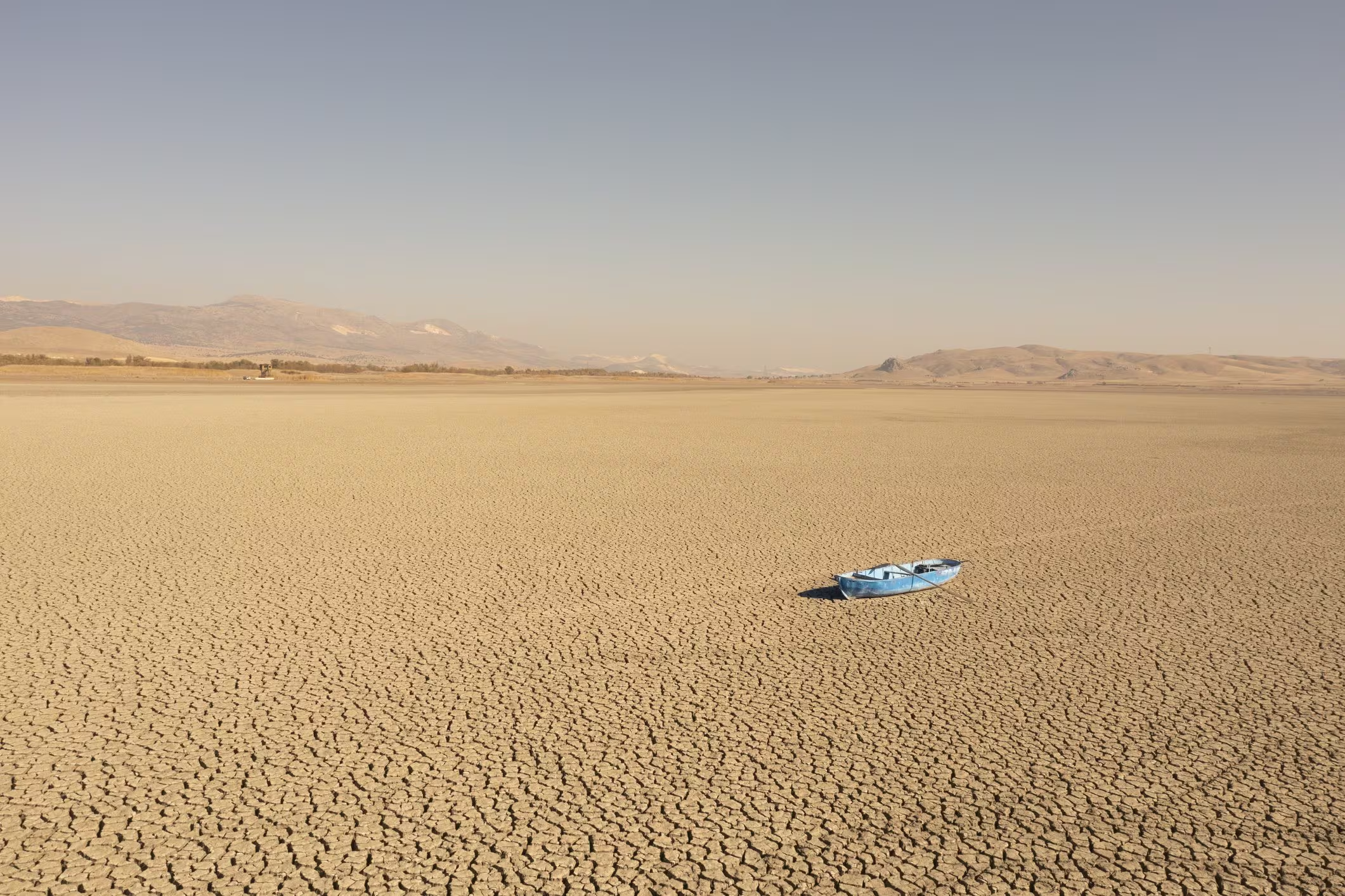
In 2026 a report from the United Nations University – Institute for Water Environment and Health (UNU-INWEH) stated that the world has entered the era of global water bankruptcythe global water bankruptcy. A phenomenon of which there are already concrete signs: approximately 70% of the main aquifers of the world shows a long-term decline. The concept of bankruptcy describes a condition in which, in many areas of the world, we use water faster than natural systems are able to regenerate it, even compromising the reserves that accumulate it and make it available over time, such as aquifers, lakes, wetlands and glaciers. It doesn’t mean that water on Earth is running out, but that some Water systems are losing the ability to return to past conditions. The problem is defined as global because many of these have already exceeded critical thresholds and because the effects are interconnected through trade, climate, migration and geopolitical dependencies.
What does “water bankruptcy” mean?
There water bankruptcy it does not simply indicate a situation of water scarcity. According to UNU-INWEH, this condition occurs when i surface and groundwater withdrawals exceed persistently the ability to renew resourcesto the point of causing damage that is difficult or too expensive to recover. The difference compared to a normal water crisis is precisely this: even when precipitation returns, some systems can no longer being able to recover the previous conditions. This is what happens, for example, when we withdraw too much water from the aquifers without giving them the time to rechargeor when wetlands and glaciers are progressively reduced.
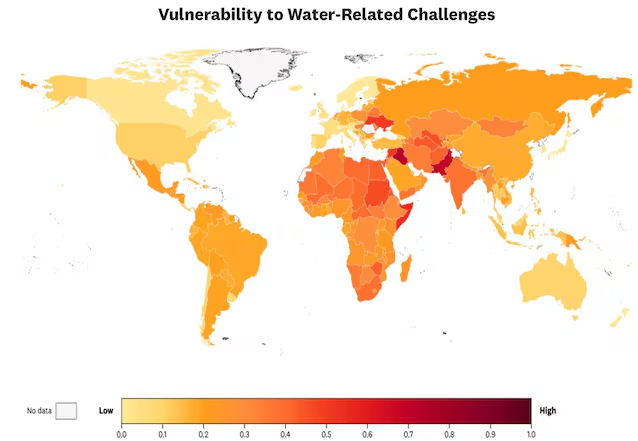
Water resources are decreasing: the UNU-INWEH report
The signs are already visible in several freshwater resources. According to the UNU-INWEH report, approximately 70% of the world’s major aquifers shows a long-term decline and more than half of large lakes lost water from the nineties to today. They have also disappeared over the last fifty years approximately 410 million hectares of natural wetlands.
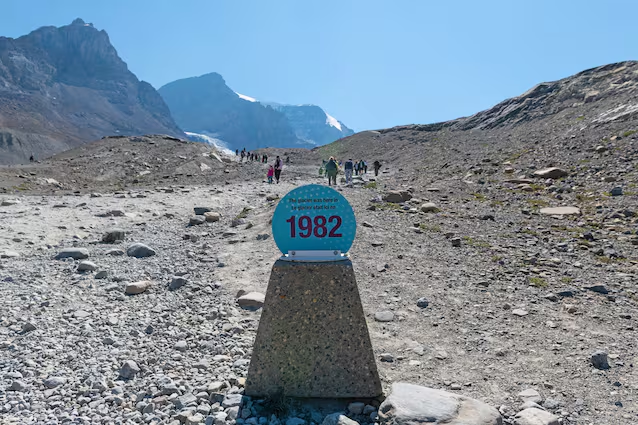
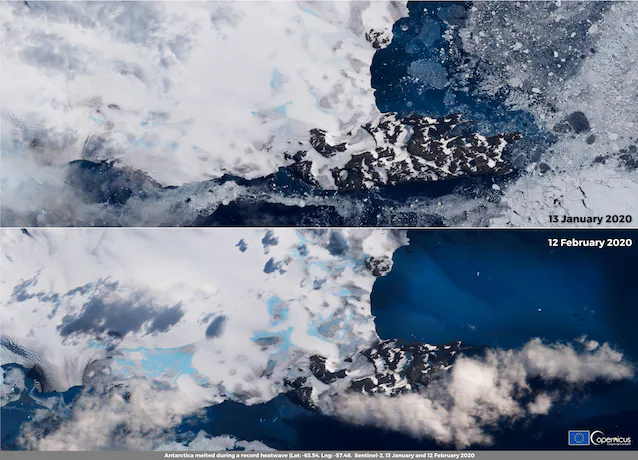
Even i glaciers are losing mass. The State of Global Water Resources 2025, report by World Meteorological Organizationreports that 2025 was the fourth consecutive year of widespread loss of glaciers in all monitored regions and that, in the last decade, the overall amount of water stored on land has also decreased. About 3 billion people and more than half of the world’s food production is found in areas where the water reserves are decreasing or unstable. In the Arctic this change is also visible from the satellite images. In fact, with the reduction of sea ice, free ocean surfaces increase, much darker than snow and ice. The difference is therefore not only visual, as white surfaces reflect a greater part of solar radiation, while the ocean absorbs more. When the ice decreases, therefore, the surface becomes darker And increases the energy absorbed by the waterfavoring further heating And fusion of ice: it is the so-called albedo feedback. The trend of the ice can also be followed day by day through Sea Ice Today: a portal of the National Snow and Ice Data Center (NSIDC) which updates maps and satellite data on the extent of sea ice. According to the US Climate Resilience Toolkit, from 1979 to today, Arctic sea ice extent in September has decreased by over 13% per decade.
Who uses the most water: agriculture, industry and data centers
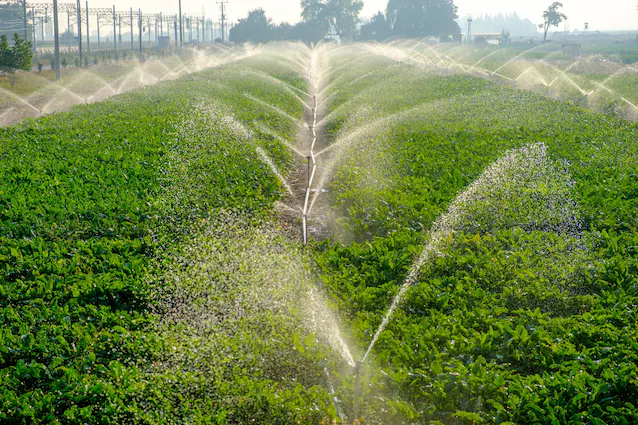
Most of the fresh water withdrawn in the world is used byagriculturewhich according to the Food and Agriculture Organization of the United Nations (FAO) represents approximately 72% of global withdrawals. The rest is mainly intended for industrial and civil uses. Among the most recent pressures there are also i data centerswhich they use waterfall to cool the servers and, indirectly, through the production ofelectricity that they consume. Lawrence Berkeley National Laboratory states that their water consumption varies greatly depending on the cooling systemal climate et al energy mix. For this reason the problem can become particularly relevant to local levelespecially in areas already subject to water stress. In other words, it’s not just how much water they consume, but also where.
How much the water crisis costs and what can be done
The Mediterranean it is one of the areas most exposed to water scarcity. The Euro-Mediterranean Water Forum 2026 estimates that beyond 180 million people in the region already live in conditions of water scarcity. The European Investment Bank also adds that this number could exceed 250 million by 2050.
The problem does not depend only on the decrease in precipitation: theincrease in temperaturesThe overexploitation of groundwater and a very uneven distribution of resources. For this reason, in addition to reducing waste, they are useful infrastructure more efficient, systems water reusedesalination technologies and more careful management of available resources. The Forum indicates reuse and desalination among the structural solutions to be developed in the most exposed areas. But adapting water systems also requires huge investments. It means extending and modernizing aqueducts and sewer networks, reducing leaks, enhancing wastewater treatment and reuse, and making infrastructure more resistant to drought and floods. A report by the World Economic Forum, carried out in collaboration with Acea and the University of Cambridge, estimates that by 2040 will be necessary 11,400 billion euros of investments. Compared to the current trajectory, a gap of around 6,500 billion euros would remain.
