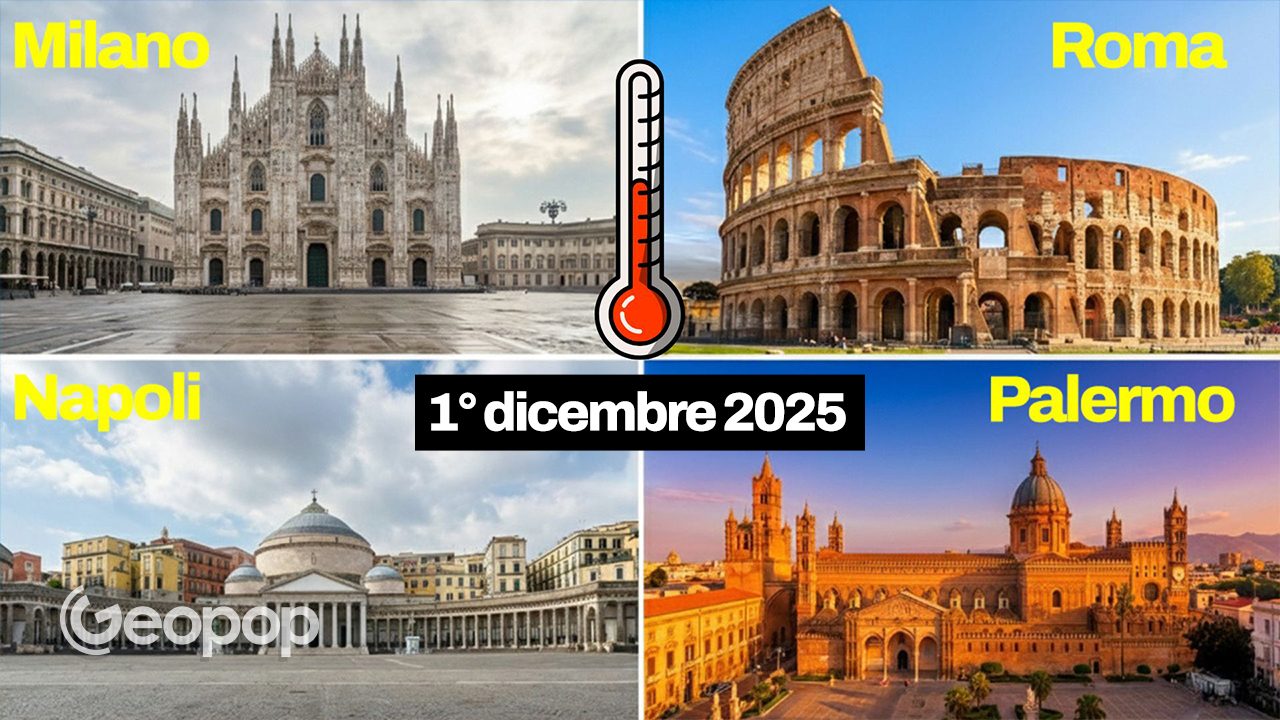
Many times we find ourselves wondering “But was it that cold last year?” or “But was it this hot in other years?”. These are questions that can be answered by searching through the meteorological archives, and that’s what we did: we bring you the temperatures of December 1st forecast for Milan, Rome, Naples And Palermocompared with those of the same date one, two and five years ago.
Milan
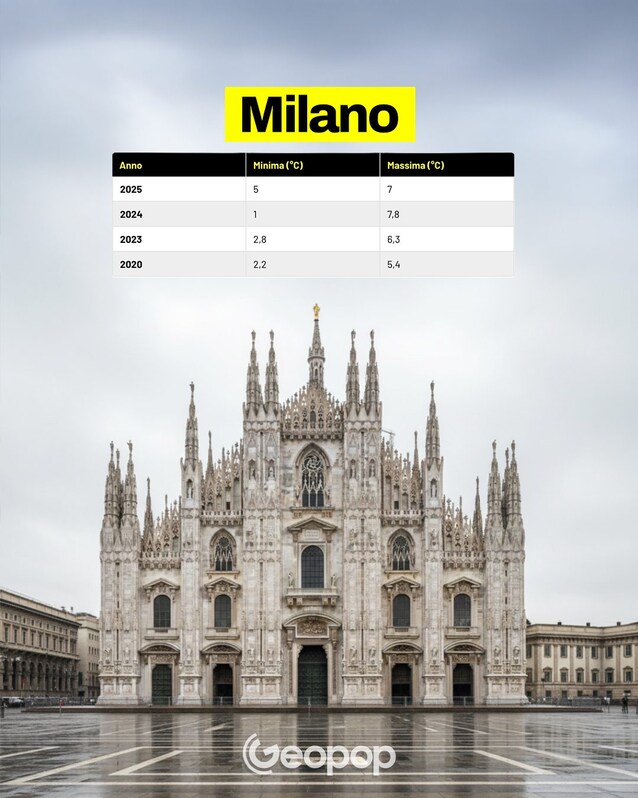
| Year | Minimum (°C) | Maximum (°C) |
|---|---|---|
| 2025 | 5 | 7 |
| 2024 | 1 | 7.8 |
| 2023 | 2.8 | 6.3 |
| 2020 | 2,2 | 5.4 |
Rome
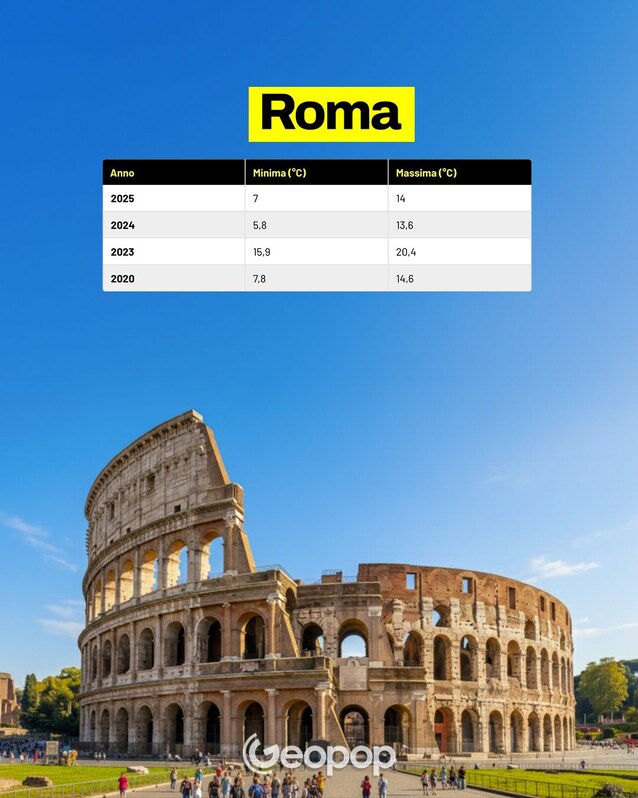
| Year | Minimum (°C) | Maximum (°C) |
|---|---|---|
| 2025 | 7 | 14 |
| 2024 | 5.8 | 13.6 |
| 2023 | 15.9 | 20.4 |
| 2020 | 7.8 | 14.6 |
Naples
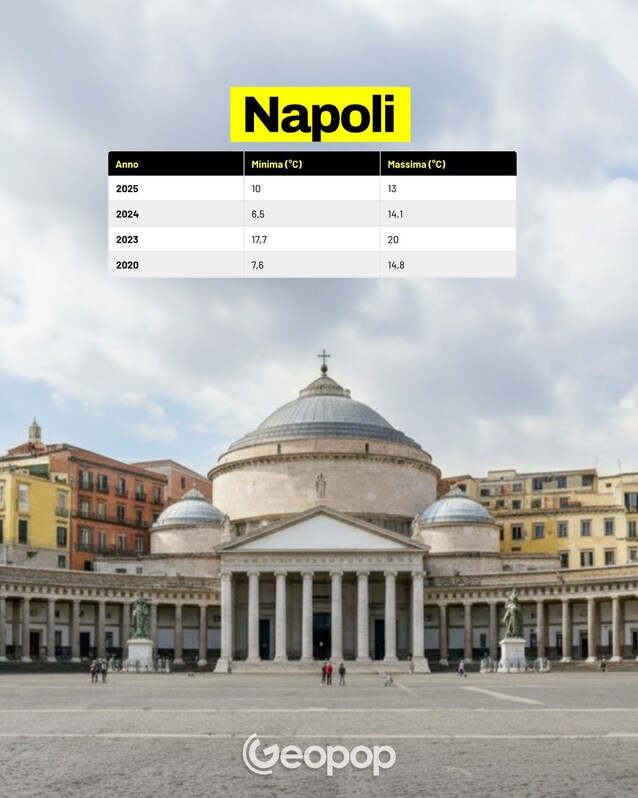
| Year | Minimum (°C) | Maximum (°C) |
|---|---|---|
| 2025 | 10 | 13 |
| 2024 | 6.5 | 14.1 |
| 2023 | 17.7 | 20 |
| 2020 | 7.6 | 14.8 |
Palermo
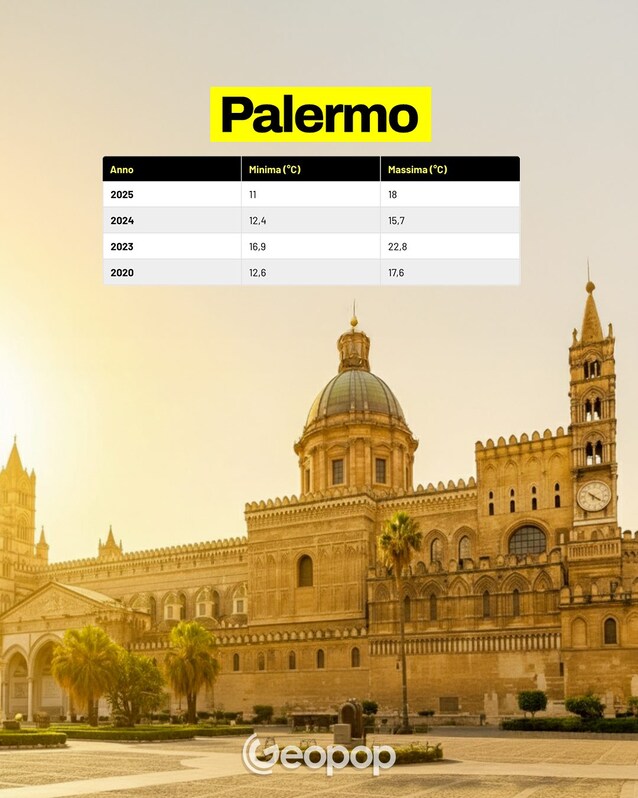
| Year | Minimum (°C) | Maximum (°C) |
|---|---|---|
| 2025 | 11 | 18 |
| 2024 | 12.4 | 15.7 |
| 2023 | 16.9 | 22.8 |
| 2020 | 12.6 | 17.6 |
It must be said that comparing the temperatures of a city in different years answers one curiosities of everyday life which we all happen to have, but from a scientific point of view it has no real meteorological and climatological value: any consideration such as “Today it is warmer” or “Today it is colder” compared to the past can only be made with respect to a reference average for at least thirty years. For example, here is the average temperature for the three cities on today’s date in the period 1991-2020to be compared with today’s ones:
| City | Average temperature 1991-2020 (°C) |
|---|---|
| Milan | 4.3 |
| Rome | 9.6 |
| Naples | 11.5 |
| Palermo | 14.2 |
Today’s data is from forecastsAir Forcewhile historical data comes from global climate analysis ERA5 created by the European Space Agency with the Copernicus program.
