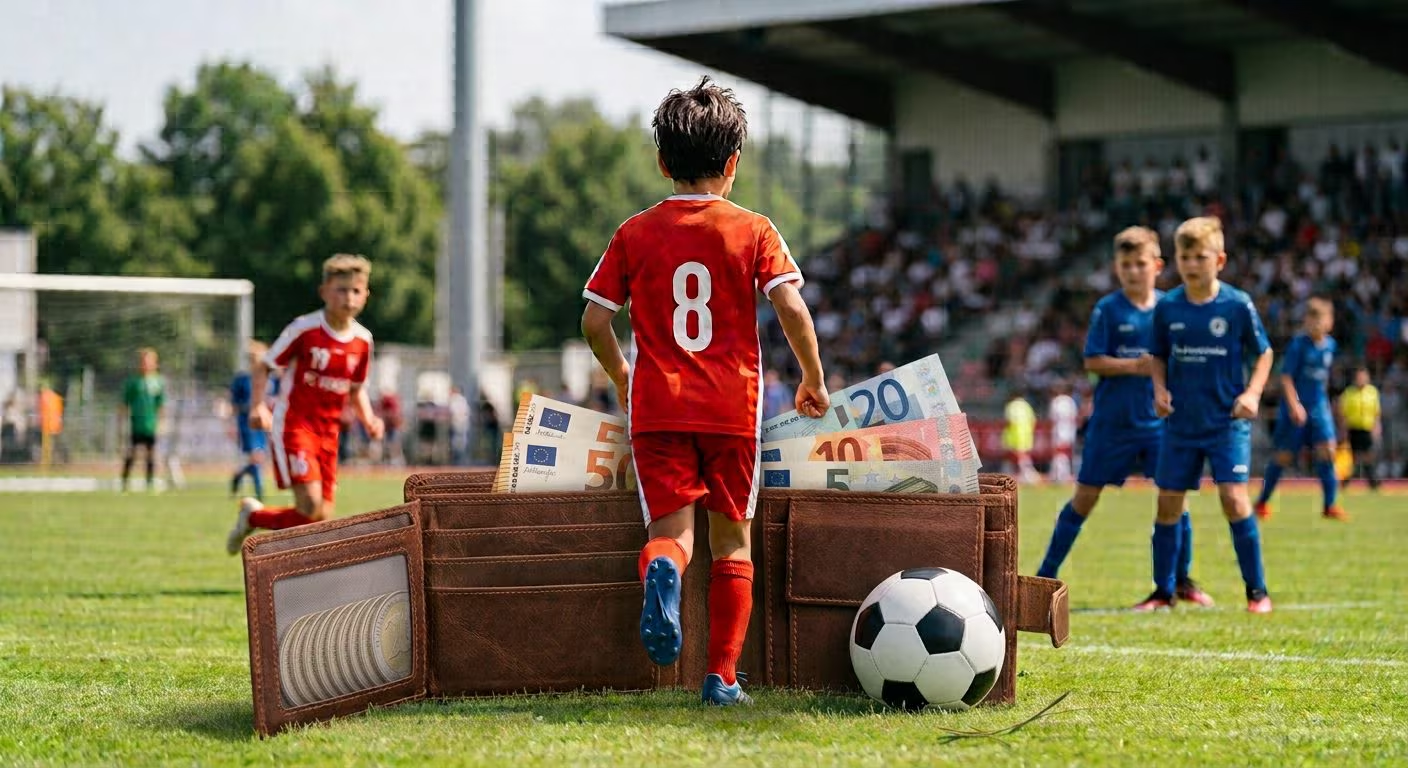
More than 5 million minors between the ages of 3 and 17 play sports, most of them playing sports three times a week. How much does it cost for a parent to send their child to tennis, swimming or football in Italy? The answer is provided by Federconsumatori with total disbursements reaching 1,000 euros.
Sport is part of our life. Three years ago it was introduced into the Italian Constitution in article 33: “The Republic recognizes the educational, social and psychophysical well-being value of sporting activity in all its forms”. From the latest ISTAT findings, there are more than 21 million 500,000 people who practice one or more sports in their free time in our country (il 37.5% of the populationa figure that has grown by 6.6% over the last thirty years). It is a sector that represents as a whole (between direct and indirect revenues) the1.5% of GDPor 32 billion euros with 420 thousand employed. But how much does it cost to start playing sports as a child and what impact does it have on families?
Average annual costs based on sport: swimming and tennis are the most expensive
According to ISTAT, the most practiced sport currently in Italy is gymnasticswhich also includes fitness and physical culture, with 33.1% of practitioners, almost a third of the total. Followed by soccerchosen by 20.3% of athletes. In third place are the water sports with 18.7% of practitioners. Based on federal membership data, or on official reports from federations and Sport and Health, football ranks first (1.5 million members), ahead of tennis and padel (1.15 million) and volleyball (320 thousand).
But how much does it cost to get your children to play sports? He provides us with the answer to this question Consumer Federation with its latest survey on practitioners under 14 years old dated 2023. From the monitoring it emerges that the most expensive activities, taking into consideration the cost of the course – with an average frequency of twice a week – and of the equipment, are the I swim (with a total outlay of 1,054 euros per year), the tennis (962 euros, of which about a third goes to equipment – the highest figure in this category) and the soccer (910 euros). To these amounts must be added the registration costs which, depending on the sports center, can vary on average from 35 to 150 euros. Here is the complete overview:
How many minors play sports in Italy and who can access benefits
I play sports more than 5 million minors between 3 and 17 years oldof which 75.6% are between 11 and 14 years old. ISTAT data on sports practice also shows that one in three minors (33.7%) between 6 and 10 years old trains three or more times a week; over half of the older ones, aged between 11 and 14, also practice sports with the same frequency (51.4%). Those who don’t do sports say they don’t do it mainly due to lack of interest and time, but The share of those who give up for economic reasons also weighs heavily (10.9% between 6-10 years; 11.3% between 11 and 14 years).
In order to facilitate the spread of sporting activity among young people and to facilitate families with the expenses to be borne, the Government provides a tax deduction equal to 19% for all costs relating to the practice carried out by children aged between 5 and 18. The maximum deductible is 210 euros for holders of a total income of up to 120,000 euros. The amount gradually decreases until it reaches zero if the family’s income is equal to or greater than 240,000 euros. Based on the annual report on tax expenditure, drawn up by the Commission for Fiscal Expenditure of the Ministry of Economy and Finance, in 2024 alone, 1.62 million Italian taxpayers had access to the deduction. Furthermore, during the current legislature a 2 million euro fund was created for the year 2027, with similar purposes (contributions for the costs of registration and attendance at amateur sports activities), although with different conditions such as the age of the beneficiaries and the family ISEE (under 18 years with ISEE less than 20 thousand euros).
