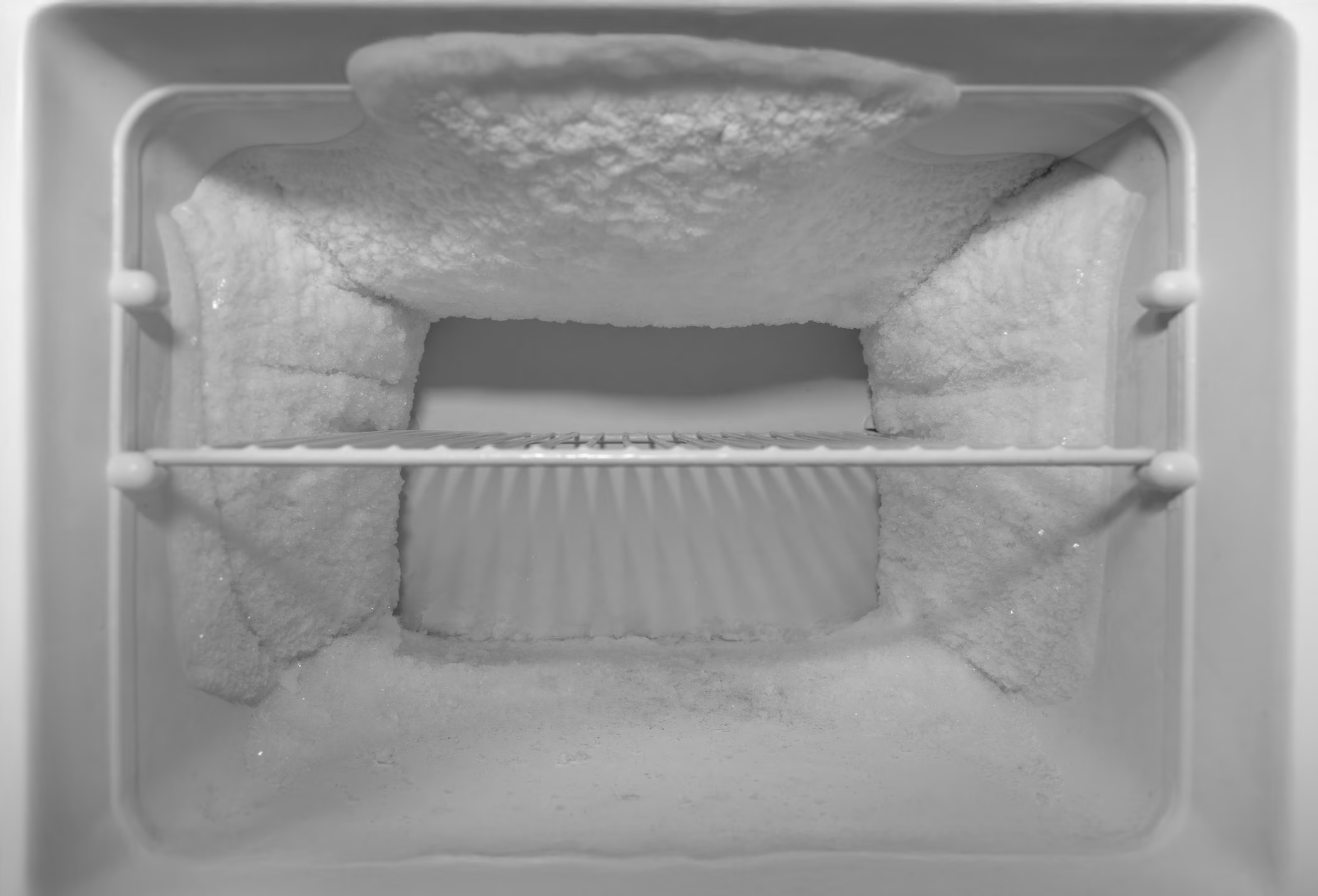
The ice that accumulates on the walls of the freezer mainly comes from the entry of humid air when we open the door: in contact with very cold walls, the water vapor can transform directly into the solid state. Reviews like the one by Liu and colleagues in 2024 highlight how, in the models No Frost this accumulation is automatically limited, while other freezers require one manual defrost. First of all food is kept safefor example in another freezer or in a cool bag, paying particular attention to meat and fish which, if exposed for too long to lower temperatures, could develop microbial contamination such as Salmonella. Then the freezer goes worn outunplugged and left open, allowing the heat to progressively melt the ice. Introducing a pan with hot water inside can speed up the process, while it is not recommended to use sharp objects to detach the frost directly.
Why ice forms in the freezer
As happens with the fridge, also in the freezer Layers of ice may form along the internal walls. This happens above all because, every time we open the door, a certain amount of external air, warmer and containing water vapor, enters the freezer. In contact with the cold walls, this vapor lowers its temperature so much until it transforms into ice crystals, without passing through the intermediate liquid state: a process called frost. It is substantially the same phenomenon that, in meteorology, leads to the formation of frost on the ground, grass or objects exposed to the air during particularly cold nights. As regards the elimination of ice from the walls of the freezer, just add a privative s in front of the name of the phenomenon: then we talk about defrost of the freezer.
Defrosting the freezer: quick steps and what to avoid
In modern freezers No Frostthis work is done automatically: a ventilation system with periodic defrost cycles limits the accumulation of ice on the surfaces. However, if our freezer requires it manual defrostit is good to follow some precise steps:
- Preparation: you must first empty it, then turn it off and unplug it from the power supply.
- Defrosting: we arrange towels or containers to collect the water and at this point, leaving the door open, we can leave everything to physics. The physical principle is quite simple: once refrigeration is stopped, the ice absorbs heat from the environment until it reaches the melting point. From that moment, the absorbed energy is used to break the bonds that hold the solid structure together and transform it into water. The classic “grandmother’s remedy” of placing a container of hot water in the freezer can help increase internal water vapor, allowing the ice to melt faster.
- Detach the pieces: when the ice has softened, we can help detach it with a plastic spatula.
- Final steps: once the defrost is finished, that’s it collect residual water and any pieces of ice, clean and dry the inside thoroughly and turn the freezer back on, always following the specific instructions for your model.
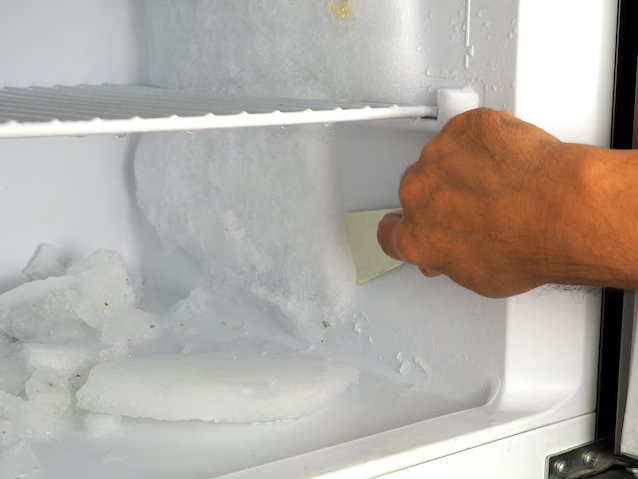
However, there are some things to pay attention to and methods to avoid to preserve the freezer:
- If you use “grandmother’s remedy”, you must be careful that the container it is not hot and use a saucer for safety, to prevent the surface from getting too hot damage the interior.
- When scraping away the larger pieces, it is not a good idea to “force” the ice to come off immediately using screwdrivers, knives or other sharp objects: in addition to the risk of getting hurt, you can drill or damage walls and freezer components.
Be careful about the foods we remove from the freezer
The most delicate point of defrosting, however, does not concern the freezer so much as what’s inside. Food should be quickly transferred to another freezer, refrigerator or cool bags. In fact, freezing does not sterilize food: once it returns to low temperatures, many microorganisms can multiply again. According to the indications of theUnited State Department of Agriculture (USDA), a food it should not be refrozen if it has been kept for more than two hours in the refrigerator or for one hour at temperatures above 32°C. Again according to the USDA, particular attention must be paid to perishable foods, such as red meat, fish or poultry: if they remain at temperatures above 4°C for more than two hoursconditions can favor the proliferation of pathogenic microorganisms, including bacteria such as Salmonella or some strains of Escherichia coli. Smelling it, looking at it or tasting a piece of it does not allow you to establish whether a food is safe or not: if it is contaminated it can in fact have no obvious alterations.
To avoid the root problem, therefore, it is best to organize defrosting when the freezer contains little food and quickly transfer it to a sufficiently cold place. And once you get everything back up and running, there’s a little daily behavior which can slow down the formation of new frost: do not hold the door open more than necessary. In fact, each new opening allows an exchange of air with the environment and therefore the entry of new humidity. Some of that water, once it enters the freezer in the form of steam, could be the ice that we find ourselves removing from the walls a few months later.
