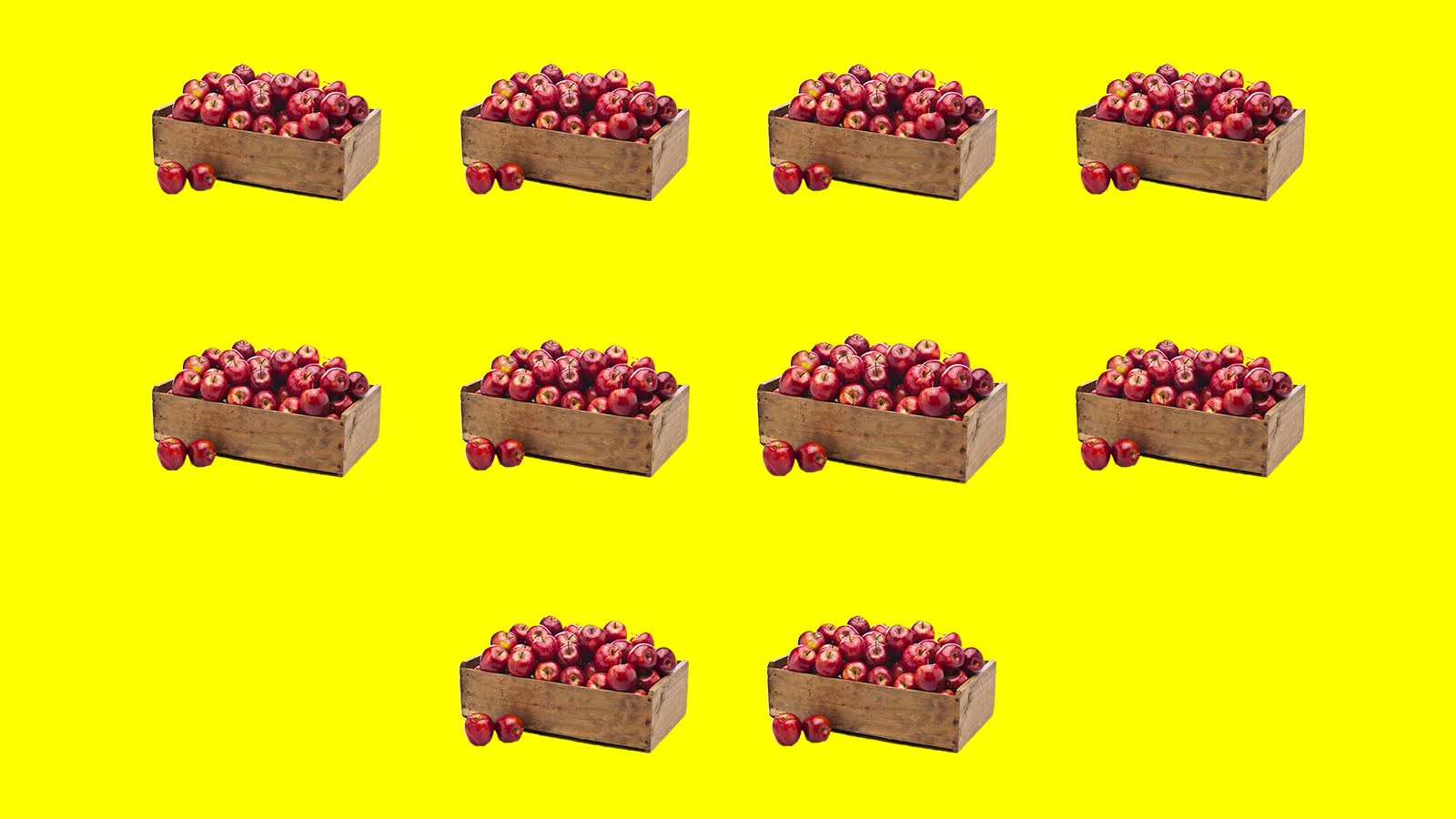
We find ourselves in this situation: we are farmers and we have 10 apple boxes ready to be loaded onto a truck headed to the market. 9 of these boxes contain apples that weigh 150 grams one o’clock, while 1 sola contains apples from 200 grams.
To distinguish the box with the different apples we had attached a red card to the outside, but due to the wind it came off and now we no longer know which one it is. To the naked eye, these apples are indistinguishable from lighter ones and all the cassettes are too equal to each other. Luckily, however, we have a scale and an empty cassette available.
The problem is that the truck is waiting and we have time to do a single weighing. How do we find the box with the heaviest apples?
The solution to the apple crate riddle
If we had more time and more weighing available, we could take one apple at a time from each box, weigh it and thus identify the box with the heaviest apples. However, since we can only use the scale once, we need to find a more efficient way to get all the necessary information with a single measurement.
First we number the cassettes from 1 to 10. Then we take from first cassette an applefrom the second two applesfrom the third three apples and so on, until we reach tithe cassette, from which we take ten apples.
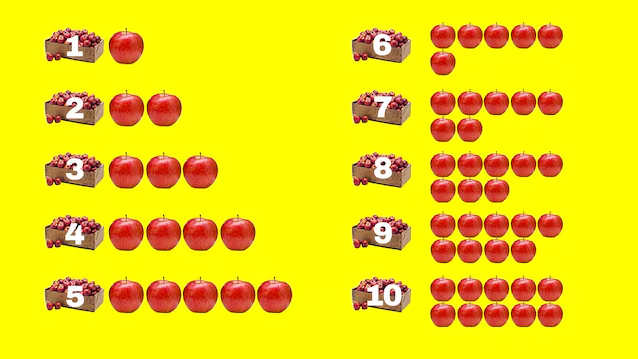
In total we will have selected:
1+2+3+…+10 = 55 apples.
Now we put all the apples in the empty box and weigh them together, only once. If all the apples were the same and weighed 150 grams, the scale would read exactly:
55 apples x 150 grams = 8250 grams.
However, we know that one of the boxes contains 200 gram apples, that is, apples that weigh 50 grams more compared to the others. Our scale, therefore, will read a number greater than 8250. The difference between weight measured by the scale e 8250 it will tell us exactly how many 200 gram apples we have caught: a waste of 50 grams corresponds to one apple, a waste of 100 to two apples, a waste of 150 to three apples, and so on.
Thanks to this information, we will be able to obtain the number of the box of different apples, because it corresponds to the number of heaviest apples.
For example, if the scale read 8300 grams, we would have:
8300 − 8250 = 50 grams.
Meaning what a alone apple 200 grams. Since we only took one apple from box number 1, the box with the heaviest apples will have to be there number 1.
If instead the scale read 8350 grams, we would have:
8350 − 8250 = 100 grams.
In this case there would be two apples heavier than expected. The cassette from which we took them, therefore, must be there number 2.
Following the same reasoning, if we read 8400 grams on the scale, the cassette we are looking for will be there number 3while if we read 8750 grams we will have a difference of 500 grams, i.e. 10 heavier apples: the box with the different apples will therefore be number 10.
In this way, with just one weighing, we will be able to identify the correct cassette.
