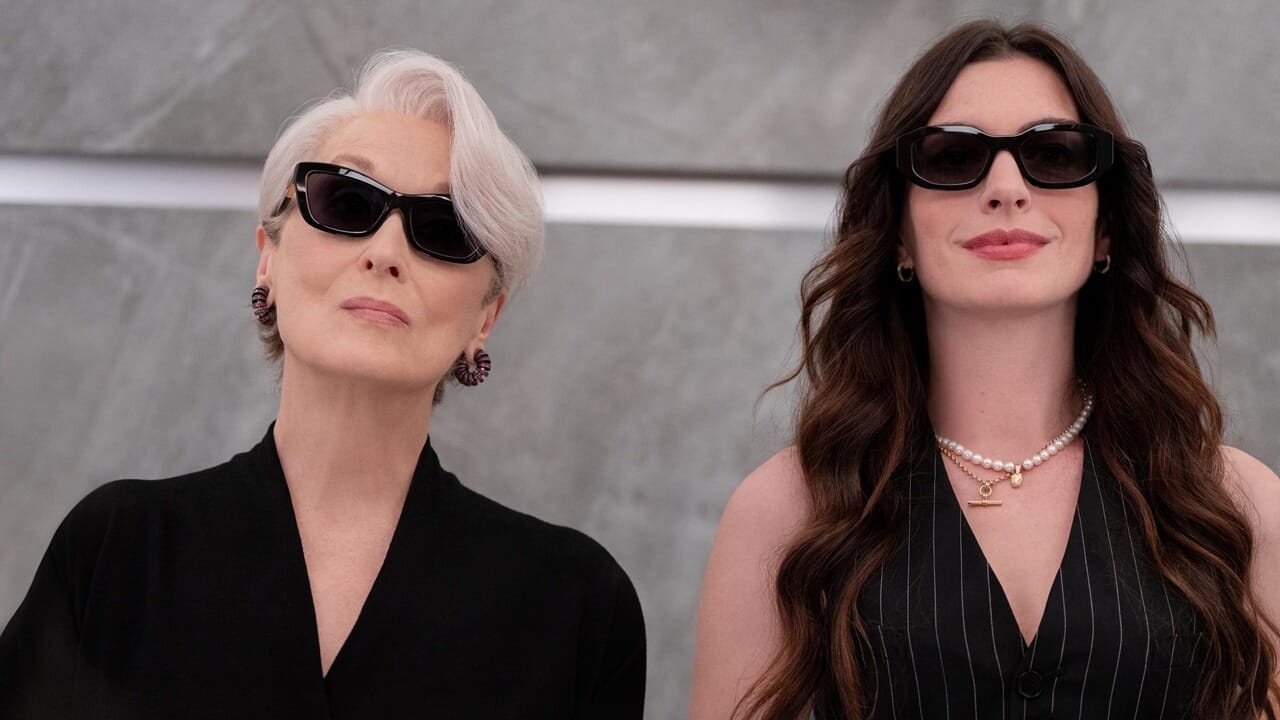
I saw “The Devil Wears Prada 2” and now I’m (give me) a little scared
Is “The Devil Wears Prada 2” funny? Yes. But it also makes you think a lot and in the end, when you leave the room, you will realize how different it is from its predecessor, how much Andrea Sachs has changed because, alas, we too have changed. But above all the world has changed, that of work, that of publishing and David Frenkel’s film ultimately disturbs us with the truth contained within its 119 minutes.
The crisis of a way of understanding the news
“The Devil Wears Prada 2” begins as it began for many, many journalists lately all over the world: an email telling you that it’s over, goodbyes, you’re fired and the magazine closes, or is closing or in any case there’s no more space. It’s happening everywhere, here in Italy the announcement regarding Wired Italia caused a sensation, and there is no doubt that Aline Brosh McKenna’s screenplay knows where to strike, knows how to achieve the total denial of the key element of the first film: the dream. In any case Andrea was, for better or worse, twenty years ago overwhelmed by the glamour, the effort, the charm and the ruthless reality of Runwaysfrom Miranda and her icy pride, from Nigel and his impertinent wisdom, from the competition with Emily, how much things have changed now. She has grown up, but she is alone, single, she has no children but frozen eggs, her profession is jeopardized by constant cuts, by the domination of content creators and influencers. Miranda? She’s not doing any better, in fact she appears on the gridiron too. The reason is simple: budgets are shrinking, the internet is always lurking, ready to destroy and elevate you with equal ferocity, in short, these are barbaric times, these are the times in which we all live.
“The Devil Wears Prada 2” replaces the fear in the offices, faced with Miranda’s cold gaze, the choice between affections and career that dominated the first, beautiful film, with another fear: that of unemployment. To this, in reality, we must add the one for personal bankruptcy, which starts at 40 years of age, when (in theory) you should have children, a family, a home and the security that has been disappearing since 2008. Here, “The Devil Wears Prada 2” throws all this in our faces, between a fashion show in Milan, one in New York, Lady Gaga, Donatella Versace. The enemy? It’s not Miranda, it’s not even Emily in the end. The enemy is Jay Ravitz, the new CEO of Runwaysclassic modern guru all synthetic clothes, fake sporty air and a mechanical vision of life, made of numbers, profit and total lack of empathy. His colorful alter ego is his “colleague” Benji Barnes (Justin Theroux), eccentric, spoiled but more manipulable. They are Mark Zuckenberg and Elon Musk, quite clearly, they are the ultra-capitalists who are taking publishing and eating it from the inside, they are the black souls who also besiege our lives.
As long as there is fashion there is hope
Andrea finds herself in a dangerous, unstable situation, with her old magazine closed and the doubt that assails her and her colleagues: are we really still of any use? “The Devil Wears Prada 2” is almost a documentary in how it talks to us about the lack of certainties, about how noise, entertainment and social media are confused today with journalism and information. Do you want an example? The preview of this film. In Milan, as in Rome, the journalists got the usual preview, a t-shirt and off they went. Influencers and content creators were instead brought to Lake Como. More and more at the previews they have access to talent, preferential treatment which is also economically expensive. But, and this is the fundamental point, they are not journalists, they do not provide information, they do marketing and product placement. Just think back to the interview (if we can call it that) of Marra and Fedez with Meloni. No uncomfortable questions, no pressure, nothing that made her uncomfortable. That’s not what a journalist does. In my own small way, I can say the same about those who have built a career commenting on films and TV series on Instagram or Facebook and are put in charge of previews, meetings, panels and Masterclasses: they never speak badly of anything.
The reason? They would obviously no longer be called. And this is what increasingly happens to journalists, who are asked to “sell” and not to analyze. Andrea, Miranda and the others already had to do the same twenty years ago, and “The Devil Wears Prada 2” emphasizes how in fashion there are no longer opinions at an editorial level, they are now the megaphone of a machine that asks it to create myths in abundance. Obviously this hasn’t been the case since today, but recent years have emphasized this trend. “The Devil Wears Prada 2” seeks as a solution the return to American exceptionalism, to patrons like Lucy Liu’s Sasha Barnes who have the sensitivity to understand that they put the money into it, they choose the people to whom they entrust the car. Tell it to Bezos and how he destroyed the Washington Post, tell it to Roger Lynch who defined Wired Italia as “unprofitable” without even actually giving real data and making it clear that he will use AI, that the editorial part will gradually be demobilized to make Condé Nast become a huge event promotion office. So yes, I am afraid, for my job, for journalism, because without true journalism democracy dies, without journalism the truth becomes a mirage.
