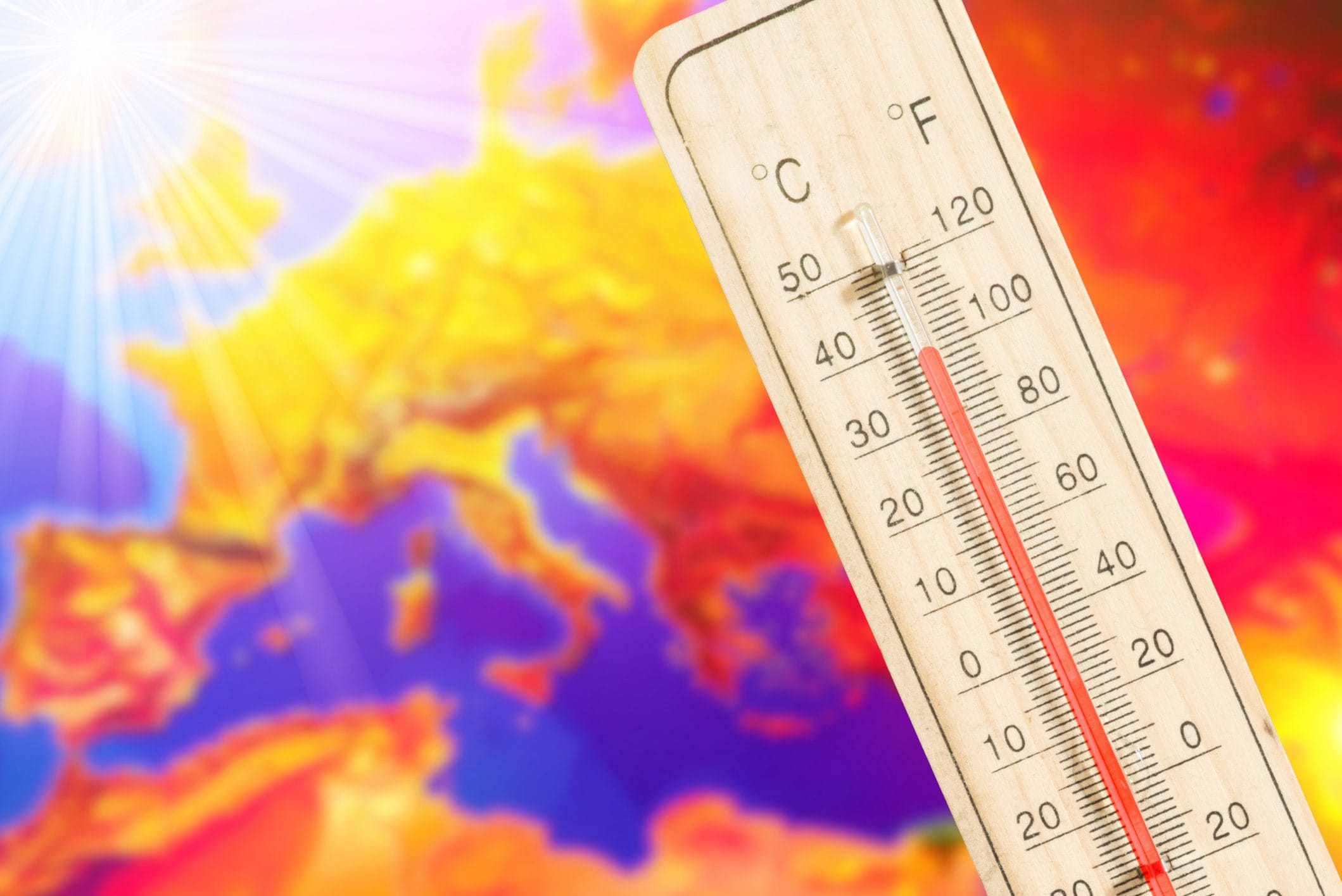
A study in Nature Climate Change explains why stopping emissions may not be enough to immediately stop the heat if the planet is already very warm.
A new study published in Nature Climate Change by a group of researchers led by Andrew H. MacDougall addresses a key question for our future: whether we bring a zero the emissions of CO₂the temperature of the Earth really stops or continues to go out?
And above all: it depends on how hot it is already the Earth when we decide to stop? The answer is that stopping emissions may not be enough to stop global warming.
How did scientists discover this?
To understand what happens “after” net zero, researchers obviously cannot wait decades in reality: they use sophisticated computer simulations of the Earth systemprograms that reproduce the behavior of the atmosphere, oceans, ice and forests.
In the study led by MacDougall, scientists have compared different virtual scenarios: they raised the planet’s temperature to different thresholds, from lower warming to much higher warming and then, in each simulation, they “pulled the plug” on CO₂ emissions to observe what happens in the following decades.
For years it had been said in a simple way that, once we reach “net zero”, that is, when we no longer add new excess CO₂ into the atmosphere, the average global temperature tends to flatten and remain stable, like a line that finally stops after a long climb. Looking at these different scenarios, however, the study shows that the behavior of the climate after the stop is not always the same: it changes depending on how hot the Earth is already when we decide to stop.
The push and pull of the climate after the emissions block CO₂
We can imagine it as a push and pull between two opposing forces that continue to act even after we have stopped emitting CO₂:
- The push that remains in the air and oceans: even when we stop emitting greenhouse gases, the climate system has accumulated energy and has not yet found a new equilibrium. It’s like a pot of hot water removed from heat: it does not immediately become cold and continues to give off heat for a while. The higher the initial heating, the more this residual push is felt.
- The natural brake of sea, forests and soil: after the halt to emissions, oceans and terrestrial ecosystems continue to absorb part of the CO₂ already present in the atmosphere, thus helping to cool the system. The problem is that, when the planet gets much warmer, this natural aid loses some momentum and struggles more to do its part.
When the heating is limited, the two effects tend to compensate each other almost equally and the temperature is more easily able to stop at one plateau. However, when warming is very high, the natural brake has a harder time holding up and the thermometer can continue to rise a little even after cutting emissions.
Reducing fossil fuels also means dealing with others greenhouse gases such as methanewith the aerosol which until now partially shielded the sunlight and with the inertia of oceans and ice, which continue to move over long periods of time, for example causing sea levels to rise for centuries.
So why is stopping emissions the decisive move?
The underlying message, in the end, is very clear and anything but resigned: waiting is not worth it. Stopping emissions remains essential to block the main heating engine, but doing it early is much more effective than doing it late, when the tank is already almost full and the margin for maneuver is narrower.
Turning off the tap doesn’t make everything that has already happened instantly disappear, but it is the only way to prevent the situation from continuing to worsen.
