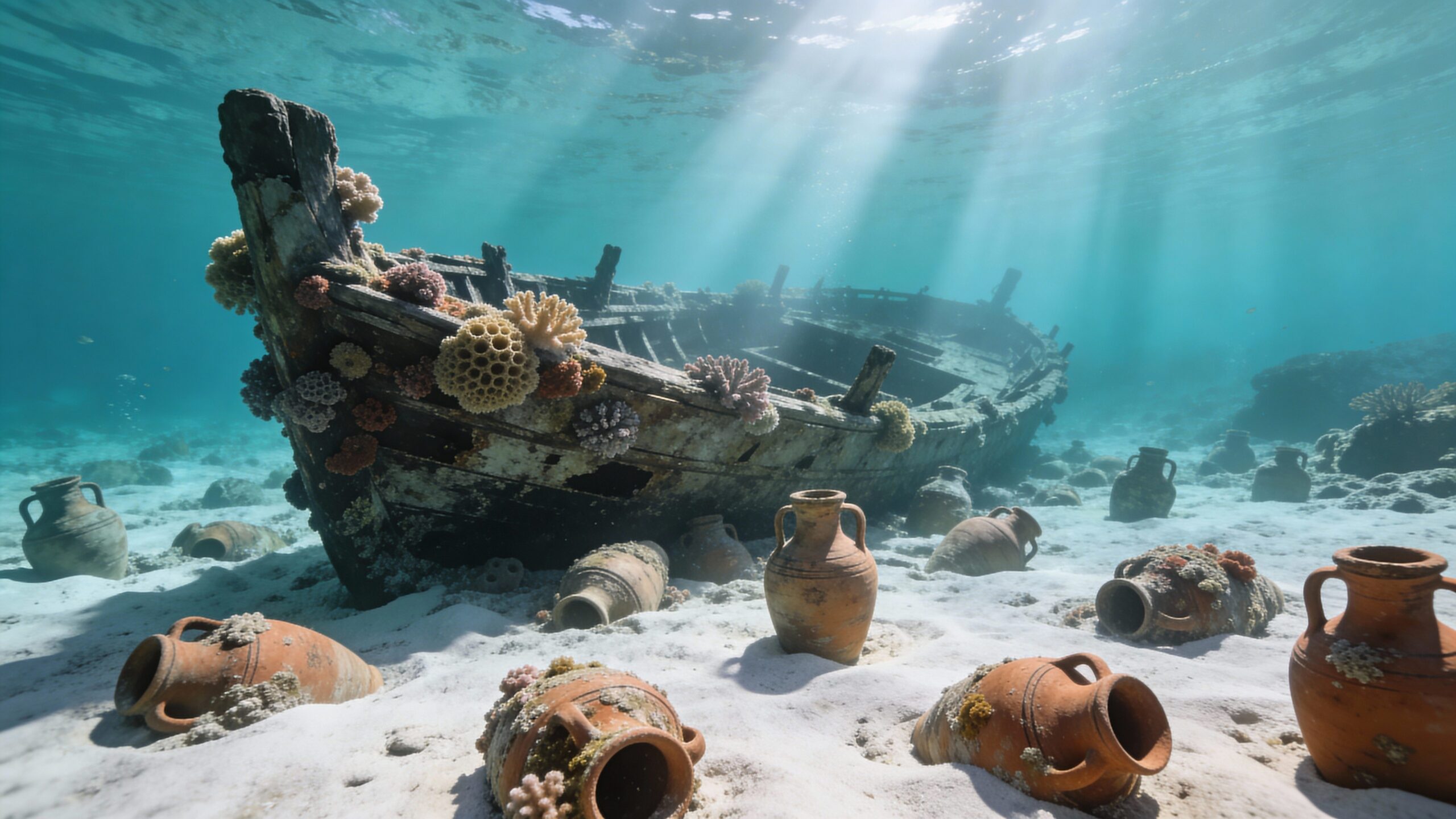
In the depths of Salentooff the coast of Saint Catherine of Nardòhas been lying for over forty years ancient wreck of great importance. It’s one cargo shipthat is, a cargo vessel, shipwrecked between the 4th and 2nd centuries BC (late Republican period), officially registered in General Catalog of Cultural Heritage of the Ministry of Culture. The wreck was identified at the beginning of the 1980s during scuba diving and subsequent reconnaissance by the Superintendence. Today the wreck and the surrounding seabed could finally be cleaned and made safe, becoming a real “underwater museum“.
The vessel, approximately 23 meters long, carried an impressive load of Greco-Italic amphorae (a type of amphora of Magna Graecia origin, produced between the 4th and 2nd century BC), probably intended for the wine trade. The original load could perhaps have exceeded a thousand amphorae, many of which are still lying on the seabed today, together with wooden parts of the hull.
Archaeologists confirm the presence of a underwater archaeological site of great scientific value, datable between 400 and 100 BCfully included among the protected submerged archaeological assets. This is not an occasional or poorly documented discovery, but a site officially recognized and studiedalbeit in a fragmented way. Unfortunately the location of the wreck is known to the public grave robbers (people who illegally search and dig in discovered or undiscovered archaeological areas to steal ancient goods), that in an attempt to recover amphorae to resell, they have some damaged several, breaking their necks.
This submerged heritage has been in a state of ruin for a long time bureaucratic stalemate. Unlike similar discoveries along the Apulian coast, which have been subject to targeted protection interventions, the Santa Caterina wreck has never been integrated into a scientific recovery project. The technical complexities and the huge economic commitment required have so far precluded definitive securing of the site, leaving it vulnerable to environmental degradation and looting. Yet, its potential is enormous: the complete study of the ship could provide valuable information on trade routes of republican Romeon shipbuilding techniques and the economy of the ancient Mediterranean.
