“In Utero” is the right series to reflect on the concept of family (and the desire for a child)
There are a man and a woman, in love and eager to have a child, but struggling with the nightmare of infertility. Then there is a couple of women, together for years, who however cannot biologically have children. And again a thirty-year-old, single, who decides to become a mother with a friend, therefore regardless of the traditional idea of romantic love.
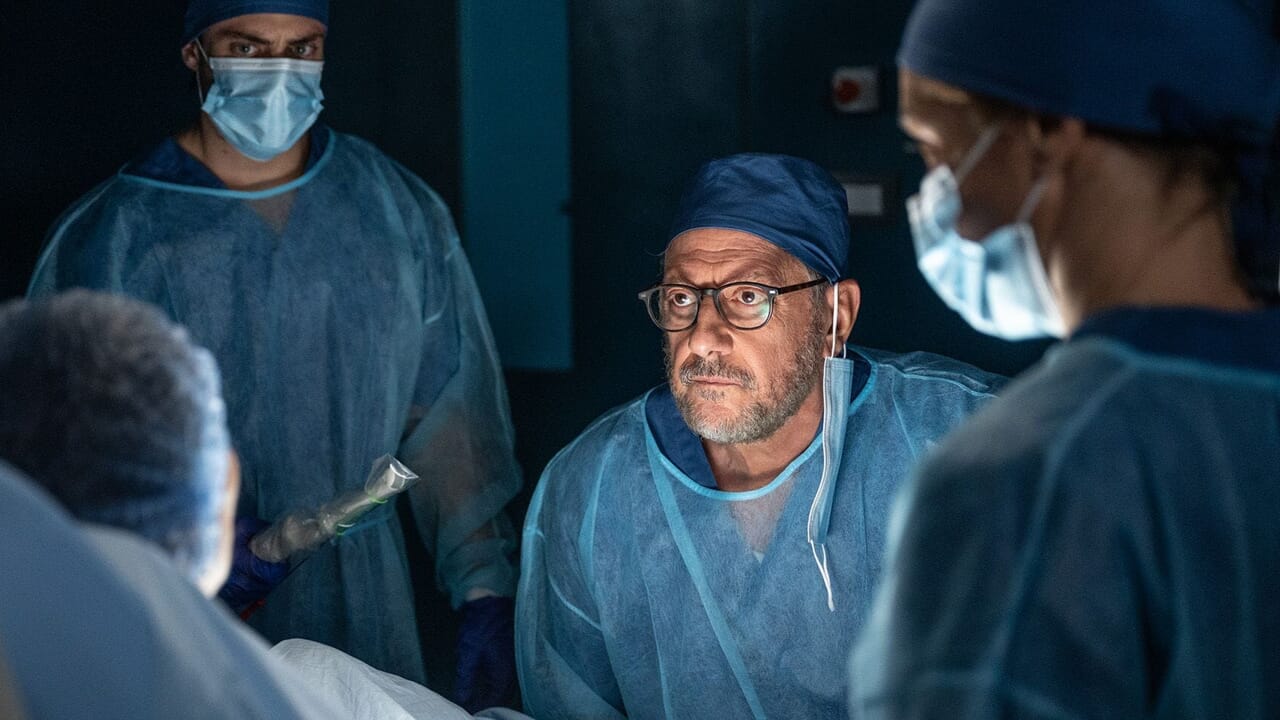
They are the protagonists of “In Utero”, a new TV series created by Margaret Mazzantini, with Sergio Castellitto in the role of a doctor who founded an assisted reproduction clinic in Barcelona. On HBO Max from May 8, the series explores all possible forms of the desire for parenthood. And it is more relevant than ever: in Italy alone, in 2023, almost 90,000 couples resorted to medically assisted procreation. And who knows how many others have done it abroad.
What is “In Utero” about?
“Children are a desire, they are neither a right nor a duty,” says Castellitto in the third episode. And it is perhaps the manifesto of the entire series, which is configured as a real “psycho-medical drama”, to use a definition coined by the actor himself. From there, in fact, in eight episodes, the desire for parenthood (and non-parenthood) that affects men and women, individuals and couples is explored. And it is done from a myriad of angles, as if scrolling through the infinite faces of a kaleidoscope of experiences.
Between deep fears, biological limits and unanswered questions, there are couples that fall apart because this baby doesn’t arrive; or there are those who, on the contrary, just don’t feel like upsetting their body with a pregnancy, but don’t know how to tell their partner. And, again, the other side of the coin is explored, the more cynical one: assisted fertilization treated as a business, like a “child factory”; at the head are Ruggero (Castellitto) and his wife Teresa (Maria Pia Calzone). And he hides a huge secret.
Parenting described in its rawness, not as the usual “miracle of nature”
“In Utero” is, in this sense, a state of the art of parenting today. A necessary product because it restores motherhood and fatherhood in their rawness, without the patina of the “miracle of nature” to which cinematographic stories have long accustomed us: often, in fact, the miracle does not happen (or cannot happen).
“Back in the day, becoming a mother was a natural thing,” Mazzantini observed at the press conference. “Today, however, the issue is much more complex and debated: it is more of a psychic thing than a visceral one”. The series then translates these ethical and moral dilemmas into people, into characters, into real life stories. An effective approach, in a present like ours, where parenting is more than ever dragged into the debate, between conservative and progressive blows; between the alarm over the collapse in birth rates and the self-determination of those who choose not to become parents; between declining fertility curves and decisions that remain, first of all, intimate and based on conscience.
In Utero, the video interview with Sergio Castellitto: “We went to shoot in Spain”
Having a child with a friend, regardless of romantic love
It is inevitable, therefore, that the series also touches on the concept of “family”. In fact, although the authors avoid any ideological or political key, director Maria Sole Tognazzi does not fail to underline: “We had to go to Spain to shoot, because here in Italy there are couples who do not have access to assisted fertilization. And this is a theme.” It is no coincidence that Flavia, played by Sara Drago, decides to have a child with a homosexual friend, giving up romance: “We are doing something new, yet to be invented”, she tells him.
A series that works, but could have been even cruder
We could still stay here to talk about all the ethical, religious and human implications that “In Utero” brings to the table; but we leave it to you to discover them. In the meantime, we advise you to approach the series with a documentary, as well as dramatic, perspective: its strength lies in the density of the perspectives, rather than in the emotional intensity. Furthermore, according to what emerged in the press conference, there is also the suspicion that Mazzantini’s original idea was cruder than the final result. And, perhaps, we would have appreciated it more.
As for emotional power, a separate mention goes to a scene played by Francesco Colella, in the role of a man who has been attempting PMA with his wife for some time: “Why, doctor, even if I don’t have children, have I always felt like a father?”, he asks Castellitto with tears in his eyes. A question that many will be able to identify with. The last episode ends with a lot of irons in the fire, and a second season is conceivable. The genetic and desire combinations, after all, are always infinite.
Rating 8
