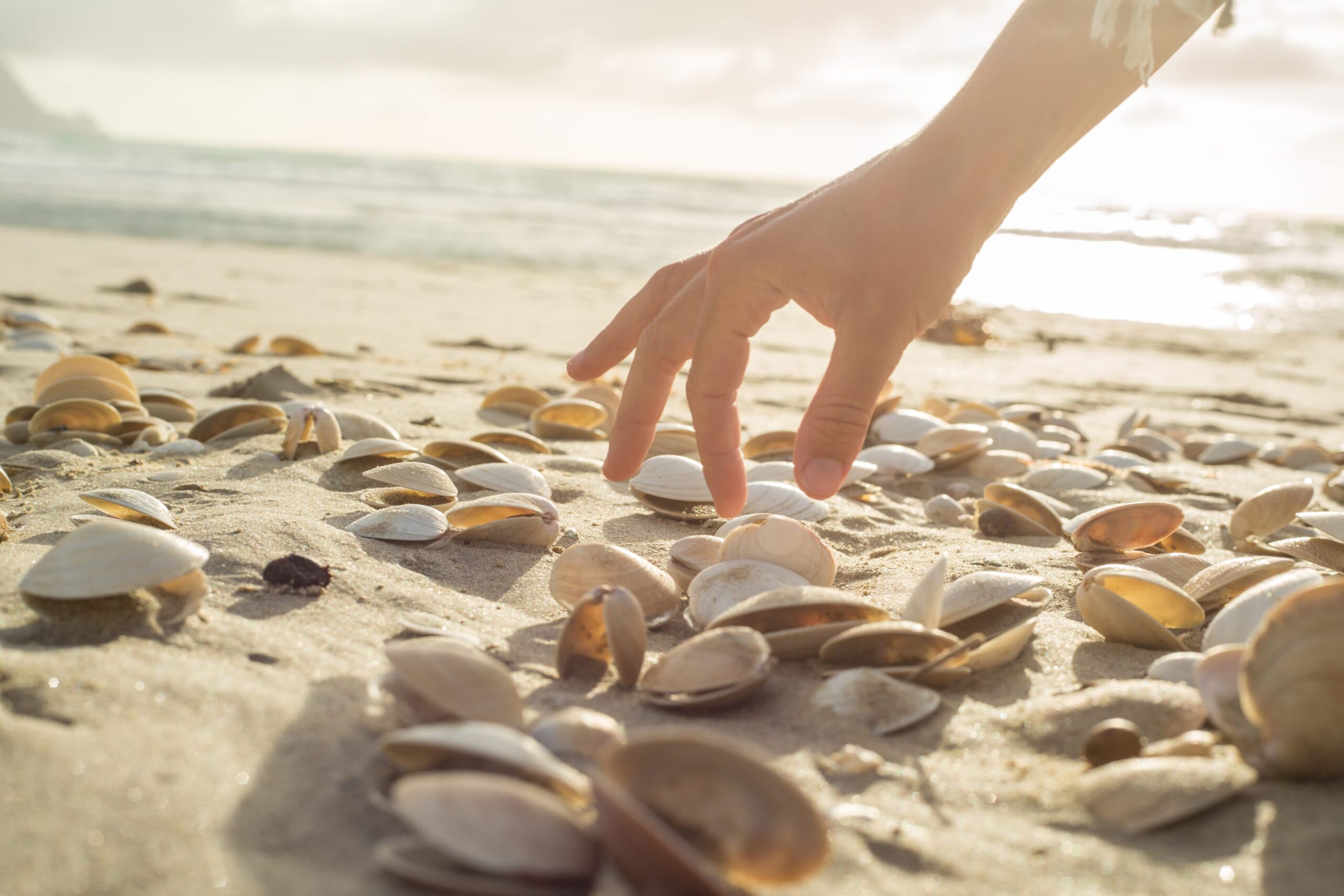
Collect one shell from the beach and take it home like souvenirs it may seem like a completely harmless gesture. In reality, however, the removal of materials from maritime state property is subject to precise limitations by article 1162 of the Navigation Code: it is an administrative offense and can cause fines exceeding 9,000 euros (very salty in particular in Sardinia and in marine protected areas). And there is also an ecological reason: shells, even when they are empty, can continue to have a role in the coastal ecosystembecoming shelters for other organisms or slowly turning into sediment.
It is not legal to collect and take away shells, sand and stones: what the law says
It is first and foremost that the rules are established Navigation Code. First of all, article 28 establishes that, among others, the lido and the beach are part of the maritime state property. Article 1162, however, sanctions those who extract “sand, algae, gravel or other materials” from state maritime property or the territorial sea without the concession provided by law. Initially it was also expected imprisonment of up to two monthswhich was then replaced with an administrative sanction and the payment “of a sum ranging from three million to eighteen million lire”: translated into euros you risk paying from €1,549 to €9,296.
The standard does not explicitly mention the shellsbut these are brought back to the category of “other materials” present on maritime state property. For this reason, in the absence of the necessary permissionsit is not allowed to take away shells from the beach, as well as sand, gravel or other natural materials.
In some regions, such as Sardinia, specific regulations have been issued (Regional Law N.16 28/07/2017) for these “tourist thefts”: from €500 to €3,000 fine. Regional laws like this are primarily designed for make checks and sanctions more immediate: Article 40 of the law, in fact, provides that controls and sanctions can also be provided by the regional Forestry Corps and local police, expanding the possibilities of intercept violators.
However, this is a local example, which however refers to the national law in the case of serious offences. Article 1162 always applies throughout the national territory of the Navigation Code and its financial penalties. So, be careful when taking a shell away to make pendants or ornaments!
But why can’t an empty shell be taken from the beach? What function could it have after the death of the mollusc that produced it?
An empty shell can become a house: what they are and how ecological they work
For some animals, an abandoned shell represents a fundamental resource. The best known case is that of hermit crabscrustaceans that have soft abdomens and use the empty shells of gastropods as protection. However, the availability of shells is not unlimited: the size, shape and quantity of shells present in the environment can influence which ones are used by hermit crabs and even the competition between individuals. Shell-rich beaches are usually found where certain sea currents or winds push the shells ashore.
A study conducted on Pagurus longicarpusfor example, compared two populations who lived in environments characterized by a different availability of empty shells, showing differences in shell usage patterns. Other research has also highlighted that the availability and characteristics of shells can influence the growth and reproduction of hermit crabs.
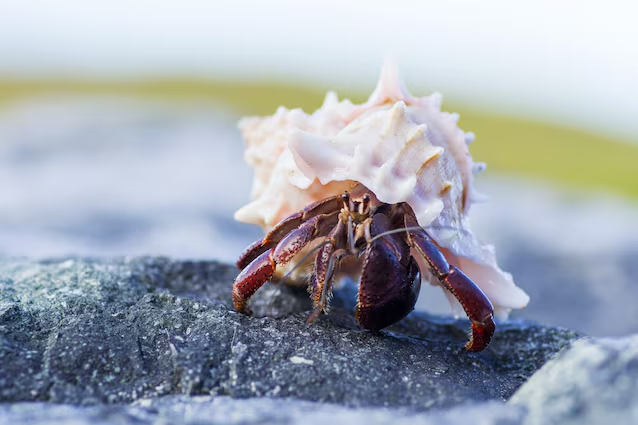
But hermit crabs are not the only organisms that can exploit empty shells. Shells can create microhabitats and hard surfaces within environments otherwise dominated by sand or mud, offering refuge or substrate to several small invertebrates. Recent studies have shown, for example, that empty shells can increase habitat complexity and foster macroinvertebrate communities. This means that a seemingly “abandoned” shell can continue to be used by the ecosystem long after the mollusk that produced it is no longer there.
They are important sediments for marine coasts: laboratory experiments
Most of the composition of a seashell is made of calcium carbonatea mineral substance that constitutes approximately the 95% of its volume. The remaining 5% is composed of organic substances, such as proteins and other macromolecules, which make the shell flexible, resistant and capable of growing continuously. When they remain in the environment, the wave motion and friction with other sediments can progressively consume and fragment them. Their remains can then become part of the beach or seabed sediments.
This process is particularly important on coasts where a significant portion of the sediment is of biological origin. In these environments, in fact, the sand does not derive exclusively from the erosion of the rocks: it can also contain fragments of shells and other calcareous remains produced by marine organisms.
The shells and their fragments can also modify the physical characteristics of the sediment. Experiments conducted in the laboratory have shown that the presence of shells and their fragments can modify the dynamics of the sediment: by increasing the amount of biogenic material, the ripples in the sand become smaller and migrate more slowly, thus influencing sediment transport.
This doesn’t mean that a single shell prevents beach erosion. Coastal erosion depends on many factors, including waves, currents, wind, sediment availability and coastal characteristics. However, shells represent a component of sedimentary material and, in some environments, can contribute significantly to its balance.
The problem is the sum of small gestures
But can collecting just one shell really make a difference? Probably not in any appreciable way. The problem emerges when the same gesture is repeated by many people for years.
A concrete example comes from a study conducted on the Mediterranean coast of Iberian peninsula. In a small bay, the researchers compared the amount of shells present on the shoreline in two periods, between 1978-1981 and 2008-2010. In about thirty years, tourist arrivals had increased by 2.74 timeswhile the abundance of shells on the shore had decreased by 2.62 times. The two phenomena also resulted significantly related.
The study does not demonstrate that tourism and harvesting are the only cause of the decline in shells: it is in fact a relationship observational. However, the authors pointed to removal by visitors as a possible explanation and highlighted the potential consequences of losing this material, including alterations in calcium carbonate recyclingof the availability of habitat and, potentially, of erosion of the beach.
It is precisely here that a seemingly insignificant shell takes on a different meaning: the problem is not the single shell, but its repeated and large-scale theft. In summary: the shells on the beach they are not natural souvenirs. This is why the simplest choice we can make is also the most respectful one: look, photograph and leave the shell where we found it. It may seem like just a small empty shell, but for the beach and the organisms that live there it may not be at all.
Sources:
Erik Paul Scully, The effects of gastropod shell availability and habitat characteristics on shell utilization by the intertidal hermit crab Pagurus longicarpus Say, Journal of Experimental Marine Biology and Ecology, Volume 37, Issue 2, 1979, Pages 139-152. Bertness, Mark. (1981). Pattern and Plasticity in Tropical Hermit Crab Growth and Reproduction. American Naturalist – AMER NATURALIST. 117. 10.1086/283757. Ana Fortič, Valentina Pitacco, Domen Trkov, From loss to life: how empty Pinna nobilis shells enhance motile macroinvertebrate habitats in soft-bottom environments, Estuarine, Coastal and Shelf Science, Volume 333, 2026, 109789, ISSN 0272-7714. Ilarri MI, Amorim L, Souza AT, Sousa R. Physical legacy of freshwater bivalves: Effects of habitat complexity on the taxonomical and functional diversity of invertebrates. Ski Total Environ. 2018 Sep 1;634:1398-1405. Cheng, C. H., de Smit, J. C., Fivash, G. S., Hulscher, S. J. M. H., Borsje, B. W., and Soetaert, K.: Sediment shell-content diminishes current-driven sand ripple development and migration, Earth Surf. Dynam., 9, 1335–1346, https://doi.org/10.5194/esurf-9-1335-2021, 2021.
Kowalewski M, Domènech R, Martinell J. Vanishing clams on an Iberian beach: local consequences and global implications of accelerating loss of shells to tourism. PLoS One. 2014 Jan 8;9(1):e83615.
