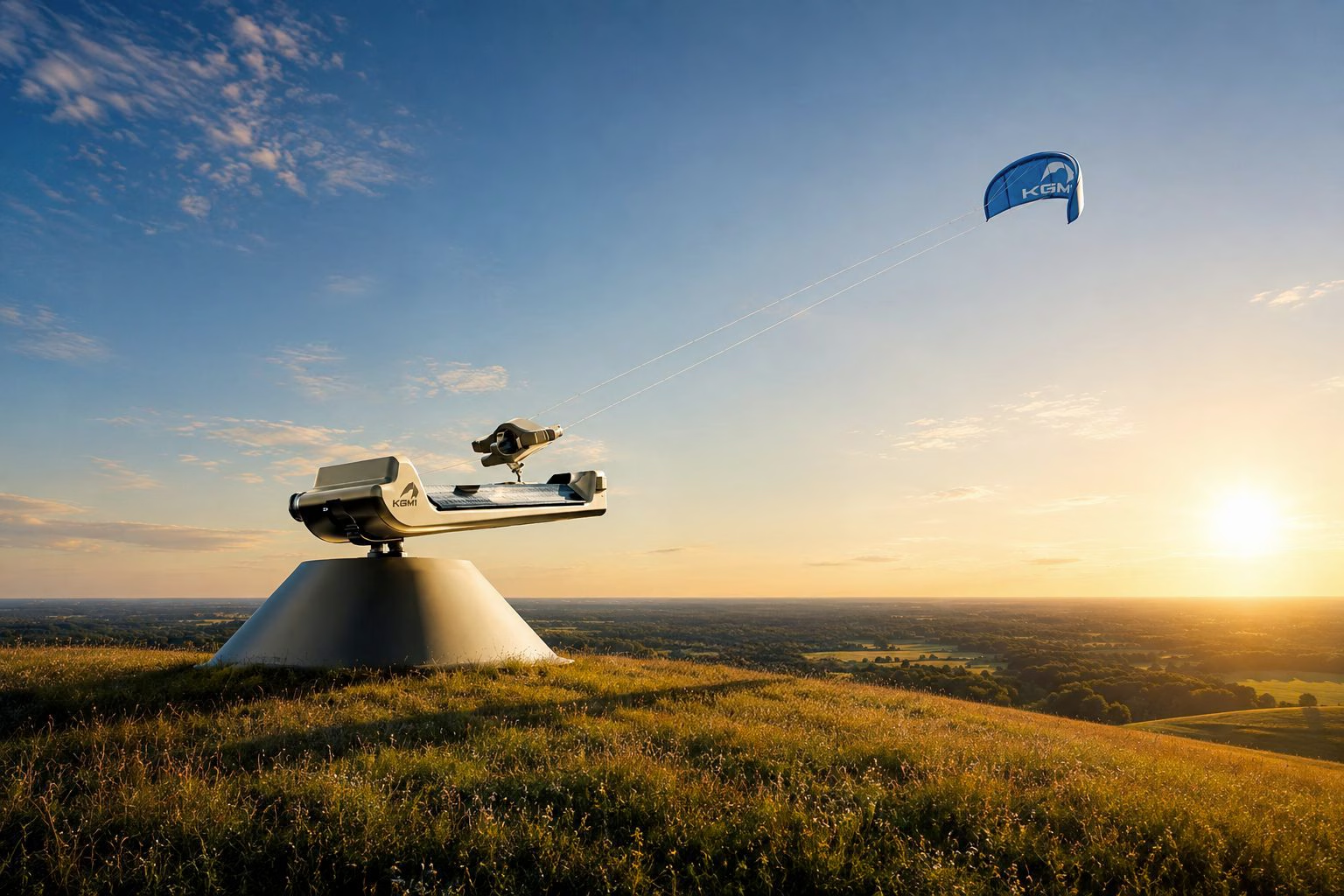
KGM1 is an Italian Airborne Wind Energy (AWE) project in the sector of high-altitude wind energywhich points to produce electricity using a wing similar to those from kitesurfingconnected to earth by three cables and capable of transforming its traction into mechanical movement for a generator. In this way, instead of building a large wind tower, only the part necessary to intercept the wind is brought into the sky, leaving the heaviest components on the ground and saving up to 90% of weight compared to traditional wind turbines. A portable and compact system to generate electricity and do without diesel generators for applications off-gridsuch as remote communities, islands and areas affected by emergencies, with an expected power in the order of 10-30kW.
The advantages of high-altitude wind power
Traditional wind turbines have a very real problem: they tend to be installed to intercept more favorable winds shovels and generators higher and higherbut this also means building bigger towers, foundations and infrastructure. THE’Airborne Wind Energy try to completely change your approach and, instead of supporting the generator with a tower, use awing tied to the ground through one or more cables making it fly in controlled trajectories. TO higher shares (higher than 200 meters) the influence of the earth’s surface and obstacles decreases and the Wind speed tends to increase.
In AWE systems with ground generation, the wing uses the wind to exert a tensile force on the cableswhose movement drives an electric generator on the ground. It’s a bit like removing everything that is “heavy and superfluous” from a wind turbine, and leaving only the part that really needs to intercept the wind. AWE also includes different technological architectures and not all systems use the same type of wing or the same energy conversion method.
What KGM1 is and how it works: 3 main elements
KGM1an independent research project on Airborne Wind Energy aimed at developing an electricity generation system for off-grid contexts and territories without reliable energy infrastructure, uses three main elements:
- awingsimilar to those used in kitesurfing;
- a Kite Steering Unit (KSU) who controls the flight;
- a generation system positioned on the ground.
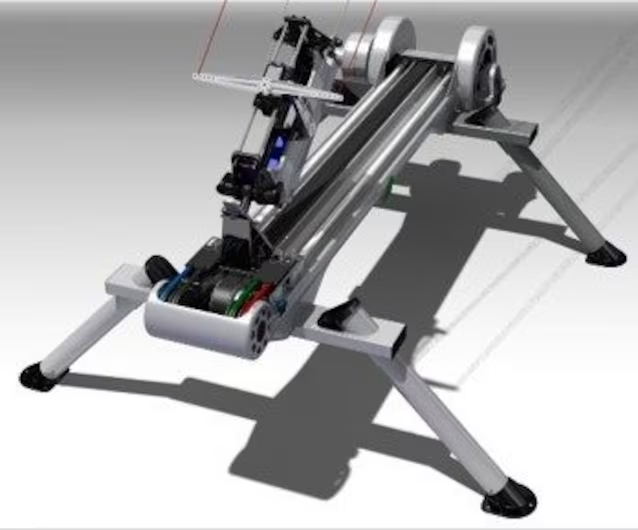
The KSU works as a sort of “pilot” of the system: it governs the wing and discharges the force of the wind onto a mobile sled, connected via three cables (tri-tether system). When the wing goes into traction, drags the sled horizontally along the track, transmitting the movement to the generator thanks to a toothed belt. The logic is the same as kitesurfing, but instead of towing a board over the waves, wind energy is used to generate electricity.

The peculiarity of KGM1 lies above all in the management of the operating cycle. In AWE systems based on the so-called “cycle yo-yo”a strong traction phase is normally followed by a phase in which the kite is depowered and the cable is recovered. KGM1 instead aims to use a technique called dynamic depoweringwhich reduces the drag of the wing without interrupting its flight. In this way the sled can return to its initial position, decreasing the force exerted by the kite, which however continues to fly without stopping. According to the technical documentation of the project, this solution allows you to reduce or eliminate the passive phases of the cyclein which the system must normally recover the cable using part of the energy produced.

Why KGM1 could be useful in remote areas
The advantage of a solution like KGM1 does not only concern energy production, but above all the logistics. A traditional wind turbine requires a tower, significant foundations, transportation of bulky components and installation machinery. This can become especially complicated on an island, in a remote community, or in an area that has just been hit by a natural disaster. An AWE system, on the other hand, concentrates most of the heavy components on the ground and can be transported in a more compact form. According to estimates reported by the designers, KGM1 could reach a weight savings of up to 90% and to a cost up to 50% lower than traditional wind turbines of reference.
Beyond the prototype: the road to commercialization
KGM1 is not yet a commercial product, but the project has already passed the proof of concept and is seeking funding to develop a third prototype. The technology was developed with one approach bottom-up and very limited initial resources, managing to demonstrate the functioning of its energy production cycle. The project has also reached a level of maturity TRL 5+ and was selected by the Solar Impulse Foundation for the Solar Impulse Efficient Solution Labelan award given to solutions evaluated for their sustainability potential and economic feasibility.
The commercial versions planned for the market off-grid they will be from 10-30kWwithout automatic take-off to contain costs and complexity, while in a second phase KGM1 aims to scale the technology towards the market on-grid. There remain to be addressed typical challenges of the sectorsuch as airspace management, automatic flight control in variable wind conditions and certification for continuous large-scale use.
