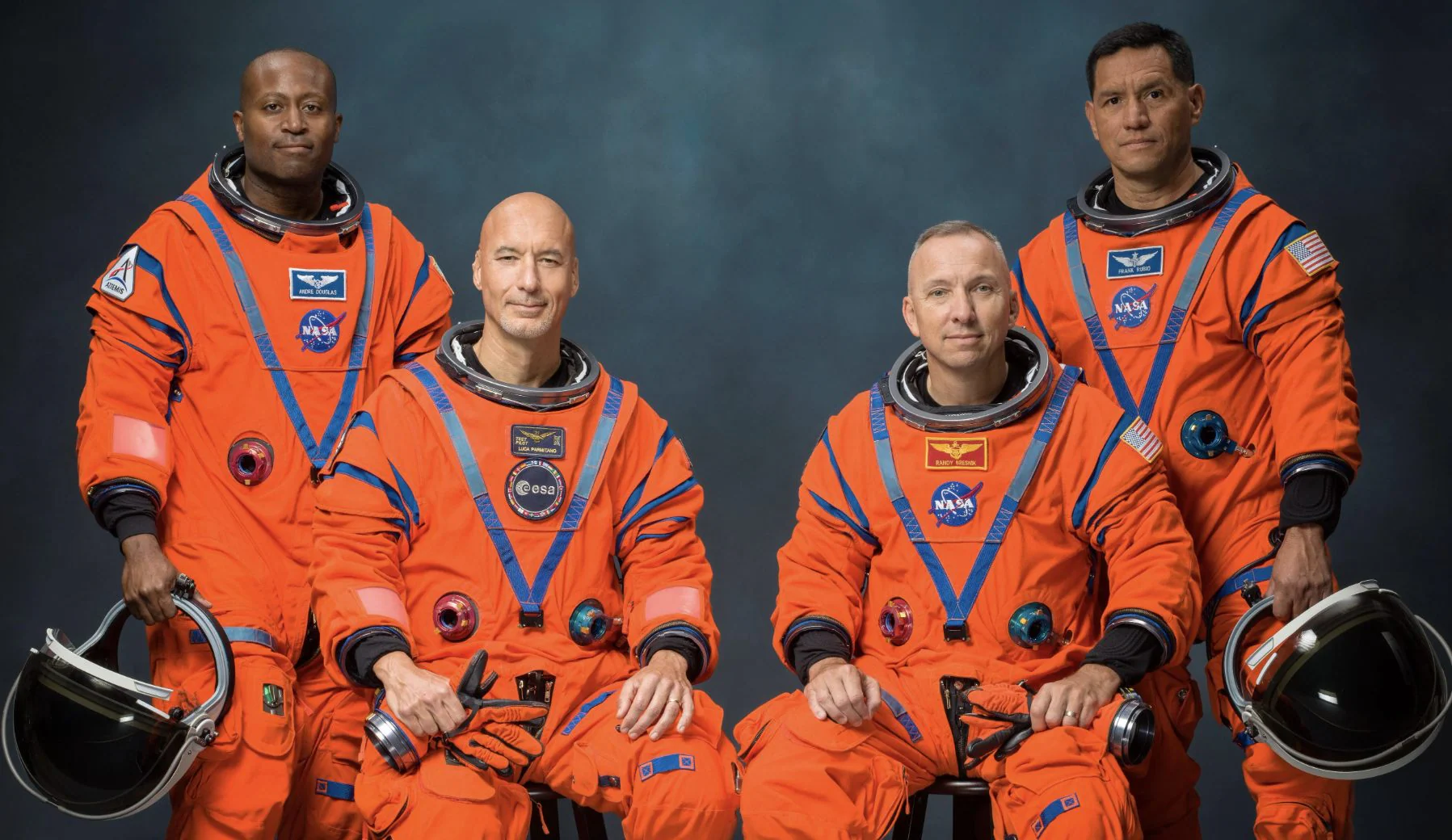
There NASA officially presented the crew of the lunar mission Artemis IIIscheduled for the second half of 2027: Italian Luca Parmitano (the only astronaut of the European Space Agency) will be the pilot of the mission, accompanied by US astronauts Randy Bresnik, Andre Douglas And Frank Rubio.
As reiterated by NASA, Artemis III has undergone a reorganization compared to what was initially expected: the mission, lasting approximately 2 weekswill no longer bring man to the Moon after over 50 years, but will serve for test in low Earth orbit the capabilities of rendezvous and docking between the capsule Orionlaunched by the SLS rocket, ed both the lunar landing systems commercial ones – first that of Blue Origin and subsequently that of SpaceX – necessary to bring astronauts to our satellite.
The data collected during this mission will help the US Space Agency reduce risks for future moon landing missions. The explosion of Blue Origin’s New Glenn rocket, which occurred on May 28 during a static fire testhe had raised doubts about possible delays of the program or to a possible one exclusion of Blue Origin. The company instead confirmed that the lander will be ready by 2027 and will actually be used during the mission.
NASA thus continues with its lunar program after full success of the Artemis II mission, during which the four astronauts aboard the Orion capsule had flew over the Moon, going up to approximately 6,500 km from the lunar surface and setting the record for the distance from Earth ever reached by a human being (almost 407,000 km).
Who are the astronauts of the Artemis III mission
The crew of Artemis III lunar mission will be composed of the commander Randy Bresnikby mission specialists Andre Douglas And Frank Rubio and the pilot Luca Parmitano, only non-US astronaut and ESA representative.
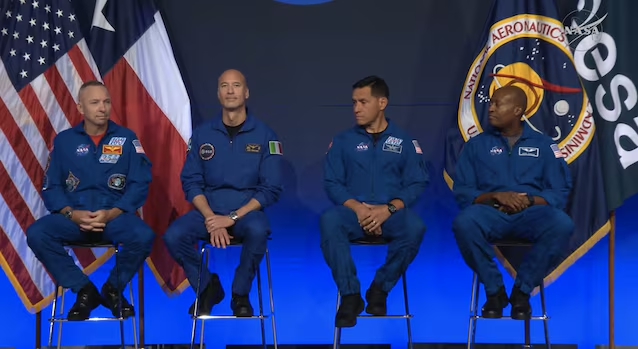
The European Space Agency will provide its third European Service Module (ESM-3) for the mission, whose crew will begin the exercises immediately: as reported by Jared Isaacmanthe NASA administrator, the first wet dress rehearsal (simulations of all launch operations) will begin by the end of this year.
This crew will then replace Reid Wiseman, Victor Glover, Christina Koch and Jeremy Hansenwho traveled aboard the Orion capsule for about 9 days during Artemis II.
Among other things, just a few days ago Axiom Space and Prada presented a new element of lunar suit designed for Artemis missions, showing the Liquid Cooling and Ventilation Garment (LCVG)or the innermost layer of the space suit that will be used by astronauts during human explorations of the lunar surface (starting from Artemis IV, therefore).
More specifically, the LCVG is designed to regulate body temperature and ensure ventilation during workouts activity out of spacecraft, which can last up to 8 hours. The developed system in fact uses a network of pipes crossed by cold water to remove the heat produced by the astronaut’s body during activities on the lunar soil and is equipped with a reserve cooling circuit in case of failure of the main system.
How the Artemis III mission will take place: what’s new
During the press conference, NASA also provided a number of updates on the Artemis III missionwhich will carry four astronauts aboard the capsule Orionlaunched from NASA’s Kennedy Space Center, Florida, across the SLS rocket (Space Launch System). The mission, confirmed for mid-2027, will be used to test the rendezvous and docking maneuvers in Earth orbit between Orion and both commercial systems of the HLS program, necessary for the actual moon landing.
In particular, the Blue Origin lander (Jeff Bezos’ company) will come launched firstfollowed bycrew aboard the Orion capsule, positioned on the SLS rocket and launched in low Earth orbit (the range between approximately 200 and 2,000 km altitude). At that point, Orion and the Blue Origin lander will remain docked in orbit for several daysduring which they will test the various operations. After their detachment, SpaceX’s (Elon Musk’s company) Starship will also be launched and will dock with Orion for a day.
Overall, the mission will last about two weeks and yes will conclude with the landing of the Orion capsule in the Pacific Ocean.
