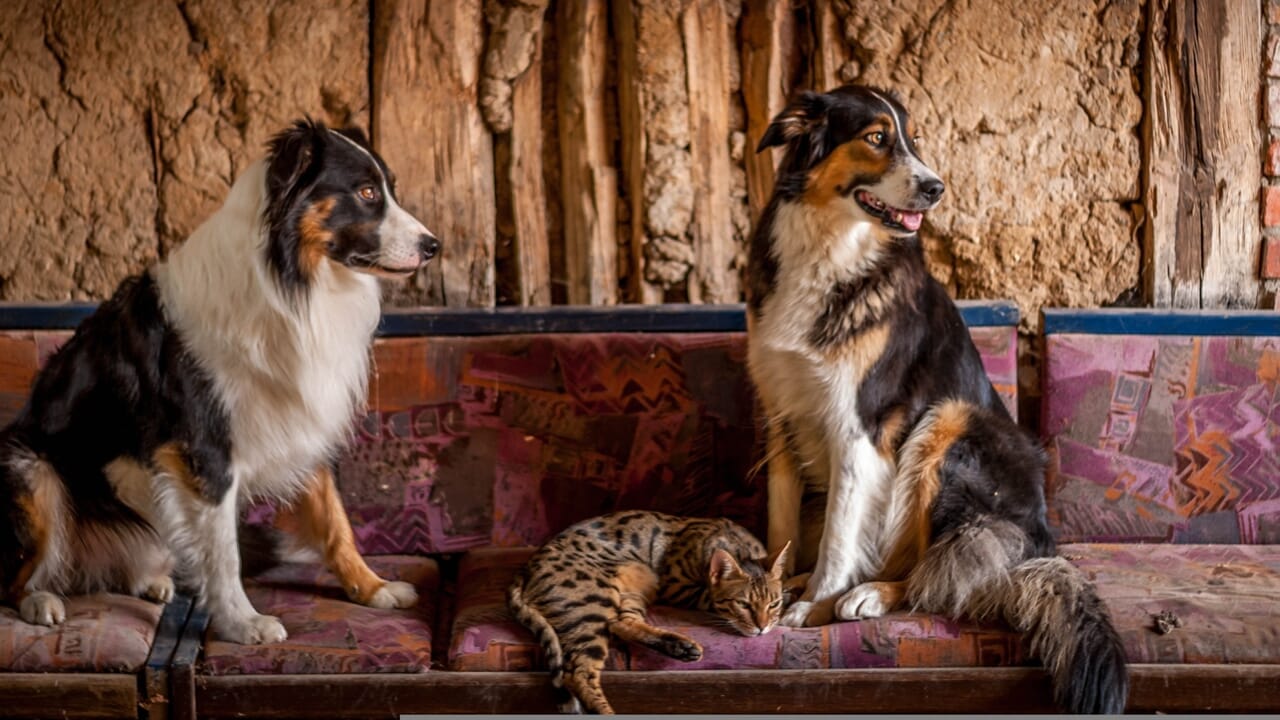
Europeans own over 72 million dogs and 83 million cats. Every year the purchases of these pets create a turnover of around 1.3 billion euros and around 60 percent of purchases take place online, a channel that makes any form of control difficult.
The European Parliament has definitively approved, with 558 votes in favour, 35 against and 52 abstentions, a series of rules which will unify for the first time the rules on the sale, breeding and keeping of dogs and cats, rules which were previously left to the total autonomy of the Member States. The new rules provide for mandatory microchips for all dogs and cats present in the Union, a ban on inbreeding and breeds with extreme physical characteristics, a stop to mutilations and new rules for imports from third countries.
“Today we have taken an important step towards the introduction of regulation in the trade of dogs and cats in the European Union. Our message is clear: a pet is a member of the family, not an object or a toy”, claimed the rapporteur of the text and president of the Agriculture and Rural Development Committee, the Czech conservative Veronika Vrecionová.
“We finally have stricter rules on breeding and traceability that will help us to counter those who see animals as a means to make a quick profit. At the same time, we are creating a level playing field for honest farmers in the EU,” he added.
The microchip becomes mandatory
The most visible measure with an immediate impact for owners is the obligation to identify via microchip for all dogs and cats present in the Union, including those already in the possession of private citizens. It is a small electronic device implanted under the skin that allows us to trace the identity of the animal and its owner, and is already widespread in many countries but so far without uniform regulation at EU level.
“The regulation that requires microchipping and registration in interoperable databases for dogs and cats is a barrier to the deplorable phenomenon of stray dogs which, especially in Southern Italy, still remains a problem of safety but also of respect for the animals themselves”, argued the MEP of the 5 Star Movement Valentina Palmisano.
Alongside identification, the law introduces the obligation to register in national databases which are interconnected and can be consulted online. This means that a dog registered in Italy can also be traced by German or French authorities, filling a gap that was often exploited by animal traffickers.
Adjustment times vary based on the subject category. Professional operators such as breeders, retailers and shelters will have four years to comply. Private individuals will have ten years to bring dogs into compliance and 15 cats. These are long deadlines, designed not to burden families excessively, but which already signal an obligatory direction. The new law sets common minimum standards: each member state will be able to adopt more stringent rules, but will not be able to go below this threshold.
Farms
The heart of the new law concerns farming practices. So-called consanguineous unions are explicitly prohibited, i.e. reproduction between parents and children, between grandparents and grandchildren, and between siblings and half-siblings. These are practices that are still widespread in some intensive farms, where the search for particular aesthetic characteristics leads to ignoring genetic risks, with serious consequences on the health of the animals.
It is also prohibited to breed dogs and cats with the aim of accentuating extreme physical characteristics that pose significant health risks. A concrete example: some dog breeds such as the English bulldog or the pug have been selected to have a very flattened muzzle, which causes them serious breathing difficulties. In the future, intentionally breeding animals for these traits will be illegal.
Painful mutilations not motivated by medical reasons are also prohibited, including ear cropping, tail docking and declawing. Dogs and cats with these traits or with extreme conformations will not be able to participate in shows, fairs or competitions.
Collars, leashes and daily life
Some of the new rules concern the ordinary management of animals. It is forbidden to tie a dog or cat to a fixed object in a stable way (so-called “tethering”), such as to a pole in your own backyard, a practice still common in some rural areas of Europe, except for medical reasons. The use of prong or choke collars without built-in safety mechanisms is also prohibited.
For dogs over eight weeks of age, the law establishes the obligation of daily access to an outdoor space or, alternatively, a daily walk. This is a minimum standard that aims to combat degrading detention conditions, especially in intensive farming.
Professional operators will have to ensure periodic veterinary visits and demonstrate adequate knowledge of the behavior and needs of the animals they care for. When they give away an animal, even for free, they are required to inform the new owner about the principles of responsible keeping.
Imports under control
One of the problems most frequently reported by animal rights associations was the so-called “pet loophole”: animals intended for sale were imported from non-EU countries pretending to be private pets, thus circumventing trade regulations. The new law explicitly closes this loophole, extending the rules not only to commercial imports but also to non-commercial movements.
Dogs and cats imported from third countries for sale will have to be microchipped before entering the Union and registered in a national database within five working days. Private individuals entering the EU with a pet will also have to pre-register it in a specific database at least five days before arrival, with some exceptions for those coming from countries already recognized as equivalent or whose animals are already registered in EU databases.
To manage these flows, a specific database will be created for travelers with animals, which will allow Member State authorities to monitor movements and identify any anomalies.
