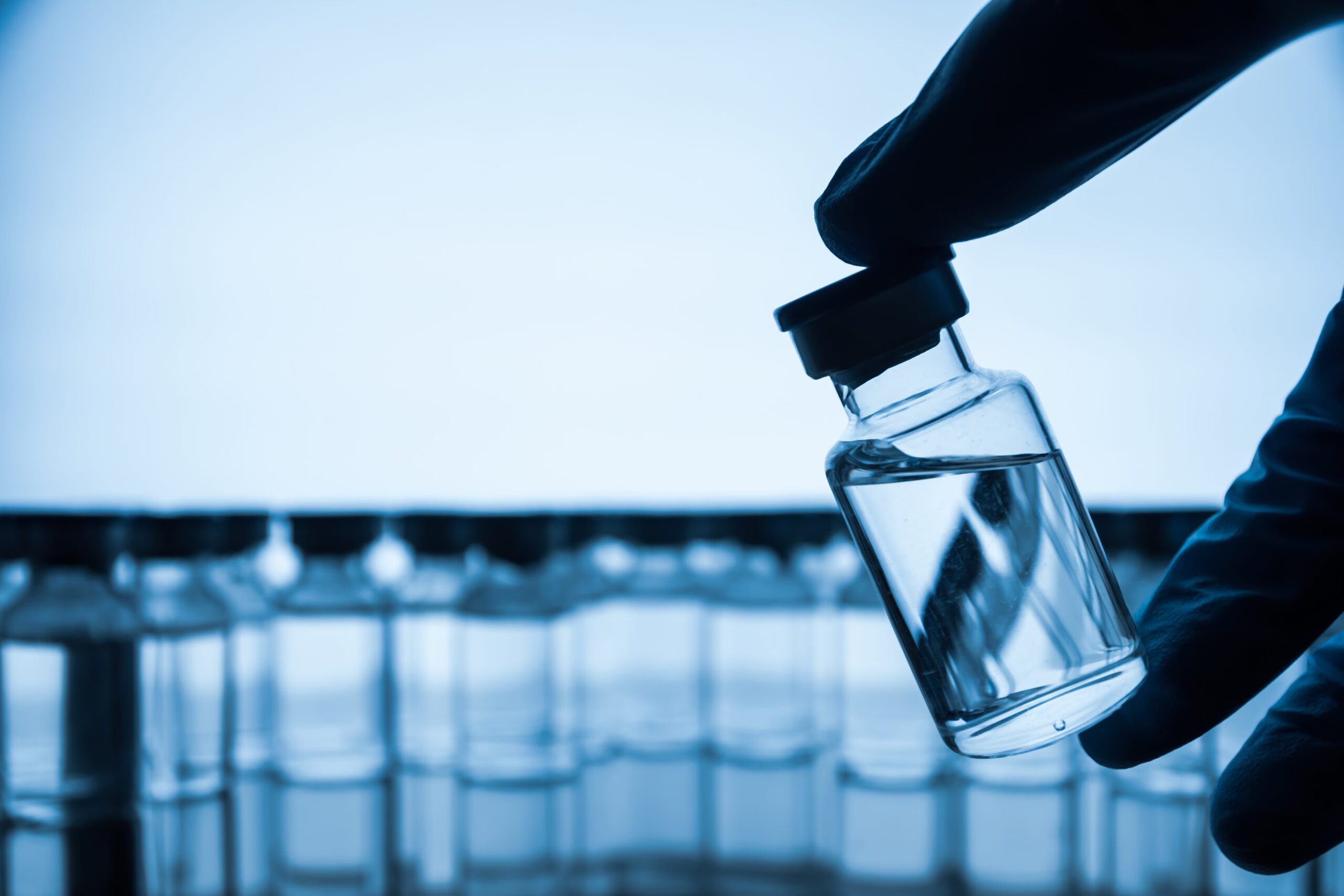
The cancer vaccine Moderna and MSD’s mRNA against melanoma has passed phase 3. It is not a preventive vaccine against cancer in general, but a treatment designed to people who have already had melanomaparticularly stages IIB to IV skin melanomas completely resected (i.e. surgically operated), which when used in combination with the immunotherapy Keytruda (pembrolizumab), serves to reduce the risk of the disease returning.
How the personalized mRNA vaccine against melanoma works
The melanoma it is the most aggressive form of skin cancer: represents approximately 1% of skin cancers, but is responsible for the majority of deaths related to this type of cancer. Even after surgical removal of the tumor, the risk of recurrence in the first two-three years remains significant, and it is precisely in this window that the vaccine intervention is concentrated.
The treatment, called autogenous intismeran (code name V940, also known as mRNA-4157), works very differently than a traditional vaccine. It is not meant to prevent an infection, but to train the immune system to recognize tumor cells remaining in the body after surgery. To do this, researchers analyze a sample of the tumor removed from the individual patient and identify the specific genetic mutations: the so-called neoantigens, abnormal proteins present only on diseased cells.
Up to 34 of these neoantigens are then encoded thanks to an artificial intelligence algorithm, and rewritten into a synthetic mRNA strand, enclosed in a lipid nanoparticle, the same transport technology used in anti-COVID vaccines, and administered to the patient. Once in the body, the mRNA instructs the cells to produce those same abnormal proteinsso that the immune system learns to recognize them and attack any tumor cells that expose them. This is why we talk about a “personalized” vaccine: each dose is tailor-made for an individual patient’s tumor, a process that takes several weeks.
Results of the phase 3 trial on the melanoma vaccine
In the phase 3 trial, more than 1000 patients with high-risk cutaneous melanoma who had already undergone surgery received the vaccine together with Keytruda (pembrolizumab), Merck’s immunotherapy already considered standard of care for this tumor, or Keytruda alone. According to the joint press release of the two companies, the combination achieved both the primary objective of the study, a increase in relapse-free timeis a secondary objective linked to the prevention of distant metastases, with an improvement defined as “statistically significant and clinically relevant”.
The companies they have not yet made public the exact figures of how much the risk is reduced: Full data will be presented at an international medical congress in the coming months, along with the start of discussions with regulatory authorities for possible approval. It should be kept in mind that, for now, what we know about phase 3 only comes from this company press release, not from a peer-reviewed scientific publication (peer review): the picture is different for phase 2b of the same treatment, whose five-year results were presented at the ASCO 2026 congress and published in the Journal of Clinical Oncology, therefore public and verifiable data, which showed a reduction of approximately 49% the risk of relapse or death compared to Keytruda in a group of 157 patients, with mostly mild or moderate side effects.
What is still missing before approval
The phase 3 results should therefore be read as very encouraging data, consistent with what was already observed in phase 2b, but not yet verifiable in detail by the scientific community. The trial itself, moreover, must be monitored: patients will continue to be followed also to evaluate the effect on overall survival, not just on the delay of recurrence. Robert VonderheidePenn Medicine oncologist and president-elect ofAmerican Association for Cancer Researchcommented that results are expected from several other trials on the same technology applied to other tumors in the coming years, and that this announcement fuels expectations that those results may also be positive. Furthermore, a significant practical limitation remains: since it is a personalized therapy, each dose requires customized production time, which complicates the idea of large-scale use in the short term.
