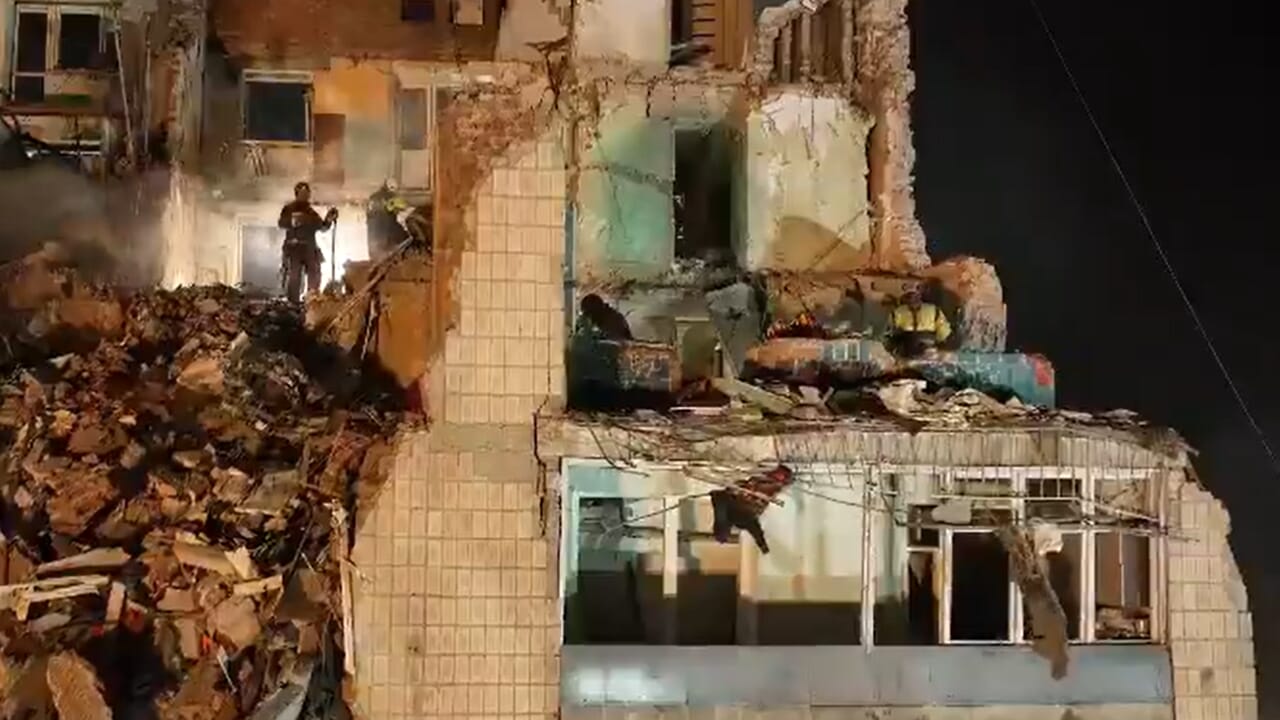
No, the war in Ukraine is not ending: from Trump only “special effects”
The peace agreement for Ukraine is a convenient illusion: the war is not ending and the negotiations led by Donald Trump – although emphasized in the media – are not changing the substance of the conflict. To understand why, we need to remember one simple thing. A war ends when at least one of these two conditions occurs:
- the parties find a compromise which, although painful, is acceptable to both;
- one of the two is at such a disadvantage that she declares defeat and accepts punitive conditions, because continuing to fight would only worsen her situation.
In the case of the war between Russia and Ukraine, neither condition was met. The positions are irreconcilable: for Kiev it means giving up its territorial integrity and future security; for Moscow it would mean admitting the failure of a war desired and claimed as “existential”. Neither side feels so disadvantaged that it can give up. This is what in theoretical terms is called “total war”: a conflict in which there is no room for political compromise and the battle is fought until one wins, or both are exhausted. In this context, diplomacy does not serve to “invent peace” from nothing, but rather to establish, in the end, the terms of the victory of one party over the other.
Here another decisive element comes into play: it’s not so much what we see that matters, but what the protagonists see. We can argue endlessly on talk shows about who is “in the lead,” but what really matters is how the situation is perceived in the Kremlin and the Ukrainian Rada. As long as neither Putin nor the Kiev Parliament consider themselves defeated, the war will continue, whether Trump, Western public opinion or supporters of their respective narratives like it or not.
So what is Trump doing? He chose to present himself as a mediator. To do this, it had to stop – at least apparently – being a “participant” as was Biden’s America, which led the Western front openly aligned with Ukraine. Thus a gap was created: on the one hand a West that still exists but lacks recognized leadership; on the other, Trump’s United States which places itself in an “other” position, in dialogue with everyone but fully allied with no one.
From a technical point of view, there is mediation: emissaries who speak with Moscow and Kiev, proposals that come and go, drafts that are adjusted. But the negotiation is moving on fragile foundations. In a total war, the initial positions are almost immovable, the concessions are minimal, and all the weight shifts to incentives (economic, political, security) and verbal formulas to “make the agreement presentable” at home.
Then there is a specific problem linked to Putin. The Russian leader continues to see the conflict as a direct challenge with Washington: a chess game in which the only real players are him and the president of the United States, while everyone else – including Ukraine – would be pawns on the chessboard. When dealing with Trump’s emissaries, he tends to consider those agreements as a binding pre-agreement, forgetting that his real counterpart is not only the White House, but a broader West, in which Europe – confused, divided, but real – is now a full participant together with Kiev.
Hence yet another information short circuit arises: the media talk about the “absence of Europe”, Russian diplomacy accuses Brussels of “sabotaging” the American plan, but in reality the Union – with all its limitations – is sitting at the table as an actor in the conflict, not as an extra. Europe and Ukraine do what is done in every negotiation: they evaluate the Russian proposal, judge it inadmissible and send it back to the sender with a counter-proposal which, predictably, Moscow in turn will reject.
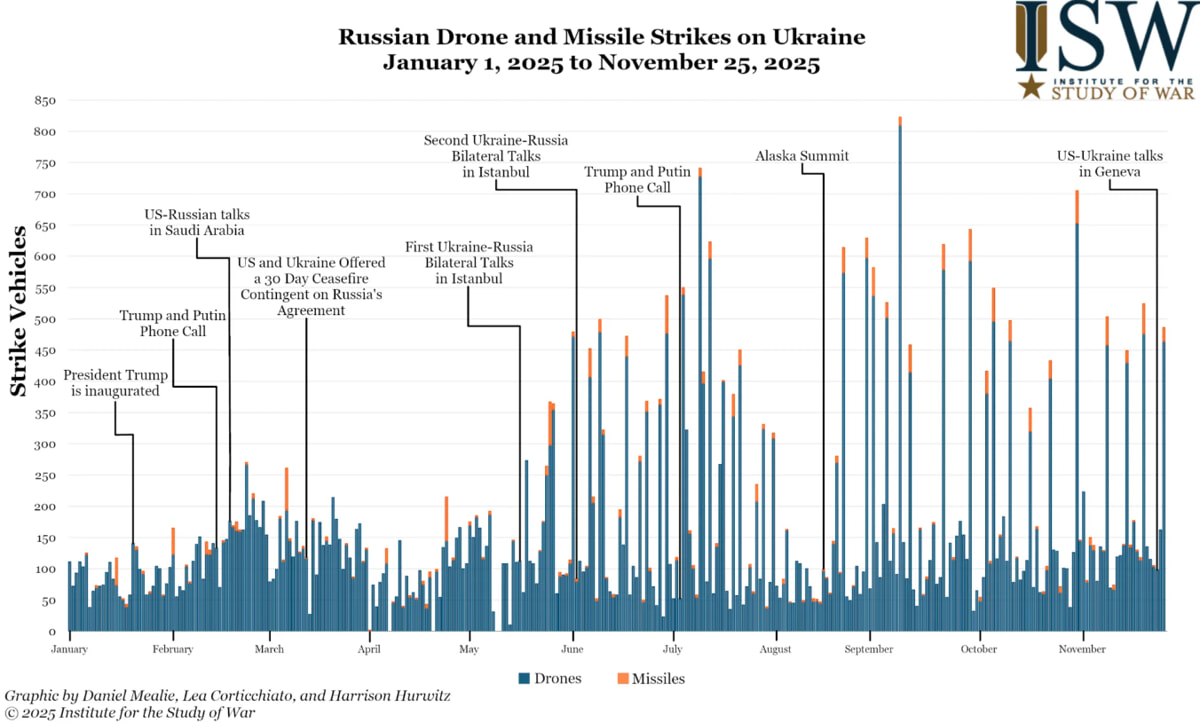
The result is that the “peace process” functions above all as spectacle. For Putin it is an instrument of hybrid warfare, useful for dividing the Western front and confusing public opinion. For Trump it is a great showcase: it puts him back at the center of the world, it allows him to tell voters “I’ll take care of it” and to use every announcement as political and media leverage.
On a military level, however, little changes. War continues to consume lives, resources and futures. The negotiation drama produces headlines, talk shows, viral posts, but does not change the underlying fact: neither of the two sides is ready, today, to accept a peace that the other can consider a victory.
As long as we remain prisoners of informative special effects, we risk mistaking for a breakthrough what is, in reality, just background noise. And meanwhile, at the front, the war goes on.
