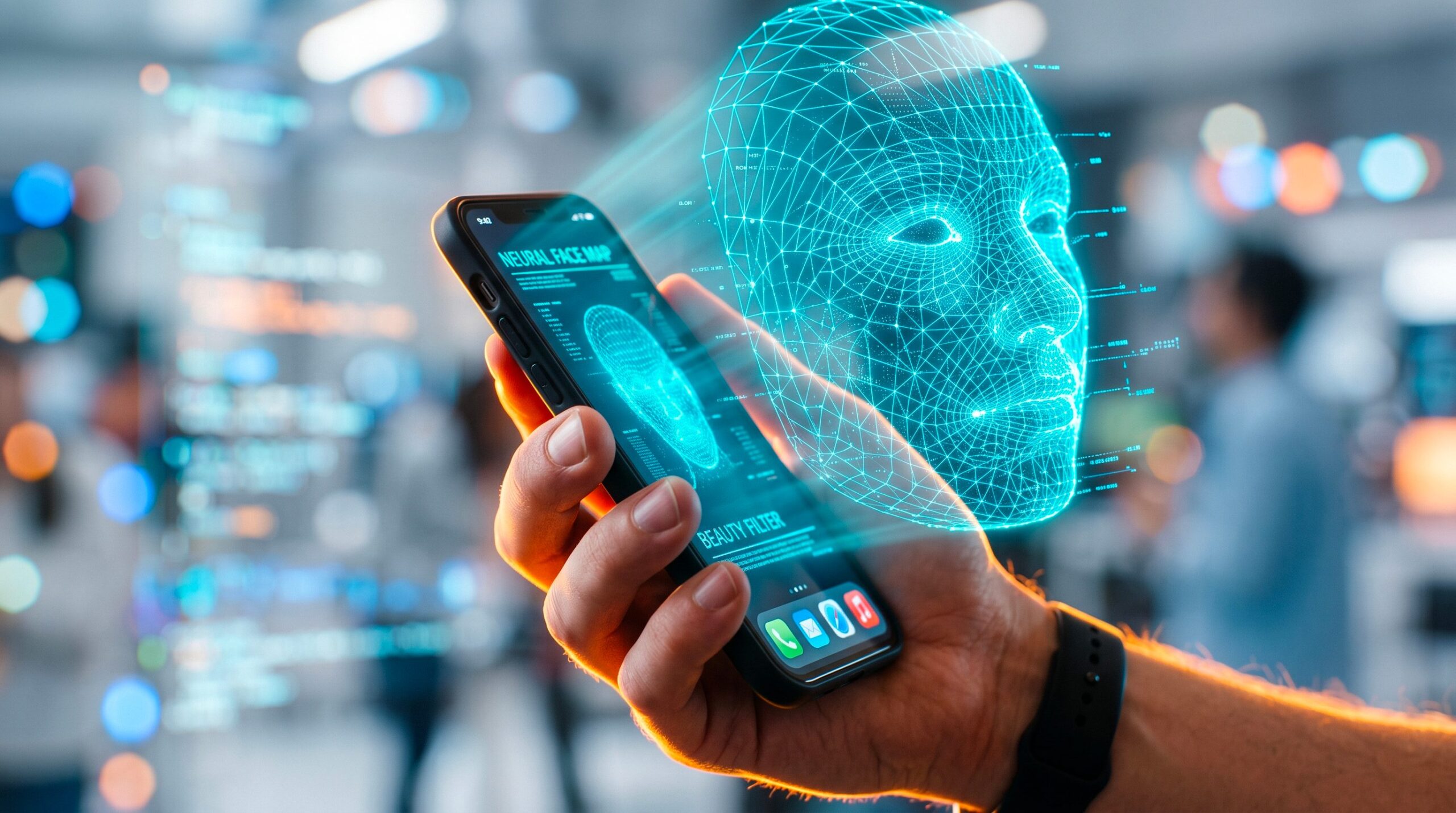
Have you ever looked at the mirror after hours spent on Instagramfeeling almost a stranger to your own face? This feeling of disconnection it’s real. A study published in Computers in Human Behavior and conducted by Dr. Sansoni together with an international team reveals a surprise: the prolonged use of social media and filters it doesn’t automatically translate into a hatred of one’s appearance. The damage is much more subtle and concerns how our brain integrates what we see with what we feel internally, blurring the physical boundaries of our identity corporeal. Through an incredible virtual reality experiment, researchers have discovered how everyday “scrolling” is literally reprogramming our sensestraining us to “inhabit” a digital body.
Prolonged use of social media can make us feel “disconnected” from our body
Normally we are well aware of where our body ends and where the external world begins. It is an ability that we take for granted but which is the result of a sophisticated brain process called multisensory integration. Our brain continuously combines internal signals, such as the perception of the heartbeat (enteroception), with external signals, such as sight and touch (exteroception), to create a coherent sense of self, termed embodiment or “embodiment“. Researchers have wondered what happens to this delicate balance when we spend years immersed in digital environments like Instagram.
To find out, they conducted a virtual reality experiment on 95 young adults, manipulating their perception: while the participants were caressed on the face or physical abdomen, they observed in the viewer a virtual avatar undergo the exact same touch in perfect synchrony.
The results revealed an unexpected phenomenon: participants who used Instagram for more years they were much more likely to “embody” the virtual facearriving at feel it as if it were your own. What does this have to do with the virtual reality experiment? When we use Instagram, we perform repetitive actions that coordinate sight and touch: we look at images or videos and, at the same time, scroll or touch the screen. This simultaneous combination acts as a real “training ground” for the brain. By repeating this action every day for years, we consolidate and strengthen the neural pathways dedicated to visual-tactile-motor processing and the brain gets used to considering what happens on a display as closely connected to our physical sensations, becoming very skilled inassociate digital visual stimuli with real tactile ones. In fact, our attention is chronically pushed to evaluate how the body looks (from the outside), rather than to perceive how the body feels (from inside).
Consequently, when researchers recreated this exact visuo-tactile deception in the headset, the brains of historical users were already perfectly predisposed to fall for it, projecting identity outside the body of flesh and bone to attach it to the avatar on the screen.
How Instagram beauty filters alter identity according to science
Today it is a widespread habit to apply filters that modify facial features to conform digital aesthetic canons preset. But what happens to our perception when we continually alter our appearance using filters? Data from the study indicates that the use of beauty filters on Instagram is associated with a greater vulnerability to bodily illusionsleading users to perceive a virtual body as their own and even feel its motor control.
The scientific explanation lies in what researchers define as “thehypothesis of the digital erosion of bodily identity“. When we apply a filter, we experience a discrepancy between the altered image we see on the screen and the actual physical sensations of our face. Furthermore, chronic exposure to homogenized aesthetic content on the platform, where everyone tends to look alike due to the same filters, confuses brain mechanisms responsible for distinguishing the self from others. If our brain is exposed for years to faces standardized by filters, the perceptual boundary between our face and that of strangers inevitably thins.
The face is our main anchor social identity: constantly changing this reference point, combined with exposure to unrealistic standards, undermines the representation depth of who we are. Occasional use of filters only temporarily alters sensorimotor perception, while years of exposure to Instagram add up erode autobiographical bodily identityor the long-term memory of how we perceive ourselves in the relational and social context.
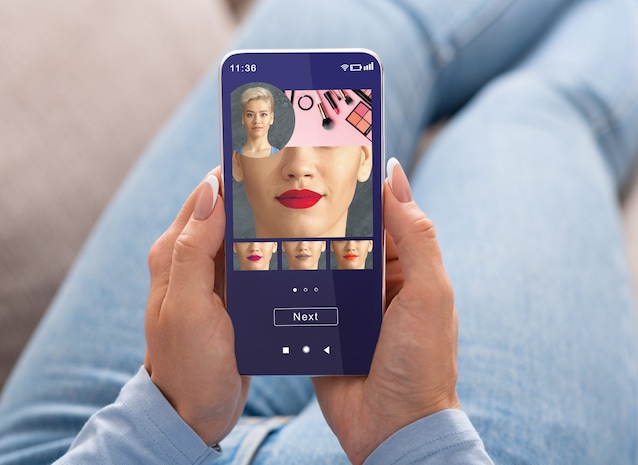
Social media shifts the perception of our body outwards
Perhaps the most counterintuitive finding of the study (the authors themselves say they were surprised) is that the time spent on the application daily or the number of years of use are not directly linked to an increase automatic of body dissatisfaction. The research puts therefore a brake on the idea of a simple cause-effect relationship between the use of social media and hatred for one’s appearance. The damage is much more subtle and specifically concerns the integration between the inner and outer worlds.
Let’s try to read this statement carefully, also because a single article does not make “Science”, which is rather based on consent and on meta-analysis: on this topic, the meta-analyses of Saiphoo and colleagues in 2020 and by Jing and colleagues in 2025 confirm a certain association between the use of social media and low self-esteem (in which the perception of one’s appearance it is just one of many components). This correlation varies from being slight to more pronounced depending on some indicators, among which the most important appear to be the time spent on social media and the users’ character inclinations. Let us also remember that “correlation is not causation“: in fact, it is not very clear, in the studies in which this association emerges, whether too much time spent on social media is the cause of lowered self-esteem or whether, on the contrary, it is a low starting self-esteem that is the cause of a lot of time spent on social media. Sansoni herself and the other authors of the study published in Computers in Human Behavior underline inconsistencies in the results in the scientific literature.
What seems to emerge is that the connection that is created between our senses while we use social media establishes a silent relationship dependence on externality and a avoidance of interiorityaltering the multisensory foundations with which the brain maps our physical identity.
How we can recover our sensory compass
To counteract this slow erosion of bodily identity, Dr. Sansoni’s research suggests we deliberately recalibrate our attention. Psychological interventions based on awareness of the present momentlike mindfulness, can be extremely useful in helping people bring their attention back to internal signals of the bodysuch as breathing rhythm or muscle tension, limiting the overload of external visual stimuli. Listening to the internal signals of one’s body therefore becomes a fundamental step not only to reduce daily stress, but to re-establish the neurological boundaries between us and the digital universe, reminding our brain that thehuman identity it’s much more than an image on a smartphone screen.
Sources
Sansoni et al., 2026, Blurring the boundaries of the self: Instagram’s impact on bodily identity and multisensory experience among young adults Saiphoo et al., 2020, Correlations between social media addiction and anxiety, depression, FoMO, loneliness and self-esteem among students: A systematic review and meta-analysis Jing et al., 2025, Correlations between social media addiction and anxiety, depression, FoMO, loneliness and self-esteem among students: A systematic review and meta-analysis
