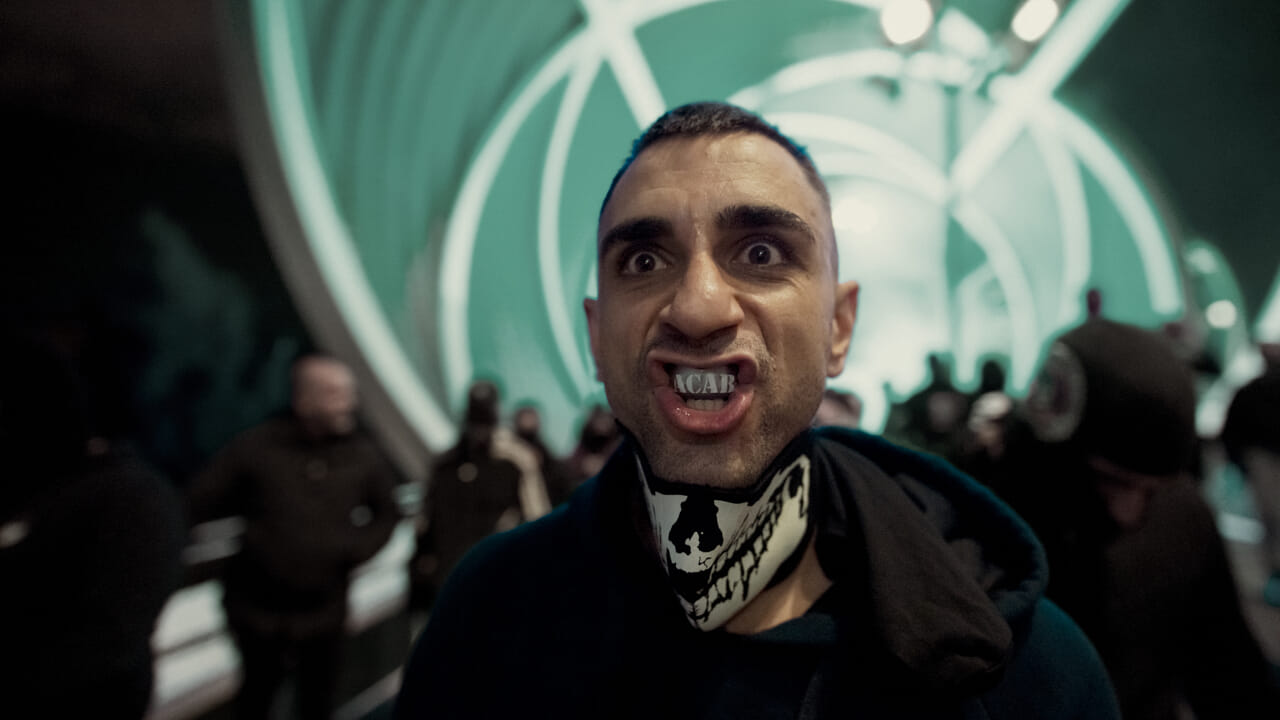
“Salvador”, because the series about incels and neo-Nazis is worth seeing
There are series that are created to entertain, give lightness, make people dream and then there are series that have a completely different objective: to shake consciences, tell the darkest side of reality and, consequently, make people reflect. “Salvador”, the new Spanish Netflix series that talks about the Incel phenomenon and neo-Nazism – available in 8 episodes from 6 February – is part of this second category of story and is one of those titles that everyone, absolutely everyone, should see, whatever their political vision, their qualifications, their culture.
Salvador: the plot
What is “Salvador” about? The protagonist is a man, a former doctor, now driving ambulances. He has several addictions behind him and a difficult relationship with his daughter Milena. During a work shift he discovers, by chance, that Milena has joined a dangerous and violent extremist group that defends racist and homophobic values, the complete opposite of those he has always taught her.
But what makes us approach violence? What lack, what weakness? And how easy is it to fall into its trap?
These are the (very interesting) questions that this series offers us.
Violence from multiple points of view
The most beautiful aspect of “Salvador” is that it is an honest, raw, ferocious series that does not condemn a concept a priori but tells it from multiple perspectives, thus leaving the final choice to the viewer to decide which side to take. Thus, the story of violence made by this series becomes multi-perspective, three-dimensional and extremely effective.
“Salvador” chooses to follow in the footsteps of many recent titles (just think of series like Adolescence or The Beauty) by addressing the very current theme of the phenomenon of Incels, i.e. the so-called involuntary celibates who think that their singleness is the fault of women who, consequently, they hate). But “Salvador” also talks about neo-Nazism that is increasingly widespread among young people, that is, the ideology that re-proposes the principles of Nazism by defending violence, racism and anti-Semitism.
In doing so, “Salvador” is not afraid to tell a dark but present cross-section of contemporaneity. And he puts it on the screen in a brutal way, making us understand not only how widespread violence is in our society but also how easy it is to give in to this behavior which even the most unsuspecting of human beings can approach. All it takes is a spark, a lack, a moment of weakness.
The difficulty of being a parent today
With 8 compelling but at the same time profound and thoughtful episodes, this series speaks very well not only of violence, corruption, politics but also of parenthood. And so it is that without the slightest fear of being annoying and too strong, she tells stories of imperfect, fragile, contradictory parents. It shows how difficult it is to be an impeccable father or a mother who doesn’t make any mistakes but also talks about children and how, at times, they can be selfish, ungrateful and incapable of considering their parents as normal and, consequently, fallible people.
In doing so, this series creates a new way of telling the story of the family and its failures on television, however, giving the viewer all the useful tools to understand, digest and deal with this type of problem, should it arise, in real life.
“Salvador” is a violent, disturbing, strong series but in its honesty it is highly appreciable. Sometimes, after all, it is precisely the stories that horrify and enrage us that stick with us the most, that make us reflect the most, that change our lives a little.
Rating: 7.5
The best Netflix series of 2026, so far
