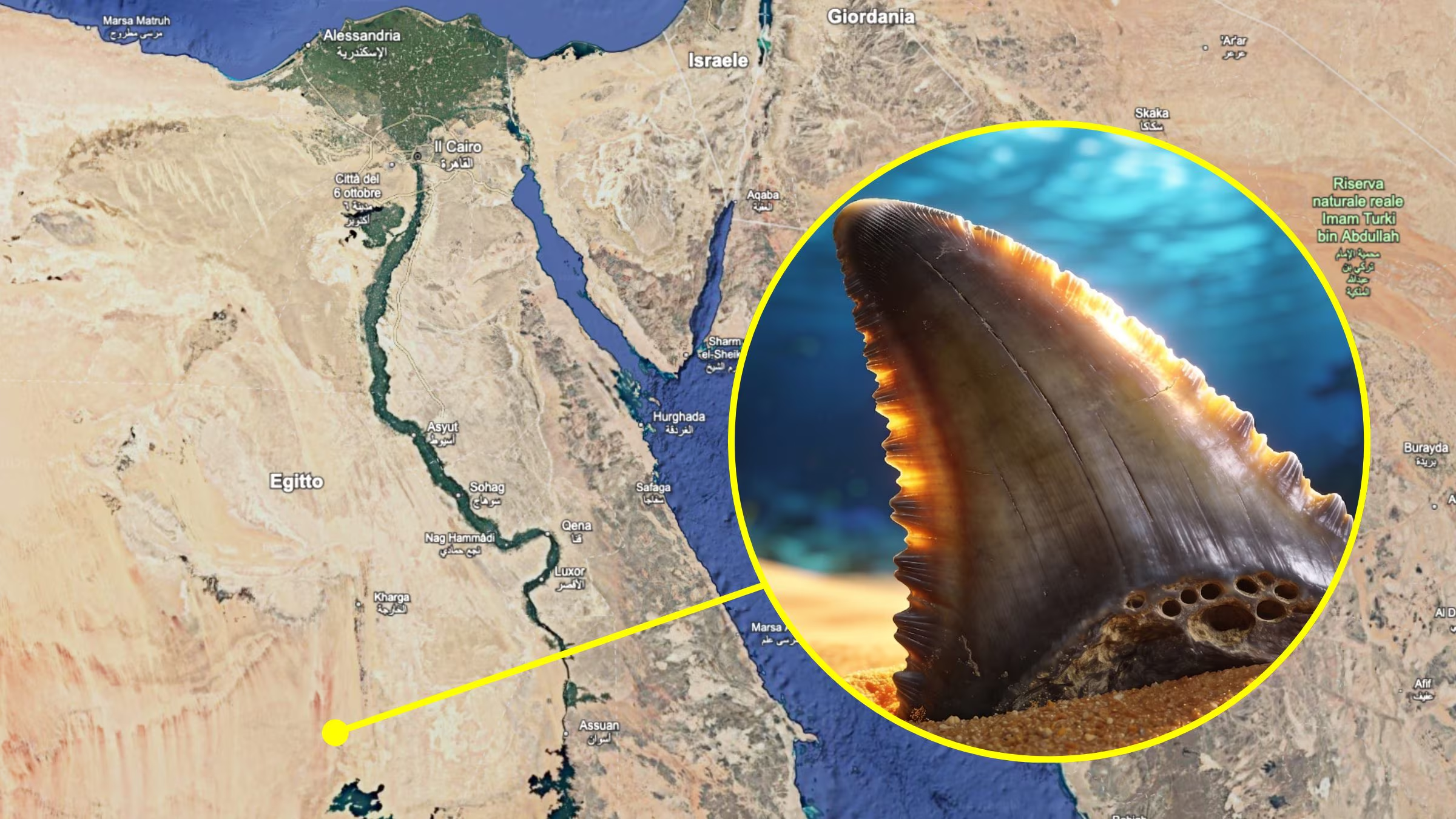
If we had to think of the most unlikely place to find traces of a giant shark, the Egyptian desert would be among the top places on the list: no sea for hundreds of kilometres, just sand, rocks and heat that reaches 50°C in summer. However, it is right on the plateau of Abu Tartur (about 650 km south-west of Cairo), that a team of paleontologists has brought to light an entire shark teeth graveyarddating back to approximately 75 million years ago. Among the already known protagonists of this deposit is Cretoxyrhina mantellia shark that could exceed 8 meters in length. The new study that expands on the finding was published in August 2026 in the journal Cretaceous Research from Tarek Yassin of Cairo University, together with Jorge D. Carrillo-Briceño of the University of Zurich. The analyzed teeth come from Duwi traininga geological layer from the Upper Cretaceous (around 83-72 million years ago) and were collected in two phases of fieldwork between 2020 and 2025.
The discovery of the shark tooth cemetery in the Sahara
In the most recent collection campaign, conducted in the Maghrabi-Liffiya sector of the plateau, researchers recovered 14 isolated teethbelonging to at least five species of lamniform sharks:
- Cretalamna cf. C. moroccanfirst reported in Egypt
- Scapanorhynchus cf. S. raphiodonfirst report in all of Africa, close relative of the current goblin shark
- Serratolamna cf. S. serrata, first report in Egypt
- Squalicorax bassaniifirst reported in Egypt
- Squalicorax pristodontus
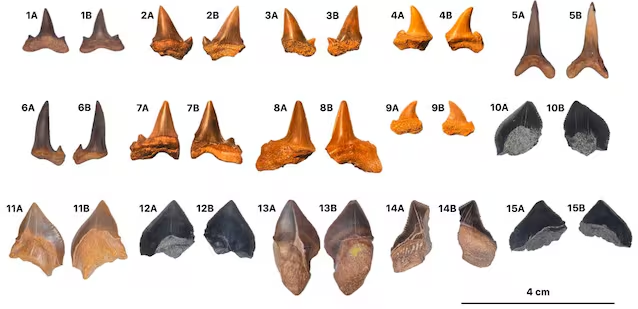
These five taxa are added to two species already identified by the same research group on a previous expedition to the same site: Scapanorhynchus (cf. S. rapax) And Cretoxyrhina (cf. C. cloaks). The total thus rises to seven species of lamniform sharks all coming from the same layer, a number that makes Abu-Tartur one of the sites with the greatest diversity of fossil sharks ever documented in Egypt.
Cretoxyrhina mantelli: the giant of the list
Cretoxyrhina mantelliknown among paleontologists as “Ginsu shark”belonged to the Cretoxyrhinidae family and is one of the best known fossil sharks in the world, thanks to some almost complete skeletons found especially in Kansas (USA), an area which in the Cretaceous was covered by the so-called Western Interior Sea. Although in this case only the teeth remain in Abu-Tartur as the cartilaginous skeleton of a shark degrades rapidly after death. The most complete findings have allowed us to estimate its dimensions with good reliability: up to 7-8 meters in length, an estimated weight of around 5,000 kg and a build very similar to that of the current white shark (Carcharodon carcharias).
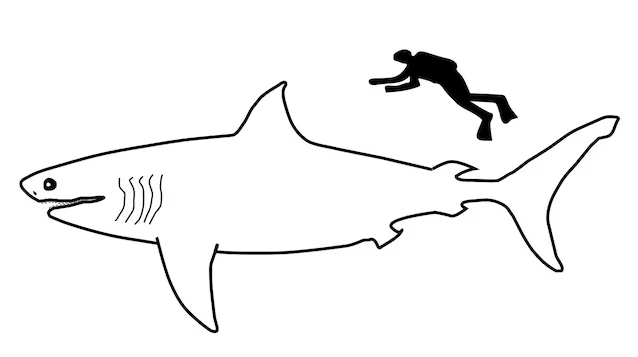
From the fossil remains with bite marks it emerged that Cretoxyrhina it hunted mosasaurs, plesiosaurs and large bony fish (all very large animals themselves) placing itself at the top of the marine food chain of that period.
Because in the desert there was the sea
But how do the teeth of an 8 meter shark end up there in the middle of the Sahara? During the Cretaceous (145-66 million years ago) the Earth was much warmer than today, polar ice was almost absent and sea levels could even exceed current levels by 170 meters. The result was that portions of land that now emerges were, at the time, submerged by a shallow, warm sea rich in life.
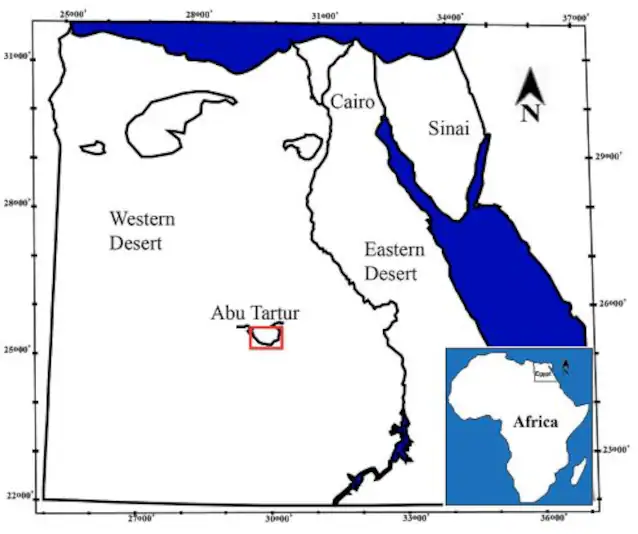
The Abu-Tartur area, in particular, was located along the outer margin of the continental shelf. Precisely in this area there is also a deposit of phosphoritesedimentary rock that forms from the accumulation of remains of marine organisms and which is considered an indicator of environments with high biological productivity. Such an abundance of nutrients meant a lot of food and therefore space for a diverse community of predators, from intermediate ones such as Squalicorax And Cretalamna up to the giant Cretoxyrhina at the apex of the pyramid. As underlined by the study authors themselves, the presence of multiple species in the same layer does not necessarily mean that they coexisted at the same precise historical moment but that the teeth could have accumulated in the sediment at different times.
Sources
Yassin, T., Carrillo-Briceño, J. D., Kindlimann, R., Ibrahim, A., & AbdelGawad, M. K. (2026). Egyptian shark graveyard: New Late Cretaceous Lamniform shark Assemblage from Duwi Formation of Abu-Tartur Area, Southwestern desert, Egypt. Cretaceous Research Yassin, T., et al. (2025). The first record of Lamniformes sharks from the Late Cretaceous in Abu Tartur area, Egypt. Historical Biology,
