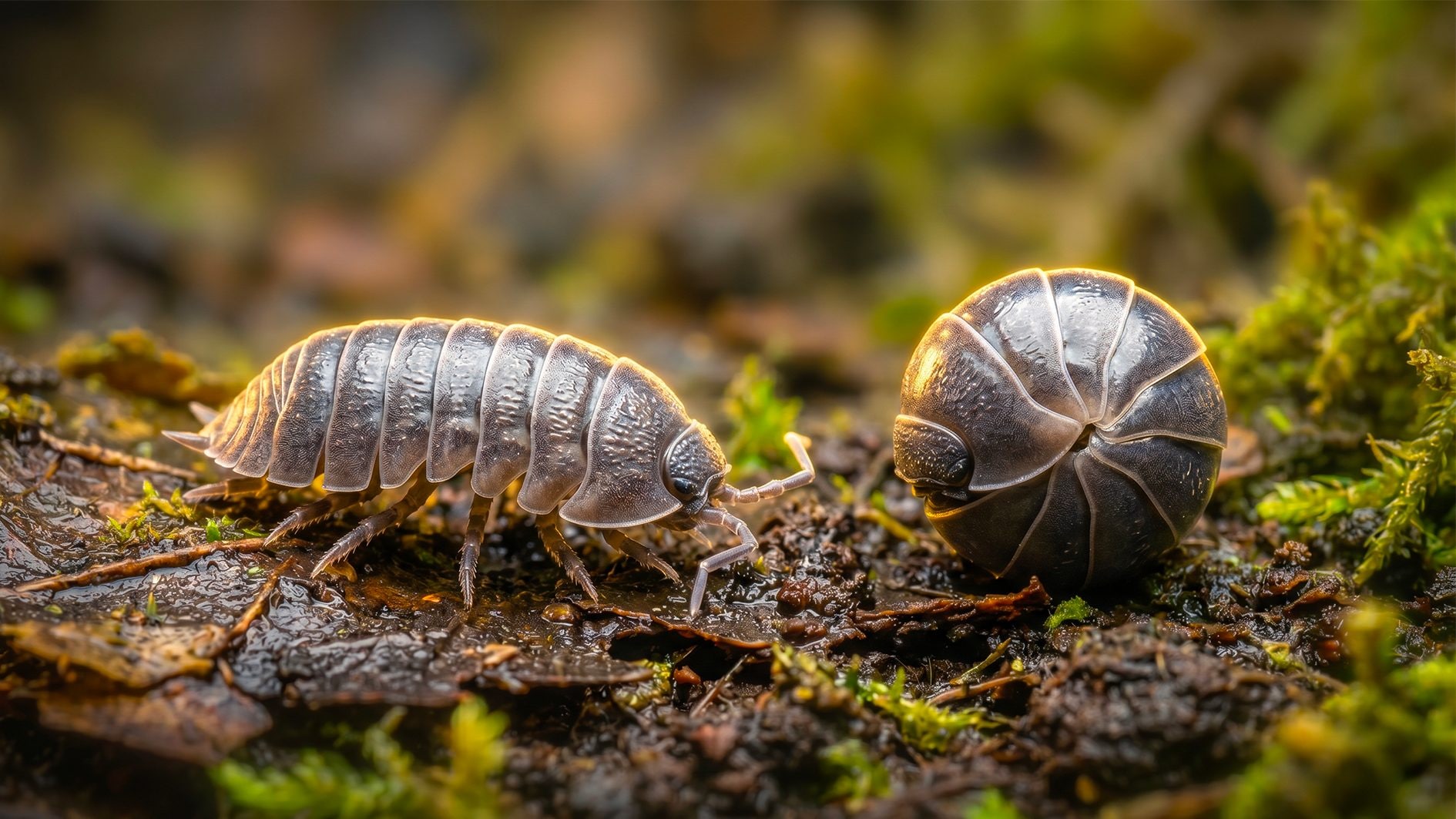
Just lift a vase or a stone in the garden from the ground and you will see them earth pigs (Armadillidium vulgare) that move disturbed by light. Just touch one with a finger or a stick because yes ball it up to form a small, brownish, shiny marble. This mechanism is called volvation or conglobation and is used by some animals as self defense system: closing the small crustacean into a “ball”, completely harmless to humans and animalsnot only defends itself from potential predators, but also from dehydration and temperature changes. It is an organism closely associated with the soil and plays an essential role in the processes of decomposition of plant material. Often used in ecotoxicology studies, it is excellent bioindicator the presence of heavy metals in the soil.
Who is the wood pig and what are his habits
The earth pig or Saint Anthony’s pig od Onischiohas earned this common nickname because, when viewed from above, it has a stocky shape that resembles that of a miniature pig. For this reason it is also associated with the little pig traditionally depicted near Sant’Antonio Abate. The scientific name of the species, Armadillidium vulgarealso derives from an analogy with another animal: the armadillo, the armored mammal capable of curling up in a ball in dangerous situations.
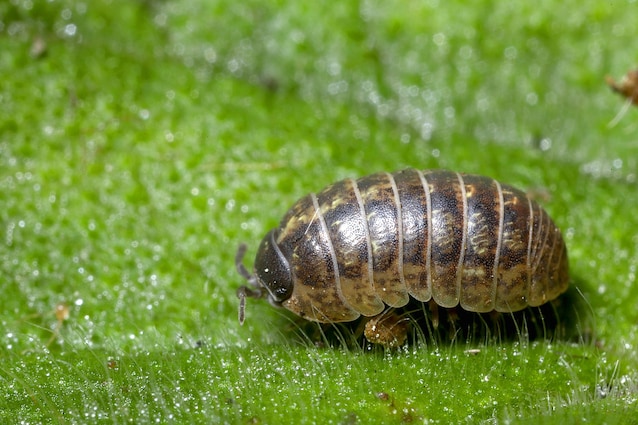
It’s not an insectjust note that it doesn’t have 6, but well 14 legs all equal to each other (the pleiopods); it is in fact a crustacean of the Order Isopoda (from the Greek equal legs), the only Order of crustaceans that has also conquered the mainland, in addition to fresh and marine waters. The order has been present on earth for approximately 20 million years. The St. Anthony’s Pig lives in damp and dark environments, it is lucidtherefore it tends to hide if exposed to light. During the winter when temperatures drop it goes into diapause; this species is also affected by variations in air humidity. It feeds on plant debris and animal residues and is completely harmless to humans, animals and plants.
Why it closes like a ball: the mechanism of conglobation
The wood pigs are able to close themselves, retracting their antennae and forming a ball in response to situations perceived as dangerous: vibrations, presence of predators such as spiders and ants, alterations to the environment. The phenomenon is said conglobation and it is possible precisely because the Armadillidium is completely covered by a rigid exoskeletonbut divided into plates joined by flexible membranes. They live in soils with a certain moisture content, but if the air and soil become too dry, these small crustaceans tend to lose water quickly by transpiration especially through the numerous small legs, the pleiopods.
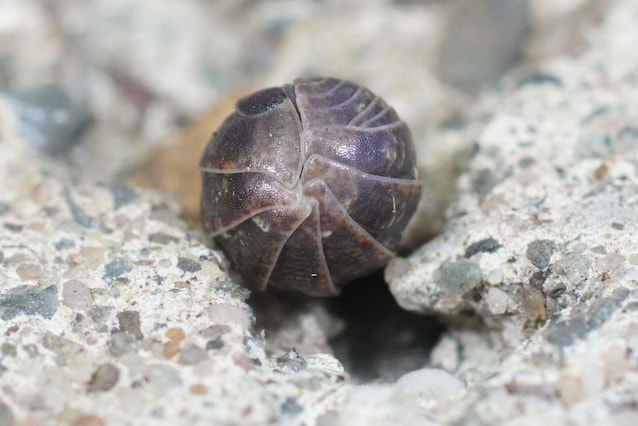
With conglobation, water loss is reduced by 34.8% and this behavior helps minimize dehydration. Even at temperatures above 40° C, in laboratory conditions, because in nature the temperatures are too high for them, Armadillidiums combine spontaneously, thus reducing water loss and the surface of the body exposed to high temperatures. It is therefore an extremely effective defense mechanism.
What is Armadillidium vulgare used for: an indicator of soil quality
Isopods are essential for the litter decomposition process and for the recycling of nutrients in the soil. They feed on organic matter and are able to also decompose lignin and cellulose. They also accumulate high amounts of heavy metals, if present in the soil: they accumulate in thehepatopancreasor in the organ that acts as the intestine, producing digestive enzymes and storing nutrients. They are capable of surviving in heavily contaminated areas and are employed as bioindicators also considering the ease with which they can be collected, identified and studied.
