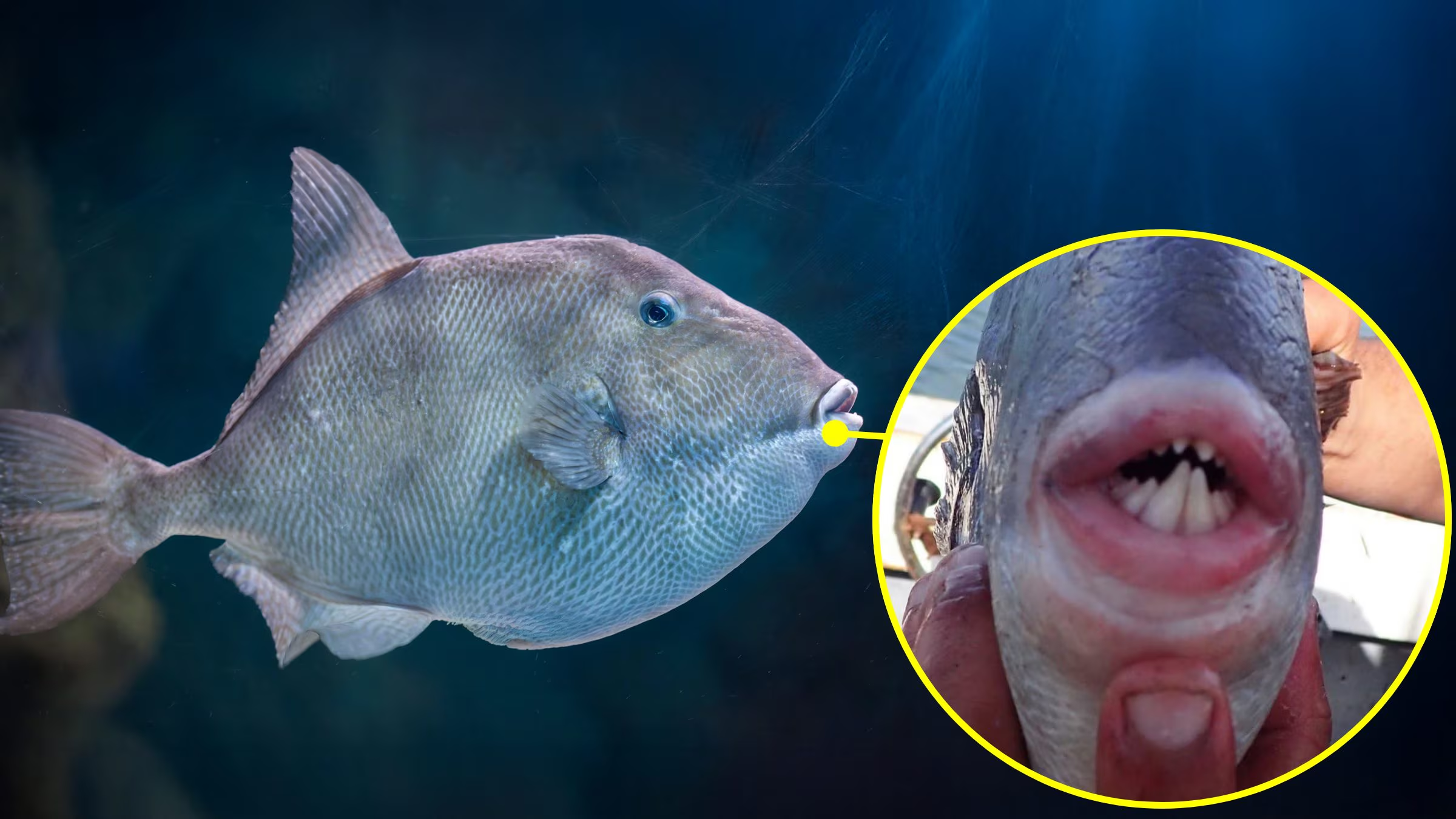
The triggerfish (Balistes capriscus) is one of the protagonists of the Balistidae family, recognizable by an anatomical peculiarity that gave it its name: the first dorsal finmade up of 3 thorny rays, locks in an upright position like the trigger of a medieval weapon. In recent days we have been hearing about it more and more often along the Italian coasts, in particular due to various news reports relating to swimmers bitten a few meters from the shore, with one case recorded in Pioppi (Cilento). But is this species really responsible? To clarify these episodes and understand how to behave, we made use of the technical contribution of Prof. Francesco Tiralongoexpert ichthyologist from the University of Catania. The triggerfish, in fact, is moving northwards from the Mediterranean and is known for its marked territoriality in defense of the nest (it is not toxic or poisonous in any way). Understanding his biology is the best way to share the sea with him without alarmism.
Why is it called that? The anatomy and the dorsal “trigger”.
The triggerfish has a oval bodycompressed laterally, with a head proportionally large compared to the rest and a small mouth but armed with a series of very robust and pointed teeth. It is precisely this combination of anatomical characteristics that is one of the traits that make it immediately recognizable in the water.
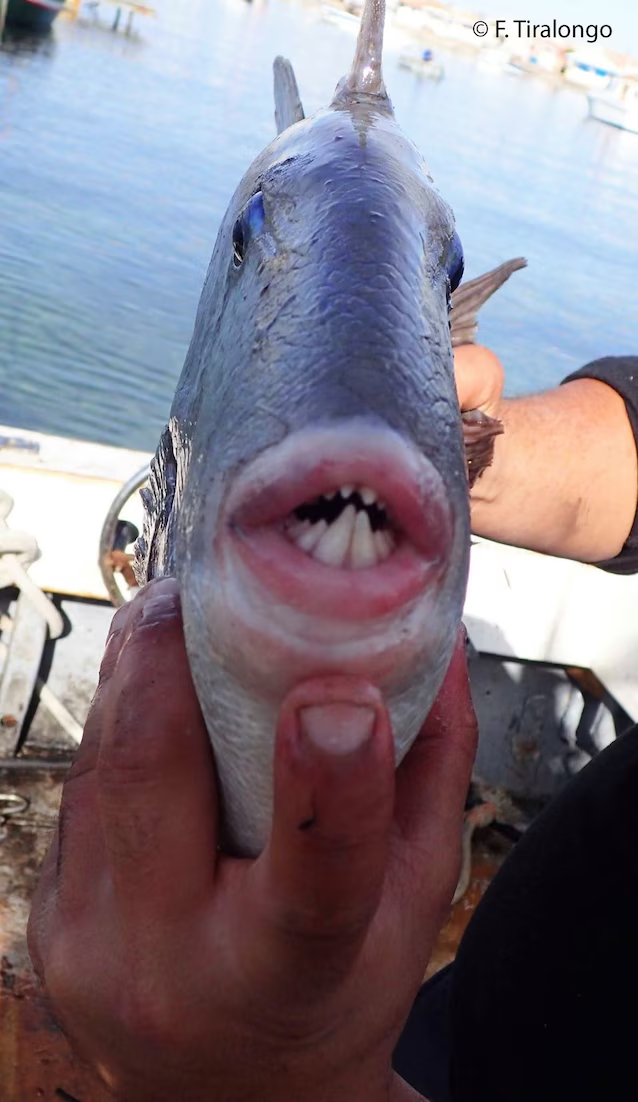
The real distinctive sign, however, is the first dorsal fincomposed of three spiny rays. The first ray is much longer and stronger than the other two and works like a lever: in normal conditions it remains folded in a sort of pocket along the back, but when the fish feels threatened he erects it suddenly. At that point the second, smaller beam behaves exactly like the trigger of a crossbow, locking against the first, keeping it rigid and impossible to lower until it is “defused”. This mechanism, as the Museum of Adriatic Zoology Giuseppe Olivi explains, has two very practical functions: it allows the fish to fit firmly in a crack between the rocks to escape a predator, and it makes its shape too bulky and thorny to be swallowed. It is no coincidence that in English the animal is simply called triggerfish“trigger fish”.
The natural habitat: from coral reefs to the Mediterranean Sea
Triggerfish are, in general, tropical and subtropical warm water animals, often associated with coral reefs and rocky bottoms up to 50-100 meters deep. The only native species of our seas is the gray triggerfish (Balistes capriscus), therefore it is not an alien species. It is considered native to the Mediterraneanbut historically its presence was common only in the warmest areas of the basin, between North Africa, Sicily and the eastern Mediterranean.
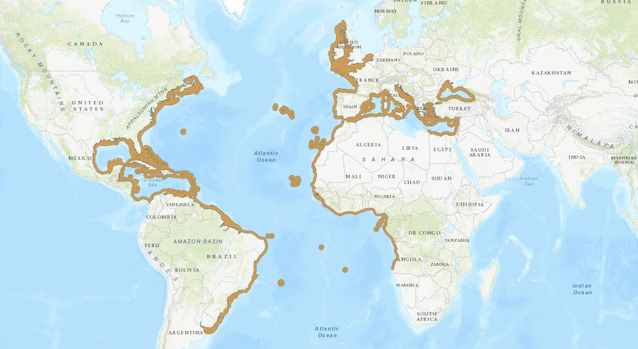
What is changing is its distribution. With theincrease in sea temperaturestriggerfish are moving back into waters that were once too cold for them, a phenomenon experts call southernization of the Mediterranean (different from “tropicalization”, which instead concerns the arrival of truly alien species). In recent years, reports have multiplied along the Adriatic, including the waters of the Gargano, as well as on the central-northern Italian coasts, where once the encounter with this fish was occasional.
At European level the species is included in the IUCN Red List category Data Deficient (lacking data), confirming the fact that the local expansion we observe today in the Mediterranean is a phenomenon in full evolution and yet to be precisely quantified.
Aggression and the bite: is it dangerous for humans?
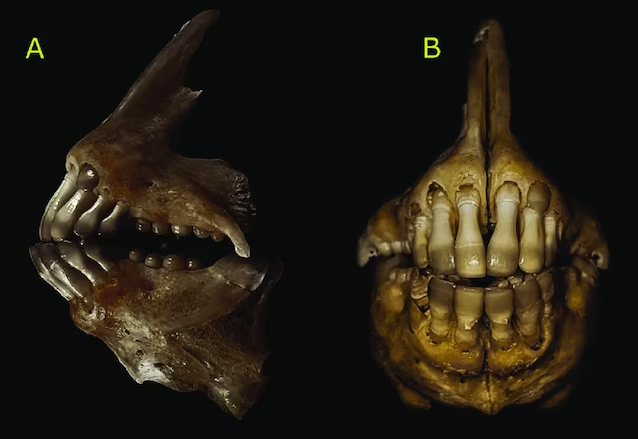
The powerful teeth of the triggerfish are made for breaking shells of molluscs, crustaceans and sea urchinswhich it usually feeds on sandy and rocky seabeds. It is the same equipment that, when applied to a human hand or foot, can cause injury. Having said that, it is not an animal that attacks humans to prey or out of pure aggression: his is almost always a defensive behavior. The critical moment coincides with the reproductive period, between spring and summer, when the animal defends the nest dug in the sand. Both parents participate in supervision: while the female guards the eggs closely, the male patrols the territory at a wider range. This means that any defensive bite can come from either sex indifferently.
In Italy, reports of bites on swimmers have increased recently, with one case of a certain severity recorded in Pioppi, Cilento. Episodes like this don’t tell of a fish that suddenly became “dangerous”, but of a animal that protects its territory and offspring in waters crowded with swimmers and divers.
However, before “pointing the finger” exclusively at the triggerfish, caution is needed. As Prof. Tiralongo specifies, in the absence of direct observations of the animal or detailed photographic documentation of the wounds, the identification of the responsible species must always be formulated with great caution. Recent research, documented by the ichthyologist himself and published in scientific literature, has in fact demonstrated with certainty that many of the bites recorded on shore during the hot season can be attributed to another much more common species: the sea bream (Diplodus sargus), also characterized by robust teeth.
Whether it’s one or the other, if the bite has already happened, the first thing to do is get out of the water. The wound should then be washed with clean fresh water, disinfected and covered; given the depth that these lesions can reach, in case of heavy bleeding or signs of infection it is advisable to contact an emergency room.
