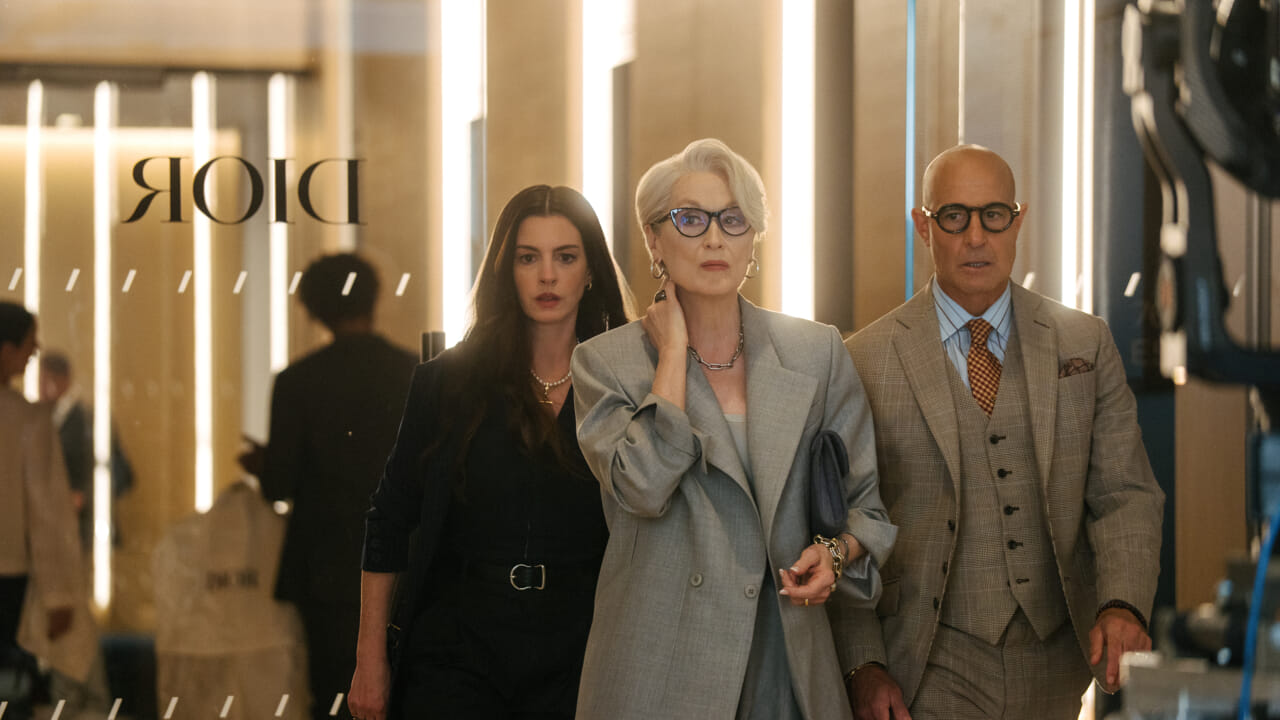
Is “The Devil Wears Prada 2” a film worthy of its predecessor? Yes, if we know how to grasp its meanings
We all remember the only crack in Miranda Priestly’s monument, in “The Devil Wears Prada 1”: her sitting on a sofa in a hotel, during the “Paris Fashion Week”, who for the first time lets herself shed a tear, reasoning about how much her obsession with work has compromised her life. Well, in “The Devil Wears Prada 2”, that crack becomes a chasm: this time not as a result of human guilt, but rather because his own publishing empire, or rather his reason for living, is losing power.
Twenty years after the release of one of the cult films – the one that mercilessly plundered the life of the very powerful Anna Wintour, director of “Vogue” – everything has changed: “Runway”, the most feared fashion magazine in the world, is no longer the almighty arbiter of taste it once was; and even its director, Miranda, is no longer the same. But then again, neither are we. It is, therefore, starting from this premise that an absolutely successful sequel arrives. A film updated to current times, without limiting itself to the mere “nostalgia operation”, but rather providing a credible satire of the “fashion system”. And what we have become.
What is the new “Devil Wears Prada” about?
First of all the plot, in brief and without spoilers. Miranda’s crack represents the crack of an entire sector, that of fashion magazines. To be clear: the first iPhone was released only a year after the release of the first “Devil Wears Prada 1” and, shortly thereafter, paper journalism would have experienced a future of absolute decline, to the benefit instead of sites, influencers and various devilments from compulsive scrolling (often anything but journalistic). In short: today Miranda and her staff still work in the luxurious offices of a skyscraper in New York, but they have a smaller budget at their disposal; they still look down on those who dare to wear “cerulean sweaters”, but at the same time they are also forced to submit to the reputational crisis that comes “from below”, i.e. from the emerging social media.
In short, the whole film revolves around the question: how will Miranda handle the end of her empire? And how can Andy Sachs, his former assistant and emblem of the public itself, ethically question – again – his approach to work? But above all: who, in a anything but ethical way, snatched the scepter from Miranda herself?
The question of questions: is it on par with the first?
Let’s clarify right away. Or rather, let’s immediately answer the question of questions: the sequel, in itself, is absolutely “worthy” of the first chapter. Of course, the first is unrepeatable: a cult film, after all, is the result of a miraculous alignment of planets and – as we know – the planets (quality dramaturgy, social urgency, public response) align once every two hundred years. But this second chapter must be seen with the same taste, and with the same love, with which you would participate in a reunion. As long as you grasp the right meanings. In fact, the characters evolve impeccably, we could even say that they grow – in some cases they grow old – without betraying their nature: Miranda, although wounded, is still there, impeccable and unpredictable in her authority; Andy has never betrayed his more “earthly” journalistic vocation; Nigel is still the lovable comic conscience of the story and Emily irresistibly tragicomic. Sure, there are some plot points that are a little more forced, but it’s still a comedy and it will be like meeting a group of friends again after so many years. But above all it will be to discover who we have become, not just them: like when, at the class dinner, we notice the receding hairline of our former classmate (and then wonder about our own).
The Devil Wears Prada 2, the complete cast: old and new characters
Does the Devil’s pitchfork bite Jeff Bezos? The meaning of the film
In fact, this time the satire of the Devil no longer shifts his pitchfork to Miranda, a former dictator who is now wounded, but to something that concerns us even more closely, even if we often overlook: on the impoverishment of online information, bent to the logic of “likes” and big tech; and, above all, on the millionaires who buy entire publishing empires and then consider them as banal activities to be overlooked in their agenda, without any ethics (at the New York premiere, many were whispering the name of Jeff Bezos, who would be, deep down, the real man parodied by this sequel: owner of the “Washington Post”, there were many protests about his work; and, above all, it seems he has also set his sights on “Vogue”, alter ego of “Runway” indeed). Then there is another message to intercept and it concerns the new “fashion system”: the one that for years has been selling itself as “changed”, that is, more “democratic” and “horizontal” – that is, no longer made up of unattainable guidelines, but of hyper-accessible influencers – but which, ultimately, is equally linked to more ruthless market logics than before.
It seems that “The Devil Wears Prada 2” is a (merciless) mockery of Jeff Bezos. Here are all the clues
In short, “The Devil Wears Prada 2” uses familiar figures like Miranda and Andy to make a ruthless satire of the world of information and fashion today. In a comedic tone, obviously: the best way to get to the goal. Also because, otherwise, when would people ever go to the cinema “to see a film about an endangered means of communication?” (as asked here New York Times). And instead we really have to start thinking about it, if we want the sacrifice of the Miranda myth not to have been in vain.
