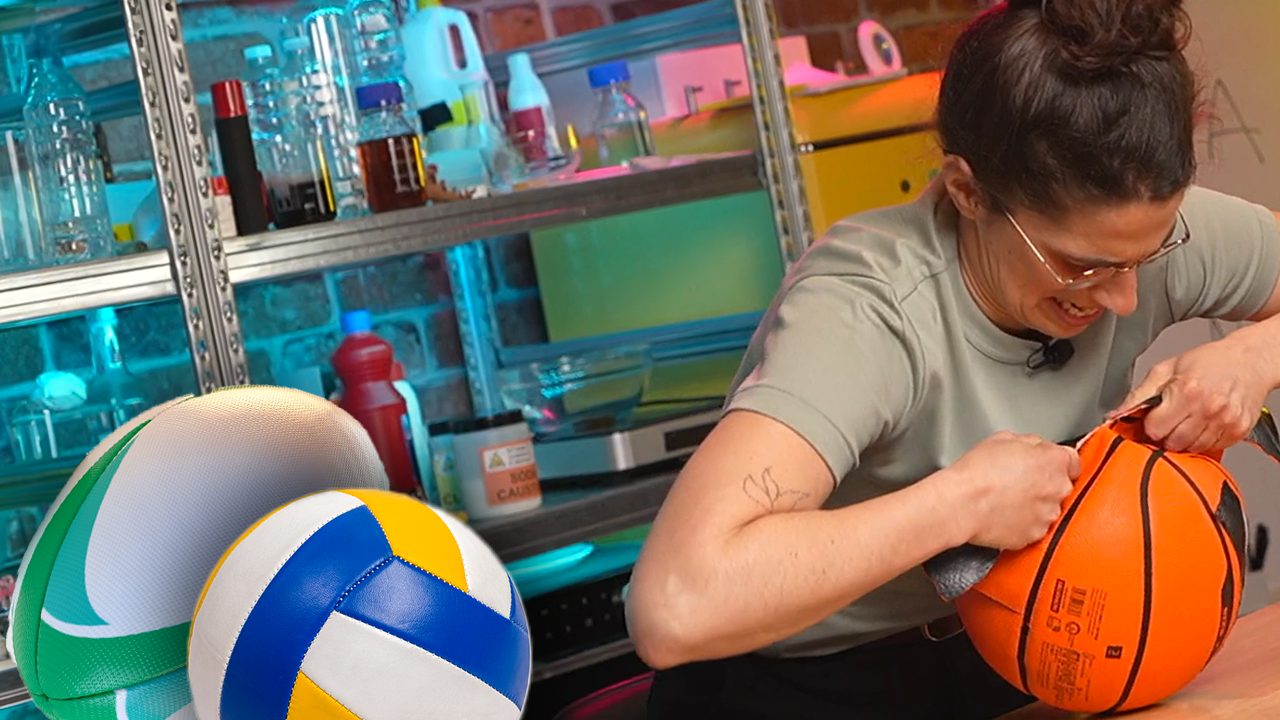
How come the different ones game balls – football, basketball, rugby and volleyball – do they have different shapes, sizes and materials? The answer lies in the fact that each specific ball must have some different physical characteristics depending on the use to be made of it. For example, the soccer ball and the volleyball ball must be very efficient in blocking impacts, the basketball ball must have an optimal bounce, while the rugby ball needs to be easily gripable as well as having to maintain its stable trajectory.
The soccer ball
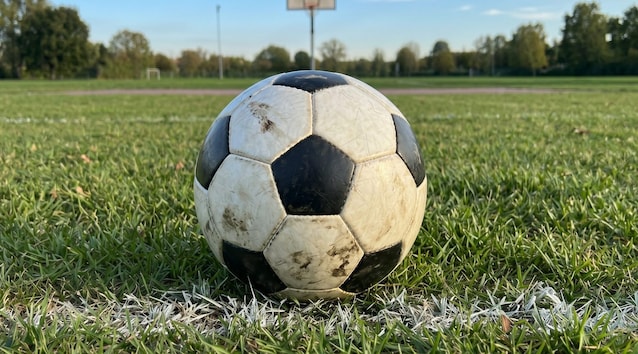
The 11-a-side soccer ball is size 5, meaning it has a circumference between 68 and 70 centimetresweighs between 410 and 450 grams and his pressure internal must be between 0.6 and 1.1 atmospheres. As we well know, its shape is spherical, or at least as spherical as possible. In professional balls, a deviation of maximum 1.5% compared to a perfect sphere is accepted.
The physical characteristics
It must also be said that the ball is not strictly a sphere, in the sense that it is obtained fromassembly of different dowels which – overall – give a spherical shape to the ball. The classic tessellation of the balloon – that of the common imagination – is obtained from a truncated icosahedronthat is, a polyhedron formed by 32 faces composed of 20 hexagons and 12 pentagons that connect them. Classically, in the ball obtained from this composition, the pentagons are black and the hexagons white.
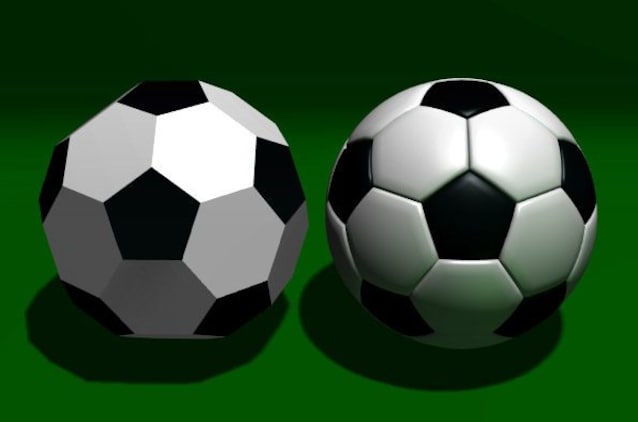
The number and the shape of the tiles (14 to 26, stars to triangles) directly influence theaerodynamics of the ball. While a smooth surface creates a large turbulent wake that increases drag and instability, i furrows or the stitching they generate small controlled turbulences in the layer of air in contact with the sphere. This “roughness effect” allows the airflow to adhere to the surface for longer and to close better behind it, reducing the low pressure zone and ensuring a faster and more stable flight.
Materials and internal structure
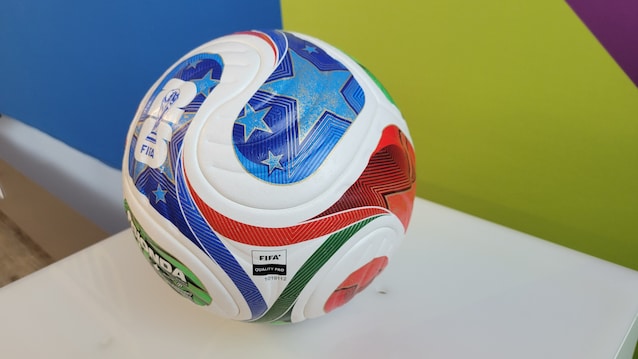
In the past, footballs were made of leather, a material which however tended to deform and become soaked in water. Today they are coated in PU (polyurethane) or PVCsynthetic materials waterproof And resistant which are sewn internally or heat-sealed. These materials have the great advantage of being waterproof and are very resistant, i.e they absorb Very good the impacts given by kicks
Under the outer covering are the liningslayers of polyester or cotton which distribute the force of the impact and preserve sphericity over time. In some flasks there is also a layer of foam to increase the properties of shock absorption of the balloons. The heart of the ball, however, is there bladder (inner tube) in latex or butyl: its elasticity and pressure retention guarantee the correct bounce and the ability of the ball to regain shape after each kick.
The basketball
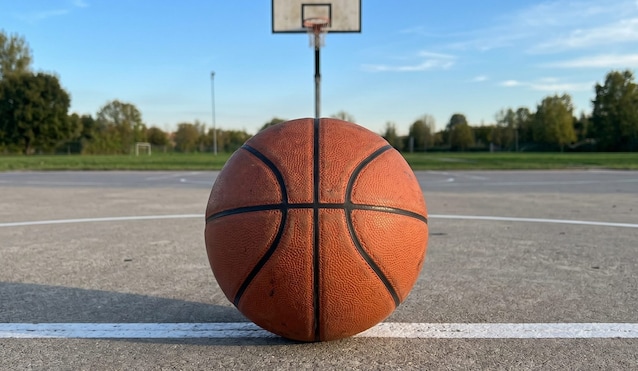
The basketball is larger and heavier than the football, and there is a difference between men and women: the men’s ball has a circumference between 75 and 78 cm and a weight between 567 and 650 grams, while the women’s ball has a circumference between 72.4 and 73.7 cm, with a weight between 510 and 567 grams. The internal pressure, be careful, is lower than that of a soccer ball: it is between 0.52 and 0.58 atmospheres.
The physical characteristics
The basketball, despite the lower internal pressure compared to the soccer ball, guarantees a superior bounce thanks to thehigh coefficient of restitution due to both materials of which it is composed, and the context in which it is used. In fact, while the grass of the football field absorbs much of the energy of the impact, thus making the ball bounce less, the basketball parquet it is rigid and almost completely returns the energy received, resulting in greater rebound. Structurally, if the soccer ball is designed to dissipate shocks, the basketball one has a more rigid and elastic casing which limits its deformation: instantly returning to its original shape after impact, the ball converts the energy of the fall into a much more effective upward thrust.
Materials and internal structure
The basketball is made up of eight leather segments or eraser glued onto one carcass Of eraser heavy. Its surface is characterized by typical punctiform reliefs which increase friction, ensuring the grip necessary between hand and ball. Internally, the inner tube is enveloped by hundreds of meters of nylon or polyester thread: this intermediate layer is essential for distributing the stress of impacts and preserving the sphericity of the ball despite strong stresses.
The rugby ball
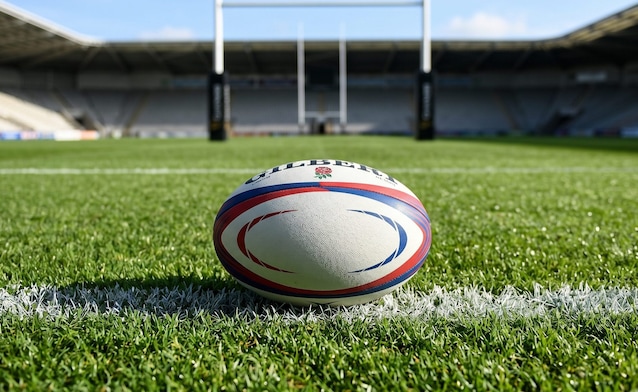
The rugby ball weighs between 410 and 460 gramsis long between 28 and 30 centimetresthe circumference of the vertical axis at its maximum point is 58-62 cm, while the perimeter we obtain if we section it horizontally at its maximum point is between 74 and 77 cm. There internal pressure is among them 0.59 and 0.69 atmospheres.
The physical characteristics
The origins of oval shape rugby ball are related to the use of animal bladders which, naturally deformed and elongated, were covered in leather. With the official distinction between football and rugby in the nineteenth century, it was understood that the oblong shape, despite being less stable on the foot, offered a fundamental practical advantage: it was much easier to hold, hold and protect during the typical running phases of this sport.
There is another fundamental reason why the rugby ball has this shape. From a physical point of view, the oval shape is extremely aerodynamic for long and tense passes, provided you take advantage of thegyroscopic effect. Imprinting the ball with one “spin” (a rotation along the horizontal axis), it behaves like a spinning top: the rotation stabilizes the flight axis, preventing the air from overturning the ball and allowing it to maintain a trajectory along the direction in which the ball is thrown.
Materials and internal structure
Just like basketball, rugby balls have a textured surface with bumps that maximize the grip and the handling. The structure is made up of four synthetic panels PU or PVC sewn internally, which replaced leather to ensure greater resistance and waterproofness. Inside, an oval bladder is protected by intermediate layers of polyester or cottonfundamental for distributing the stresses of impacts and preserving the specific aerodynamic shape of the ball.
The volleyball ball
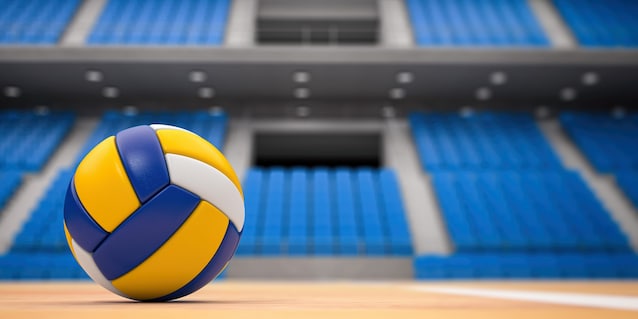
First thing to say: the volleyball is there lightest of allin fact it weighs between 260 and 280 grams. Why? Because basically it doesn’t have to hurt. It has a circumference between 65 and 67 centimeters, so it is slightly smaller than a soccer ball and has an internal pressure between 0.2 and 0.3 atmospheres.
The physical characteristics
The volleyball is characterized by a internal pressure and a reduced weightspecifically chosen to limit arm trauma during play. This low pressure favors a greater deformation on impactwhich not only better distributes the energy of the blow making the reception less painful, but also increases the contact time with the hand, allowing superior control of the trajectory. The classical structure provides 18 panels rectangular organized into six groups, although modern variants exist with fewer panels and different geometries to further optimize the touch.
Material and internal structure
Also in this case the external structure is usually made of synthetic material PU or PVCwhich as in football have the important role of blocking impacts, i.e. absorbing the energy received during dunks, dribbles or bagher.
Compared to the soccer ball, the surface of the ball is “more grippy”in the sense that it is not perfectly smooth but allows a sufficient friction between hand and ball thanks to very small reliefs. The internal structure is very similar to that of a football, we have the air chamber and an intermediate layer between the panels and the bladder made of cotton or polyester which, as usual, serves to maintain the spherical shape of the ball and distribute external stress.
